The Inventory of Ghosts: A Pragmatic Account of Property, Leverage, and the Fall of Willowbrook Lake
CHAPTER 1: THE FRICTION OF IRON
The key didn’t want to turn. It was a heavy piece of solid brass, tarnished at the ridges, carrying the faint scent of machine oil and the cold dampness of a basement that hadn’t seen sunlight in thirty years. Theodore leaned his shoulder against the solid oak door, feeling the splinters of the weathered lacquer bite into his shirt. With a dull, metallic click, the bolt finally slid back.
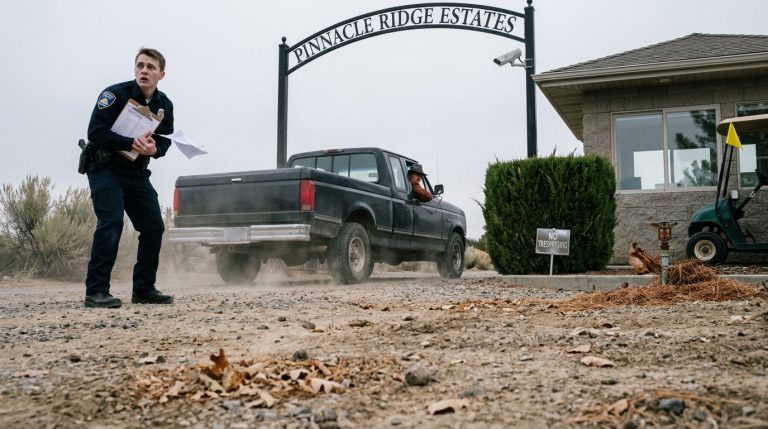
Behind him, the gravel drive crunched. Three patrol cars sat idling in a crescent formation, their tires throwing up small flints of grey slate. The blue and red strobes cut through the low-hanging fog off the water, turning the white-painted facade of the house into a rhythmic, flashing warning.
“Step away from the threshold, sir,” the oldest officer said. He didn’t unholster his weapon, but his thumb was hooked into his belt, pushing the leather holster forward. “We have a report of an unauthorized entry into the Palmer estate.”
Theodore didn’t drop the box of cast-iron skillet pans he was holding. The weight ran straight down his forearms, dull and familiar. “I am Theodore Palmer. This was my uncle’s house.”
He reached into his back pocket with his free hand, pulling out a folded sheaf of legal cap paper. The edges were already soft from the humidity of the lake. He held it out. The paper didn’t shake. It was the deed, stamped by the county clerk three weeks prior, accompanied by a copy of the probate certificate.
The officer didn’t take it. Instead, a shadow fell across the gravel.
Brenda Fitzgerald moved with the rigid precision of an old ledger book. Her tennis whites were immaculate, completely untouched by the damp mist rolling off the shoreline. She smelled of expensive lavender perfume and the dry, chemical scent of a bank vault. She didn’t look at Theodore; she looked at the U-Haul truck parked across the grass border.
“The rules are quite specific, Officer,” Brenda said, her voice thin and flat, like paper sliding across glass. “Non-conforming commercial vehicles are not permitted on the access roads before nine o’clock. And we do not allow unregistered laborers on the property without a pre-approved security clearance from the board.”
The officer glanced down at the paperwork Theodore was holding, then back to Brenda. He cleared his throat, the sound dry in the autumn air. “Looks like his names on the title, Mrs. Fitzgerald. Probate went through.”
“The title is subject to the covenants,” Brenda replied. She stepped closer to the porch, her small, sharp eyes fixing on the rusted iron hinges of Theodore’s grandmother’s chest inside the truck. “Papers don’t change the nature of this community, Mr. Palmer. You don’t belong on this block. Your uncle understood the boundaries. If you choose to cross them, I will ensure the county code enforcement checks every square inch of this foundation by noon tomorrow.”
She turned on her heel, her white shoes leaving small, perfect indentations in the damp turf.
Theodore looked down at the brass key still buried in the lock. The metal was cold, holding the precise chill of the lake water below. He didn’t argue. He didn’t raise his voice. He simply watched the patrol cars back down the driveway, their tires grinding the loose shale into powder.
When he stepped inside, the house smelled of old wool and floor wax. In the corner of the hallway, sitting right on the boundary line where the floorboards met the baseboard, lay a small, dead loon chick, its feathers dry and stiff. Next to it was a fresh, crisp white envelope, slipped under the door frame while the engine blocks of the police cars were still cooling. It was a pre-printed violation notice for unauthorized landscaping, dated two days before he had even received the keys.
CHAPTER 2: THE INVENTORY OF DEBT
The floorboard didn’t want to yield. It was a thick plank of untreated heart-pine, swollen from decades of lake humidity and anchored by square-headed iron nails that had rusted into the joists. Theodore jammed the flat edge of the crowbar into the seam, the metal screeching as it bit against the stubborn grain. He threw his weight onto the lever. The wood groaned, a sharp splintering sound cutting through the heavy silence of the basement, before the nail finally popped with a dull report like a small caliber pistol shot.
The air that rose from the gap was thick with the scent of dry earth, rotted paper, and decayed zinc.
Theodore wiped a streak of grey dust and sweat from his forehead with the back of his hand, leaving a dark smudge across his skin. He reached into the dark cavity between the joists. His fingers brushed against something cold, heavy, and metallic. He pulled it out into the dim light of the single overhead bulb. It was an iron key, heavily pitted with corrosion, its third tooth completely notched out. He set it on the rim of an open banker’s box. It made a dry, hollow clink.
Beneath where the key had rested lay a ledger bound in cracked pigskin, its corners eaten away by silverfish.
This wasn’t a standard corporate record book. Theodore flipped the cover open, the binding cracking under the friction of his thumbs. The pages were covered in his uncle’s tight, cramped handwriting, every line executed in faded red ink. There were no emotional musings, no personal letters. It was an inventory of numbers, dates, and names—Bob Martinez, Linda Palmer, Frank Sullivan. Next to each name were columns tracking numbers that didn’t align with standard rent or property valuations.
“Looking for something specific, Palmer?”
The voice came from the top of the basement stairs, flat and rough as coarse sandpaper. Frank Sullivan stood in the shadow of the doorway, his massive, weathered frame blocking the light from the kitchen above. He wore an old canvas work jacket stained with grease and oil. He didn’t look like a man who belonged in a picture-perfect retirement community; he looked like a piece of machinery that had been left out in the rain.
Theodore didn’t slam the ledger shut. He didn’t move his hands from the pages. “My uncle kept good records, Frank. Better than the ones Brenda has.”
Frank descended the stairs slowly, each step creaking under his heavy boots. He stopped at the edge of the old wooden table, his eyes tracking the rusted iron key, then the red columns in the ledger. His jaw tightened, the skin around his old scars turning a dull, bloodless white. “Theo wasn’t just tracking the fines, boy. He was tracking the water lines. The pump station down by the eastern cove? It hasn’t been serviced by the county since ninety-six. Brenda’s been billing us eight hundred a year per household for ‘infrastructure maintenance,’ but the intake pipe is choked with iron slag and zebra mussels. If that pump fails, half the foundations on this side of the lake collapse into the silt.”
Theodore turned a page. The red ink showed a massive deficit—a systemic drainage of funds from the primary association account into a company called Fitzgerald Family Services, balanced only by counter-deposits from an entity listed as Willowbrook Management.
“The association is bleeding,” Theodore said, his finger resting on a column of consecutive red zeroes. “Brenda isn’t just skimming. She’s running the whole grid on credit she doesn’t own.”
“She knows you’re down here,” Frank said, his voice dropping an octave, the sound like gravel shifting under a tire. “She had her brother-in-law’s truck parked at the end of the lane twenty minutes ago. The one who runs the mailbox outfit. They aren’t just checking your grass height, Theodore. They’re looking for whatever Theo didn’t file with the county clerk before his heart quit.”
Theodore closed the pigskin book. The dust from the cover settled on his fingers, gritty and gray. He could feel the active agency of the trap his uncle had laid, but the gears were old, stiff, and required manual force to turn. “Let her look. Every notice she sends is printed on paper bought with stolen assessments.”
He stood up, the iron key sliding into his front pocket, its broken tooth digging through the denim against his thigh. He grabbed the handle of the banker’s box, the cardboard soft and tearing slightly under the weight of five years of municipal tax receipts. He didn’t wait for Brenda to make the next move; he needed the physical proof of the water utility fraud before the emergency board meeting on Friday.
As he reached the top of the stairs, the phone in the kitchen began to ring—a sharp, mechanical rattle that vibrated through the old plaster walls. Theodore picked up the receiver. There was no greeting on the other end, only the steady, rhythmic hum of a diesel engine idling close to the receiver, and then the dry, paper-thin click of a line disconnecting.
From the kitchen window, looking past the fraying edges of the screen, Theodore watched a single black SUV with tinted glass crawl past the perimeter line of his gravel driveway, its tires chewing slowly into the soft, unpaved edge of the road.
CHAPTER 3: THE CORROSION MATRIX
“The contract has already been executed, Mr. Palmer. Your signature isn’t required to legitimize an administrative necessity.”
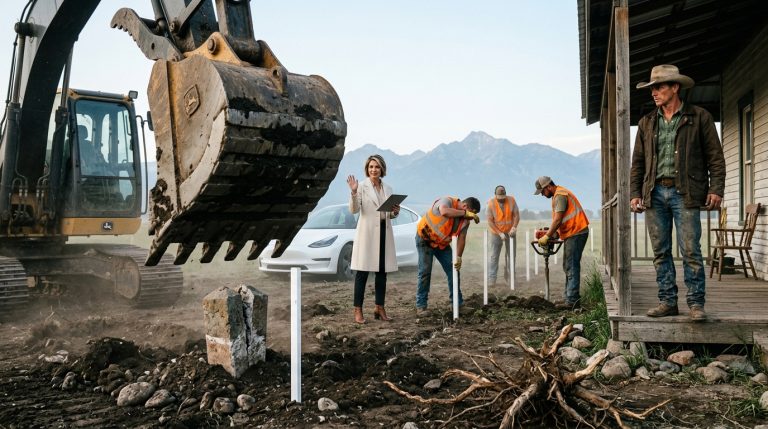
Brenda Fitzgerald didn’t look up from her clipboard. She stood at the end of the gravel driveway, her white tennis shoes dusted with a fine layer of gray shale powder. Behind her, a commercial flatbed truck sat idling, its hydraulic lift hissing as two men in grease-stained coveralls unbolted a heavy iron crate. The smell of exhaust fumes and hot engine oil fouled the crisp morning air, cutting through the damp scent of the pine woods.
Theodore didn’t move from the bottom step of the porch. His hand remained buried in his pocket, his fingers tracking the cold, notched edge of the iron key he had unearthed from the basement joists. “The association documents require a majority vote from the landholders before any mandatory vendor exclusivity can be enforced. You haven’t called a quorum, Brenda.”
“Section Twelve, Subsection B,” Brenda said, her voice thin, clipped, and dry as dead leaves. She finally raised her eyes, her gaze flat and fixed on the front door of Uncle Theo’s house. “The executive board retains emergency intervention rights regarding architectural uniformity. Your mailbox post is heavily oxidized. It poses a material risk to the property value of the adjacent lots. Lakefront Mailbox Solutions is the only county-certified structural installer for this development.”
“Robert Fitzgerald runs Lakefront Mailbox Solutions,” Theodore countered calmly. He stepped down onto the gravel, the stones grinding beneath his heavy boots. “He’s your brother-in-law. And his standard commercial rate for a steel post installation is fifty dollars. You’re billing the estate four hundred.”
A subtle twitch caught the corner of Brenda’s narrow mouth, her carefully maintained composure stiffening like wet cement in the sun. She dropped the clipboard to her side, the metal ring clicking against her silver bracelet. “Your uncle was a hoarder of obsolete paper, Theodore. He died alone in a drafty house because he spent his final years looking backward instead of forward. Do not mistake his eccentricity for leverage. The assessment stands, and if the balance isn’t cleared by Friday’s emergency session, the lien process will initiate automatically through the district court.”
She didn’t wait for a response. She turned toward the flatbed, her heels clicking sharply against the hard-packed earth as she signaled the crew to drop the crate near the boundary line.
Theodore didn’t argue. He watched the truck gear down, its transmission whining as it backed away. Once the noise faded, he walked down to the edge of the property where the iron crate sat. The metal was cold, covered in a cheap coat of black industrial lacquer that was already flaking off in large, brittle scabs to reveal the pitted orange rust beneath. He reached down, tracing the underside of the mounting bracket.
Slipped into the seam of the plastic casing was a clear packing slip. He pulled it free, his thumb wiping away a smudge of heavy graphite grease.
The invoice wasn’t from a manufacturer. It was a routing document from Grandview Development Corporation, stamped with a heavy, purple ink seal. Theodore held the slip up to the gray light off the water. The seal didn’t bear the logo of their county clerk; it carried the registry designation of the adjoining district, a completely separate legal jurisdiction twenty miles south.
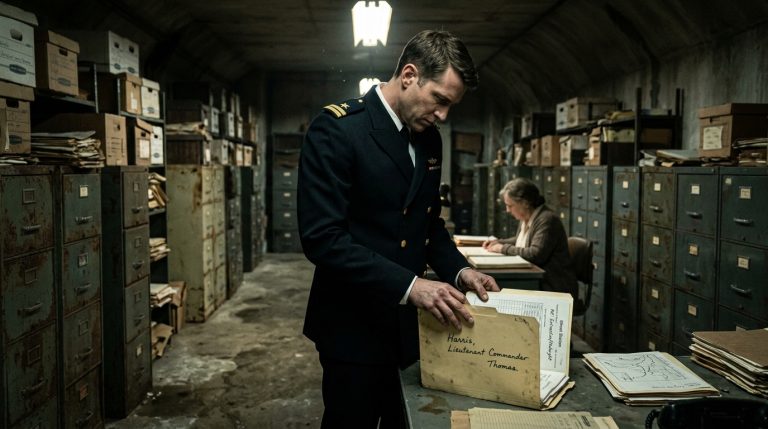
He walked back into the house, the grit from the driveway tracking onto the linoleum floor. In the study, the shadow of the afternoon sun fell across Uncle Theo’s green metal filing cabinets. Theodore unlocked the top drawer using the small, tarnished key from the desk organizer. The drawer slid forward with a heavy, metallic rattle, the suspension tracks long dried of grease.
He pulled the folder marked Vendor Audits: 2021-2024. Inside lay thirty-two pages of corporate registration printouts, cross-referenced with his uncle’s steady red-ink margins. Every contract Brenda had approved over the past thirty-six months—from the pool chemical supplier to the private patrol service guarding the entry gate—carried the exact same jurisdictional anomaly. They weren’t local vendors. They were all shell companies registered to the same commercial suite in the southern district, all tied back to a parent holding firm named Grandview Infrastructure.
The phone on the desk rang once, then fell silent.
Theodore leaned over the mahogany desk, his palms flat against the cool wood. He wasn’t looking at a simple case of suburban embezzlement anymore. The mailbox fines, the unapproved wildflower violations, the surprise eight-hundred-dollar emergency infrastructure assessments—they weren’t designed to collect cash. They were designed to generate structural defaults. Brenda was systematically creating an unbroken paper trail of non-compliance and unpaid debt to clear the titles of the original properties, forcing the landholders into a corner where foreclosure was the only clean exit.
The door behind him creaked. Bob Martinez stood in the hallway, his old wool cap held tightly in both hands, his face pale against the dark wood framing of the door.
“She just left a notice at my door, Theo,” Bob said, his voice carrying the dry vibration of a man who spent his life working the mills. “An emergency assessment for the water intake lines. Eight hundred dollars due by Friday or she cuts the main valve to my foundation. I don’t have it, boy. Not with the clinic bills from the city.”
Theodore stood up straight, his fingers tightening around the edge of the Grandview routing slip. The iron key in his pocket felt heavy, solid, and real against his thigh.
“Don’t write the check, Bob,” Theodore said, his voice low and level. “We’re going to the community center on Friday. But we aren’t going there to pay the fines. We’re going there to audit the ledger.”
Bob looked down at the floor, his weathered boots tracing the edge of the frayed rug. “She’s got the county sheriff on speed dial, Theodore. She’s done this before to the family on the point. They tried to fight the code violations, and three weeks later they were packing a U-Haul in the dark.”
“They didn’t have the routing sheets,” Theodore said, setting the Grandview document down on the desk, right beside his uncle’s red-inked pigskin ledger. “My uncle spent three years letting her build her own cage, Bob. We just have to bolt the door.”
He picked up his jacket from the chair. He needed to verify the physical status of the eastern cove pump station before the sun went down completely. If the infrastructure documentation matched the corporate anomalies in the filing cabinet, Brenda wasn’t just enforcing rules—she was selling a neighborhood that didn’t belong to her.
As he stepped out onto the back deck, the wind off the lake carried the bitter, metallic tang of oxidized iron and stagnant water from the cove below. The light was dying, turning the water a cold, slate gray, and down along the shore path, the high-beam headlights of the black SUV flicked on, casting long, sharp shadows through the birch trees straight toward his kitchen window.
CHAPTER 4: THE BREAKING STRAIN
The padlocked chain on the eastern cove pump house didn’t snap clean; it tore out a chunk of the rotted cedar frame with a dry, splintering crunch. Theodore dropped the bolt cutters onto the muddy bank, the iron jaws clotted with wet orange silt. Cold lake water lapped against the toes of his boots, carrying the greasy film of old motor oil and decaying pondweed.
Inside the unheated corrugated shed, the main intake valve hummed with a violent, uneven vibration that shook the concrete floorboards. It didn’t sound like a piece of functioning municipal infrastructure. It sounded like an iron drum filled with crushing stones.
“You’re five minutes away from a criminal trespassing charge, Palmer.”
Brenda Fitzgerald didn’t use a flashlight. She stood in the narrow doorway, framed by the freezing gray fog rising off the cove. Behind her, the headlights of the black SUV cut through the mist, illuminating the wet, flaking rust on the exterior pump housing. Two private security guards stood just behind her shoulder, their tactical jackets stiff with canvas starch, their hands resting flat against their heavy utility belts.
Theodore didn’t step away from the vibrating manifold. His fingers were already blackened with carbon grease from checking the pressure meters. “The intake bypass is closed, Brenda. You didn’t just neglect the maintenance line. Someone manually locked out the secondary emergency valve. If the lake level drops another six inches before winter, the suction vacuum will split the primary transmission main right down the center of Bob’s lot.”
Brenda took a single step into the shed, her white tennis shoes instantly ruined by the black slurry on the floor. She didn’t look down. Her face remained a rigid mask of calculated indifference. “The engineering schedule is managed exclusively by Grandview Infrastructure. Your amateur assessment of the district grid has no legal standing with this board. You have exactly sixty seconds to vacate this enclosure before my security team enforces the removal order.”
“Grandview isn’t an infrastructure firm,” Theodore said, straightening his spine. He reached into his coat pocket and drew out the folded purple-stamped routing sheet he’d pulled from the mailbox crate. “They’re a commercial acquisition company registered to a vacant post office box in the southern district. I checked the county tax portal before I walked down here. You planted a forged developer proposal in your personal board files to justify these emergency assessments. You’re trying to run the homeowners into a structural default so Grandview can buy the underlying parcels for pennies at the county auction.”
For the first time since Theodore had arrived at the lake, Brenda’s perfect posture faltered. Her shoulders dropped an inch, her eyes widening into two dark, hard flints. But she didn’t panic. A thin, sharp smile pulled at the corners of her mouth, cold as the frost on the metal walls.
“You think your uncle was a genius, don’t you?” she whispered, her voice cutting through the mechanical rattle of the pump. “Old Theo spent thirty years collecting papers, hiding behind his shell corporations, pretending he was the protector of this little valley. But he missed the primary filing, Theodore. He thought he was playing chess with the board, but he didn’t realize who owned the table.”
She nodded to the guard on her left. The man didn’t hesitate. He stepped forward, his heavy boot kicking the iron legs of the primary pressure monitor. The gauge shattered against the concrete, spraying an oily jet of high-pressure stagnant water across Theodore’s chest and arms.
“The emergency valve is broken,” Brenda said flatly, turning back toward the fog. “And since you broke the lock on the outer door, Mr. Palmer, the county sheriff will have your name on the incident report for the infrastructure failure. The board has already voted. The public eviction notice will be served at the community center in exactly one hour.”
The security guards moved with synchronized momentum, their weight pushing Theodore back toward the muddy edge of the cove as they slammed the ruined door shut. The padlock was gone, but they jammed a steel rebar pin through thehasp, locking him out of the control loop completely.
Theodore stood on the bank, his jacket soaked through with the bitter, copper-tasting silt water. His skin was burning from the cold wind, and his boots sank three inches into the freezing muck. He looked down at his hands, slick with graphite grease and the black residue of the broken monitor.
He had the Grandview documents, but Brenda’s reaction didn’t match the logic of a simple exposure. She hadn’t run. She hadn’t tried to defend the forged contract. She had moved straight to the nuclear option because she knew something about the title structure that wasn’t in Uncle Theo’s standard filing cabinets.
He turned away from the cove, his breath coming in short, white plumes as he forced his way up the steep gravel path toward Bob’s property. His legs were heavy with exhaustion, the sheer physics of the mud and the cold pulling at his energy. He needed to get to the community center before the residents signed the emergency assessment waivers out of pure fear.
When he reached the edge of the paved road, Bob Martinez was already waiting by his old pickup truck, the engine sputtering and coughing a blue cloud of exhaust into the grey afternoon.
“They’re already inside, Theodore,” Bob said, his hands shaking as he gripped the rusted door handle of the truck. “Linda and Frank are trying to stall, but Brenda brought three lawyers from the city. They’re telling people that if they don’t sign the Grandview joint-venture release by five o’clock, the county is condemns the water line and takes the houses by morning.”
Theodore climbed into the passenger seat, the wet canvas of his coat sticking to the cold vinyl. He reached into his inner pocket, his fingers sliding past the Grandview paperwork until they hit a small, stiff piece of paper he hadn’t noticed before—a carbon bank slip from 1999 that had been stuck to the back of his uncle’s ledger. It listed a land transfer value of zero dollars to an entity called the Willowbrook Land Association, but the registration number was completely missing the state charter seal.
The trap wasn’t just snapping shut on Brenda. It was turning on him. The false bottom of the mystery had just fallen away under his boots, and as the truck roared toward the community center, Theodore realized his uncle hadn’t been tracking a corrupt board president—he had been tracking a legal ghost town.
CHAPTER 5: THE VACANT CHARTER
The double doors of the community center didn’t glide open; they rattled violently against their brass tracks as Theodore pushed past the threshold. Inside, the room was stagnant with the smell of old linoleum wax, burnt commercial coffee, and the sharp, sour sweat of twelve households pinned under an ultimatum. At the head table, Brenda Fitzgerald sat flanked by three city corporate attorneys whose tailored wool suits looked absurdly dark against the flaking wood-veneer walls of the recreation hall.
Brenda’s gavel struck the oak block—a single, clean crack that cut through the low murmur of the room. “You are out of order, Mr. Palmer. The open comment period closed at four-thirty. The board is currently executing the final resolution for the joint-venture infrastructure release.”
“There is no board, Brenda,” Theodore said.
He didn’t walk down the center aisle. He stepped toward the side wall, dropping his soaked canvas jacket onto an empty folding chair. The wet impact left a dark, heavy circle on the canvas. From his inner pocket, he drew out the original county surveys and the zero-dollar land transfer slip from 1999. His boots clicked flatly against the hard floorboards, tracking gray lake silt right to the margin of the front row.
The senior corporate attorney leaned forward, his gold pen scratching a short line across a legal pad. “Mr. Palmer, if you intend to interfere with a lawful corporate vote under the restrictive covenants of this development, I am prepared to file an immediate injunction for material tortious interference.”
“Look at the corporate seal on the table,” Theodore said, pointing a finger at the heavy iron press sitting near Brenda’s left hand. “The registration says Willowbrook Lake Properties, Association Charter Ninety-Eight. My uncle didn’t just keep invoices for mailbox installations or chemical deliveries. He kept the state non-profit registry books.”
He reached into the folder, pulling out a certified document from the state department of commerce, stamped with a raised metallic seal that had turned dull and leaden with age. He slid it across the table. It slid over the polished wood until it hit the base of Brenda’s laptop.
“The charter expired twenty-eight years ago,” Theodore said, his voice dropping into a level, pragmatic rhythm that echoed off the high rafters. “The original development company dissolved in December of nineteen-ninety-eight. When the board was reconstituted under your name six years ago, you never filed the articles of reinstatement. You didn’t just run a selective enforcement scam, Brenda. You’ve been issuing liens, calculating fines, and collecting assessments under a corporate identity that has legally ceased to exist.”
A heavy silence dropped over the room, thick and suffocating as wet wool. Linda Palmer stood up from the second row, her reading glasses dangling from a silver chain around her neck. “Brenda, what is he talking about? Our mortgage deeds say we’re subject to the association rules.”
“The deeds are subject to the underlying land leases,” Theodore answered for her, his eyes remaining fixed on Brenda’s face. The flaking lacquer on the edge of the head table was peeling under the pressure of Brenda’s fingers; her knuckles had turned a hard, bloodless white. “And those leases aren’t held by the association. They were bought by Willowbrook Management Services—the shell corporation my uncle established when the original developer went under. I inherited the asset portfolio three weeks ago. Every square inch of the ground under these foundations belongs to the Palmer estate. The association is a vacant shell.”
The senior attorney didn’t write another line. He looked down at the department of commerce document, his thumb catching the edge of the raised seal, then slowly capped his pen. He turned his head toward Brenda, his jaw tight. “Mrs. Fitzgerald, did your office fail to submit the annual corporate renewal filings during the ninety-eight restructuring?”
Brenda didn’t answer the lawyer. She stood up, her chair screeching backward against the linoleum with a sound like tearing metal. Her carefully manicured facade cracked, the veins in her neck tightening into hard, visible cords. “This is a technicality! We built this community! We kept the values from collapsing when your family let the shore paths rot! You think you can come in here with old paper and take six years of management?”
“It’s not management when you sell the land out from under the people living on it,” Theodore said. He reached into his pocket and pulled out the iron key with the missing tooth, setting it down directly on top of her gavel block. “The FBI white-collar division took the Grandview routing files at noon today. The emergency funds you cleared for private security and your brother-in-law’s mailbox company were routed through a dissolved entity. That’s wire fraud, Brenda. And without a legal charter, you have no corporate immunity. The liability runs straight to your personal bank accounts.”
From the double doors behind them, the heavy, measured tread of regional authority broke the silence. Two state troopers stepped into the light of the fluorescent tubes, their badges dull and silver under the glare. One of them held an open leather folder containing the asset seizure warrant from the county tax assessor’s office.
Brenda didn’t scream. She didn’t offer a final speech. She watched the senior attorney pick up his leather briefcase, snapping the brass latches shut with two clean, final clicks before stepping away from the head table entirely. As the troopers escorted her through the side exit, her white tennis shoes clicked with a hollow, rhythmic friction against the floorboards until the door clicked shut behind her.
Theodore didn’t look at the crowd as they began to talk all at once. He walked over to the head table, picked up the old iron corporate press, and dropped it into the open banker’s box at his feet. The metal struck the bottom with a heavy, dead thud, releasing a small puff of dry gray dust that smelled exactly like the basement joists.
Six months later, the iron gate at the entrance of the development sat unlatched, its hinges turning gray under the winter frost. There were no white envelopes taped to the mailboxes along the lane, and the eastern cove pump house ran with a low, steady, industrial purr that didn’t rattle the windows. The land titles had been restructured under a collective land trust, managed directly by the residents themselves with transparent ledgers posted on the public board.
Theodore sat on the back deck of his uncle’s house, a heavy earthenware mug of black coffee cooling between his palms. The morning mist was rising off the gold-flecked surface of the water, and from the deep pine woods across the cove, a single loon called out, its voice clear and sharp against the cold, quiet air.