The Silent Spring: A Veteran’s Tactical Dismantling of a Suburban Saboteur’s Manufactured Paradise
CHAPTER 1: THE SILVER CARNAGE
The air above Clearwater Lake was thick enough to chew. It was a suffocating cocktail of pine needles, morning mist, and the bloated, sweet-sick rot of five hundred rainbow trout floating belly-up like spent shell casings. I stood at the edge of my dock, my prosthetic leg vibrating with a phantom ache that mirrored the throbbing in my temples.
Five years. Five years of hauling feed, wrestling with state permits that read like ancient Sanskrit, and fighting the VA for every scrap of recognition I could get. I had turned this stagnant mountain pool into a sustainable engine of life. Now, it was a graveyard.
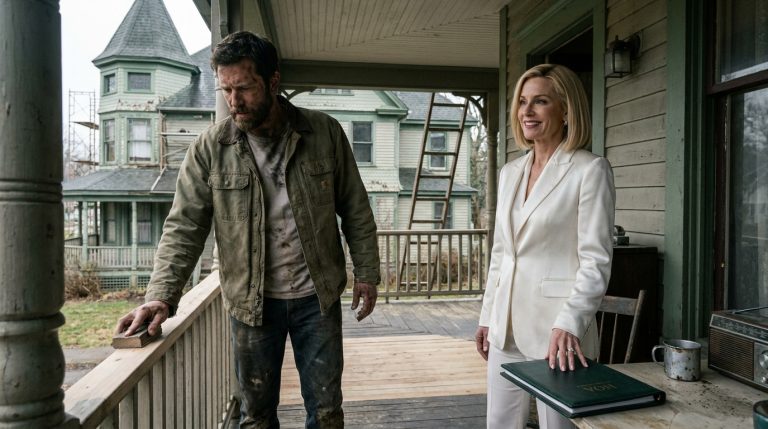
The sound of expensive tires crunching on gravel drifted across the property line. It wasn’t the rhythmic purr of a truck; it was the sharp, indignant snap of a German-engineered sedan. Delilah Thornfield. She didn’t walk; she marched, her power suit a sharp, charcoal-gray contradiction against the soft, mossy earth of the Montana morning. She carried a coffee cup like a ceremonial weapon.
She reached the perimeter of the dock and stopped, her face settling into the practiced, predatory smirk of someone who had never lost an argument in her life. She looked at the carnage, then back at me, her eyes devoid of anything resembling empathy.
“Finally,” she said, her voice cutting through the heavy air with the precision of a scalpel. “Maybe now you’ll shut down this disgusting fish operation. It’s a blight, Ezra. You’re dragging the property value of the entire valley down into the mud.”
I didn’t answer. I knelt at the water’s edge, scooping a sample of the milky, unnatural sheen into a sterilized mason jar. The trout weren’t just dead; they were scorched. Copper sulfate. The signature of an amateur playing god with a chemistry set they didn’t understand.
“You have no idea what you’ve just done,” I said. My voice was low, devoid of the panic she wanted to see. I felt the cold, hard logic of my training surfacing, suppressing the urge to throw her into the toxic water.
She laughed, a thin, brittle sound that grated against the silence of the woods. “I solved a neighborhood problem, soldier boy. If you don’t like the result, call your lawyer. Oh wait—you can’t afford one.”
She turned on her heel, satisfied, and began the trek back toward her idling BMW. She was looking at the surface, seeing only a ruined farm. She wasn’t looking at the ground beneath her expensive heels, or the limestone veins running deep below the valley floor. She had no idea that the springs feeding my lake were a closed loop, a geological artery that pumped directly into the private wells of every single house in Willowbrook Estates.
She was walking away, convinced she had won the day. She didn’t know that the clock had just started ticking, and that in six weeks, the bitter taste of her own crime would be waiting for her in the very water she used to brew her morning coffee. I stood up, tucked the jar into my vest, and watched her go. The war wasn’t over. It had just moved from the surface to the deep, silent geography of the earth.
I turned back to the lake. The next move was mine.
CHAPTER 2: THE DOCKSIDE STAREDOWN
The BMW didn’t pull away immediately. It sat idling, a low, predatory hum that vibrated through the wooden planks of the dock and into the soles of my boots. I kept my back to her, my hands steady as I sealed the mason jar. I knew the look on her face without having to turn around. It was the look of a person who had just finished a hostile takeover and was waiting for the victim to start crying.
I stood up, the jar of toxic water heavy and cool in my palm. The mist off the lake was damp, clinging to the wool of my jacket like a second, heavier skin. I turned, letting the morning light hit the side of my face, keeping the lines of my expression as flat and unreadable as the surface of the lake.
“You’re still here, Delilah,” I said, my voice matching the flat, grey quality of the water.
She leaned against the driver’s side door, her arms crossed, the expensive material of her blazer catching the light. She looked like she was conducting a board meeting on the edge of a disaster. “I’m waiting for you to realize the scale of your error, Ezra. You think this is just about some fish. It’s about the aesthetic integrity of Willowbrook. We don’t do ‘rustic’ anymore. We do high-end, we do curated, and we definitely do not do floating pens full of slime.”
“The copper sulfate,” I said, ignoring the speech. “You bought it. I’m guessing the receipt is tucked right in that manila folder you’re so fond of.”
Her eyes widened, just for a flicker of a second. It wasn’t fear; it was professional annoyance. The kind of look a supervisor gives an employee who has noticed an accounting discrepancy. “I don’t have to explain my gardening habits to you. I’m an officer of the HOA. I have the mandate of the entire board to ensure our local environment is free from commercialized, low-rent operations.”
She took a step toward the dock, her heels clicking sharply against the gravel. “You’re an interesting case study, Ezra. A soldier who can’t stop fighting wars that are already over. But let me give you some advice: the law isn’t a battlefield. It’s a bureaucracy. And in a bureaucracy, you’ve already lost. I have six complaints filed against you this week alone. By the time I’m done, you won’t even have the legal right to stand on this dock, let alone farm trout.”
I looked at the water. The silver bellies of the fish were beginning to sink, the chemical weight pulling them down into the dark, cold depths of the lake bed. The oily film was spreading, a kaleidoscope of iridescent blues and greens that looked beautiful if you didn’t know what it represented.
“You’re very thorough, Delilah,” I said, walking past her toward the cabin. I didn’t look at her, but I could feel her eyes tracking me, measuring my resolve. “I’ll give you that. But you’re operating on an assumption. You think this lake is a isolated system. You think what happens here stays here.”
“Everything stays here, Ezra,” she retorted, her voice dropping into that chilling, corporate calm she used to deliver bad news. “And next week, when the county inspector comes out, you’ll be gone.”
I reached the cabin door and paused, my hand on the rusted iron handle. The silence in the woods was absolute—no birds, no insects, just the distant, muffled sound of a chainsaw from somewhere deep in the valley. A perfect, manufactured quiet.
“Inspectors,” I repeated, a small, humorless smile touching my lips. “I look forward to it. I have a feeling they’re going to be very interested in exactly how you decided to clean up your ‘local environment’.”
I stepped inside and shut the door, the heavy wood muffling her indignant huff. I didn’t wait for her to drive off. I went straight to the desk, pulled out the topographical survey maps, and traced the line of the underground limestone channels with a trembling finger. Six weeks. The water would travel at a slow, relentless pace, carrying the chemical signature of her vanity through the dark, cold veins of the earth.
I looked at the wall where I pinned my notes. I needed to see what else she was hiding. The environmental terrorism was a loud, messy crime, but Delilah didn’t spend thirty years in corporate compliance just to burn things down. There was a financial layer to this, a secondary motivation that had nothing to do with fishing etiquette and everything to do with numbers. I needed to dig into the HOA’s recent records. If she was funding her ‘gardening’ with community assets, the crack in her armor wasn’t just a hairline fracture—it was an opening.
I reached for my laptop, the screen glowing bright against the dim, pine-scented air of the cabin. I began to search. I looked for patterns, for the rhythmic, obsessive documentation that a woman like Delilah couldn’t help but leave behind.
It was there. Hidden in a string of innocuous maintenance invoices for community landscaping and ‘water system integrity’ testing. The payments weren’t going to contractors; they were being routed to shell accounts. She wasn’t just terrorizing me; she was gutting the neighborhood.
I leaned back, the weight of the information settling into my chest. This wasn’t just a fight for my farm anymore. It was a countdown. And the more she pushed, the faster the chemical plume moved toward the unsuspecting houses of Willowbrook.
CHAPTER 3: THE INSPECTORS VANTAGE
The hum of the heavy-duty diesel engine cut through the morning mist, a deep, guttural sound that rattled the pine trees lining the driveway. It wasn’t the refined, pampered purr of a luxury sedan; it was the hardworking, mechanical growl of a county vehicle that had spent more time on logging roads than on asphalt. Jake Morrison climbed out, his movements efficient, his eyes already scanning the horizon with the practiced, cynical sweep of a man who’d seen every variety of human greed.
He stood by his truck for a moment, letting his gaze drift over the shimmering, iridescent mess of my lake. He didn’t look shocked. He looked tired.
“Mr. Blackwood,” he said, his voice gravel-rough as he walked up the gravel path. “Word on the street is that Clearwater Lake has become a bit of a biohazard overnight. I’m here to make it official.”
I didn’t offer him coffee. I didn’t bother with the pleasantries of a host. I just handed him the clipboard I’d prepared, my tactical mind already assessing him. I looked for the tell—the shift in demeanor, the flinch, the moment where he’d realize he was stepping into a war zone. I saw it when his eyes caught the small, faded Marine Corps tattoo peeking from beneath my sleeve. The skepticism in his expression didn’t vanish, but it shifted. It became the measured, silent respect of two people who knew the weight of a uniform.
“Army engineer,” he said, reading my expression rather than the paperwork. “Twenty years, right?”
“Five,” I corrected, my tone steady. “IED in the valley, shredded leg, end of career. Now I’m a fish farmer.”
Jake nodded once, a sharp, decisive movement, and his demeanor changed entirely. He clicked his pen. “Alright, soldier. Let’s see what we’ve got. I’ve seen this pattern before. Willowbrook Estates thinks they’re the center of the universe, and anything that isn’t a manicured lawn is a personal insult to their property values. Delilah Thornfield, right?”
“She’s currently holding a manila folder like it’s the Magna Carta,” I said.
Jake let out a sharp, cynical laugh that carried over the water. “She’s a compliance officer. She thinks if she can write enough citations, she can rewrite reality. She’s been trying to get someone out here to condemn this place for months. She thinks you’re a nuisance. What she doesn’t know is that I’ve got a harassment radar that pings every time she logs a complaint.”
We walked down to the water’s edge. Jake knelt, his movements precise as he pulled a testing kit from his vest. The smell of wood smoke from my cabin mixed with the ozone of his equipment, creating a sharp, industrial tension that felt like the air before a lightning strike. He dipped the sensor into the water, his brow furrowing as the numbers crawled across the small digital screen.
“Copper levels are through the roof,” he muttered, his voice dropping into that low, professional register that meant bad news. “This isn’t an algae bloom, Ezra. This is an execution. Someone dumped a massive amount of copper sulfate here, probably around two, three in the morning.”
“I know,” I said.
Jake looked up, his eyes meeting mine. “You realize what this means for you, right? It’s not just about the fish. This is environmental terrorism. It’s a crime against the land, and it’s a crime against you. But if you try to fight this as a property dispute, they’ll bury you. You need to leverage the geological reality. You know the aquifer maps as well as I do.”
“I’m working on it,” I said, feeling the weight of the information I’d found on my laptop. “I’m looking into the HOA’s financials. They’re running a shell game with the community funds.”
Jake stood up, his face grim. “If you go after their money, you better be ready for them to come after your life. They aren’t going to roll over just because you found a few bank statements. They’ll escalate. They’ll try to shut you down through the county, through the courts, and if that fails, they’ll try to shut you down physically.”
He gestured toward the valley below, where the expensive tumors of Willowbrook Estates sprouted among the pines. “They’re playing a game of chicken, Ezra. They think they’re the ones driving the freight train, but they don’t even know they’re sitting on the tracks.”
He handed me the clipboard back. It was marked with the official, authoritative stamp of the county environmental office. “This report clears you of any wrongdoing. It documents that your facility is a model of sustainable practice. But it also explicitly notes that the complaints against you appear to be motivated by personal animus. This is your shield. Use it. But remember, a shield doesn’t stop a bullet—it just gives you time to find a better position.”
He climbed back into his truck, the engine roaring to life with a sound of mechanical defiance. “Stay sharp, soldier. Delilah is going to have a very bad day when she sees this report on her desk.”
I watched him drive off, the dust cloud from his tires swirling in the morning light. I looked down at the report. It was the first move in a long, cold game of chess. I had the county’s backing, I had the evidence of her chemical sabotage, and I had the ticking clock of the aquifer contamination. The board was set. Now, I just had to make sure I didn’t lose the game in the opening.
CHAPTER 4: THE TACTICAL BLOCKADE
The morning air was unusually still, a heavy, oppressive silence that signaled a storm rolling in over the Absaroka Range. I was halfway through checking the backup generator, my hands slick with machine oil, when the rumble of engines broke the quiet. It wasn’t the single, arrogant engine of Delilah’s BMW. It was the synchronized, rhythmic thrum of multiple heavy vehicles climbing the steep incline of my access road.
I didn’t wait for them to reach the gate. I grabbed my binoculars and moved to the edge of the tree line, keeping my silhouette low. Three black SUVs, scrubbed clean of markings, rolled up the gravel with the deliberate, menacing pace of a raiding party. Six men emerged. They weren’t police, and they weren’t the local sheriff’s deputies. They were tactical contractors—the kind who looked like they’d spent their formative years in private military corporations and their weekends in gyms, trying to cultivate the same level of aggression.
At their head stood a man who looked like he’d been carved out of granite. He didn’t carry a clipboard; he carried a bullhorn.
“Mr. Blackwood,” his voice boomed, amplified and echoing off the canyon walls. It was a sound that could have woken the fish in the next county over. “Step away from the water. You are currently under investigation for environmental violations. Secure the perimeter.”
My stomach tightened, that familiar, metallic coil of adrenaline snapping taut. I felt the phantom ache in my leg, a reminder of the last time I’d been on the wrong side of an “investigation.” I didn’t move. I watched them. One of the contractors began dragging plastic caution tape across the main path to the dock. Another one started photographing my gear, his movements stiff and practiced, the camera shutter clicking like a mechanical insect in the quiet.
Then, the lead SUV’s rear door opened, and Delilah stepped out. She wasn’t wearing her power suit today. She wore a high-collared coat, dark glasses, and an expression of pure, unadulterated malicious joy. She clutched a manila folder—the same one from the dock, or perhaps a twin—like a weapon she was finally ready to unsheathe.
“Gentlemen,” she announced, her voice pitched for an audience that wasn’t there. “Document all fishing equipment. If he resists, document the obstruction. Mr. Blackwood needs a lesson in legal compliance.”
I walked out of the tree line then, my hands empty, my posture relaxed but alert. My mind was already parsing the legal battlefield. Blocking access to a county-maintained easement was a violation of state law, but more importantly, it was a direct interference with my business—my interstate commerce. If she was dumb enough to use private security to enforce an HOA covenant on public land, she was handing me the rope she’d use to hang herself.
“You’re trespassing, Delilah,” I said, my voice steady, carrying over the idling diesel engines.
She turned, a sharp, elegant movement. Her glasses slipped down her nose, revealing eyes that were cold and triumphant. “We are conducting a lawful investigation into environmental hazards, Ezra. You’re a liability. This is just the beginning of the restoration of this community’s standards.”
“You’re playing general with six guys who barely know the difference between a trespass notice and a warrant,” I retorted, keeping my focus on the lead contractor. He was looking at me now, his eyes narrowing. He was waiting for me to lose my temper, to give them a reason to justify their billable hours with a confrontation.
I didn’t give it to him. Instead, I pulled my phone from my pocket and dialed a number I’d kept on speed-dial since Jake Morrison’s visit.
“Jake,” I said, putting him on speakerphone, my voice clear and deliberate. “I’ve got six private contractors currently blocking a public access road and photographing my private property. Delilah Thornfield is here. She’s claiming an ‘investigation.’ I suggest you and the sheriff get out here before this turns into an international incident.”
The lead contractor froze. The man holding the camera lowered it. Delilah’s triumphant smile faltered, just for a fraction of a second, before hardening into a mask of pure, indignant rage.
“You have no authority to summon law enforcement,” she hissed, striding toward me. “This is an HOA matter. We are protecting the integrity of our water supply.”
“If you’re so concerned about the water,” I said, my voice low and dangerous, “maybe you should look at what’s actually in it.”
She didn’t hear the warning, or if she did, she chose to ignore it. The lead contractor looked at her, his expression questioning. He was a professional; he knew when a job was sliding from ‘intimidate’ to ‘illegal.’
“Ma’am?” he asked, his voice low.
“Carry on,” she commanded, though her fingers were white around the edges of the folder.
I turned back to the cabin, ignoring them. I knew what would happen next. They’d film, they’d post, they’d intimidate—and in thirty minutes, they’d be staring down the barrel of a sheriff’s badge that wouldn’t care about their tactical gear or their HOA covenants. Every minute they spent here was a minute of recorded evidence I could feed into the legal machine.
As I walked away, I saw something discarded on the porch—a thick, heavy manila folder that hadn’t been there when I’d gone out to the generator. I paused, my hand hovering over the handle, and glanced back at the SUVs. They were preoccupied with their blockade. I slipped the folder inside, the weight of it suggesting it was full of documents she didn’t want the public—or the sheriff—to see.
The storm was closing in, the sky turning a bruised, ominous purple. The air smelled of ozone, diesel, and the sharp, sudden scent of a war that had just escalated into the physical realm. They thought they were holding the line. They had no idea they were just digging their own trench.
CHAPTER 5: THE JOURNALISTIC AMBUSH
The rain had finally arrived, a relentless, icy drizzle that turned the gravel access road into a slurry of slick mud. I stood on the porch, watching the headlights of the retreating security vehicles cut through the gloom. They’d folded like paper houses the moment the sheriff’s cruiser had pulled up, its lights strobing blue and white against the pines. Delilah had looked less like a corporate dictator and more like a cornered animal, her face contorted in a mask of impotent fury as her ‘tactical’ squad slunk away into the night.
But the real threat wasn’t the guards. It was the woman standing near the gate, holding a Nikon with the practiced, predatory grace of a war correspondent. Emma Vasquez. She hadn’t been invited, and she certainly wasn’t there for the scenery.
She waited until the dust—what little there was left in the rain—had settled before she walked up the drive. Her photographer trailed behind, his camera bag slung over a shoulder that looked like it had carried gear through every major conflict zone in the last decade.
“Mr. Blackwood,” she said, skipping the pleasantries. She didn’t look at the cabin; she looked at the dock, at the caution tape fluttering in the wind, at the entire tableau of a man being systematically dismantled by his neighbors. “I’ve been following the HOA board minutes for three months. I know about the ’emergency’ landscaping projects, the mysterious invoices for ‘water system integrity,’ and I know about the three denied applications for the Bitterroot Angling Club. You’re not just a fish farmer to Delilah, are you?”
“I’m just a guy trying to keep his land,” I said, leaning against the porch railing. My leg was screaming—the cold and the damp were a constant, unwanted reminder of the IED.
“Don’t give me the ‘local hero’ line,” Emma countered, her smile razor-thin. “I’ve seen the police reports. I know about the harassment, the bogus health inspections, and the private security theater. But what I don’t know—what nobody seems to be talking about—is why a woman with thirty years of corporate compliance experience is spending her days fighting a war over a trout pond.”
She reached into her bag and pulled out a notepad, flipping through the pages with a rhythmic, impatient snap. “I dug into the HOA budget. It’s a mess. Massive, unexplained outflows to shell corporations registered in Delaware. If this were a real corporate audit, Delilah would have been fired and sued within forty-eight hours. Why is she doing this, Ezra? What is she trying to cover up?”
I hesitated. I had the folder I’d swiped from the porch, the documents within detailing exactly how she’d been siphoning the community’s money into her own pockets. It was the Layer 1 decoy—the secret she thought she was protecting, the greed that she believed was her ultimate sin. I looked at Emma. She was a weapon, and if I aimed her correctly, I could destroy Delilah’s credibility in a single morning edition.
“Come inside,” I said, stepping aside.
The cabin was warm, the air thick with the smell of old paper and machine oil. I spread the documents across the table. Emma’s photographer moved in, the camera shutter clicking like a series of rapid-fire shots. Emma’s eyes widened as she scanned the pages.
“Embezzlement,” she whispered, the word sharp and definitive. “She’s not just sabotaging you to save her view. She’s using the environmental complaints as a cover for massive, systematic theft of HOA funds. She’s inflating cleanup costs for the lake to siphon money into personal accounts.”
“She’s a parasite,” I said. “And she’s going to keep doing it as long as she thinks she’s in control.”
“She’s more than a parasite,” Emma said, her gaze fixed on the figures. “She’s a sociopath with a line of credit. But this—this is the kill shot.”
She looked up at me, her expression unreadable. “What about the lake, Ezra? What about the copper sulfate?”
I paused. I couldn’t tell her about the aquifer. Not yet. If the news got out that the entire valley’s water supply was at risk, there would be panic, lawsuits, and an EPA intervention that would shut down my farm long before Delilah ever saw the inside of a courtroom. I had to let the decoy secret play out. I had to let the public focus on the embezzlement, the greed, the ‘suburban terrorist’ narrative. I had to keep the deeper, darker reality—the geological time bomb beneath our feet—strictly under wraps.
“The chemicals are just the tool she used to intimidate me,” I said, lying with the practiced ease of a man who’d been trained to maintain cover. “She wanted me off the property so she could continue to bill the HOA for ‘restoration’ projects that would never happen.”
Emma stared at me for a long moment, sensing the gap in the logic but deciding to let it slide. She was a reporter; she knew when she had a story, even if it wasn’t the whole story. “This runs tomorrow. Front page. I’ll make sure the entire county knows exactly where their HOA dues have been going.”
As they left, the camera flashes illuminated the rain-slicked yard, capturing the image of a man standing alone on a porch, the center of a storm he had helped engineer. I watched them go, feeling the weight of the folder on the table. It was the perfect decoy. It was exactly what Delilah feared, exactly what the public would understand, and exactly what would draw the attention away from the real, slow-motion catastrophe moving through the limestone caves deep beneath the valley floor.
I was winning the battle. But as the rain drummed against the roof, I felt a tremor—not from the storm, but from the realization that once I pulled this lever, there was no going back. I wasn’t just exposing a thief. I was triggering a collapse that would change the entire valley.
CHAPTER 6: THE SCORCHED EARTH
The alarms didn’t blare; they shrieked. A high-pitched, electronic cadence that cut through the dark of the cabin at 4:13 AM. I rolled out of the cot, my prosthetic striking the floorboards with a heavy, uncoordinated thud. I grabbed the tablet from the desk. The topographical map of Clearwater Lake was a sea of blinking red error icons. Sensor Node 4: Offline. Sensor Node 7: Offline. Main Flow Meter: Signal Lost.
It wasn’t a glitch. It was an amputation.
I shoved my arms into my canvas jacket, grabbed the heavy Maglite, and pushed out the door into the freezing pre-dawn air. The storm from the previous day had passed, leaving behind a brittle, bone-chilling cold, but the silence of the woods was gone. In its place was a low, vibrating mechanical roar that shook the pine needles loose from the branches.
I crested the ridge above the dock and stopped, the breath freezing in my lungs.
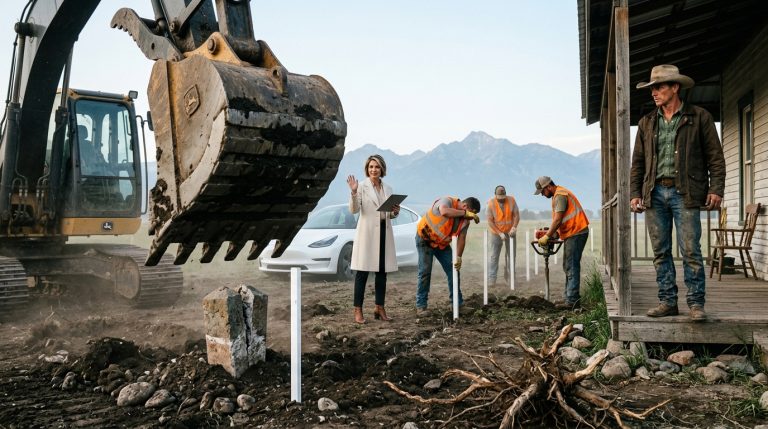
They had brought in heavy machinery. Two massive, diesel-powered industrial displacement pumps sat on the shoreline, their thick, ribbed hoses slithering into the black water like anacondas. Portable floodlights carved harsh, blinding angles through the darkness, casting long, jagged shadows across the mud. A crew of four men in high-visibility vests were wrestling a secondary intake pipe toward the deepest part of the lake, right over the main limestone fissures.
They weren’t just destroying the crime scene. They were draining it.
I scrambled down the gravel embankment, the loose stones sliding out from under my boots. “Hey!” I roared, my voice barely carrying over the deafening mechanical whine of the pumps. “Cut the engines! Shut them down!”
A man built like a oil drum stepped into my path. He didn’t look like the tactical cosplayers Delilah had hired before. He wore a hard hat, mud-caked boots, and the indifferent expression of a man earning triple overtime.
“Back off, buddy,” he shouted, pressing a thick hand against my chest. The friction of his heavy canvas glove against my jacket felt like sandpaper. “We’ve got a court order. Emergency environmental remediation. Property is under temporary receivership due to hazardous contamination.”
He shoved a crumpled piece of paper at me. The county seal at the top was real. A judge’s signature, obtained in the dead of night, granting the HOA emergency powers to “mitigate a public health hazard.” Emma’s article must have hit the digital wire at midnight. The embezzlement was public, and Delilah, stripped of her corporate mask, had gone completely feral.
I looked past the foreman. Standing near the command console of the primary pump was Delilah. She wasn’t wearing a power suit. She was wrapped in a heavy trench coat, her hair pulled back harshly, her face illuminated by the harsh white glare of the halogens. She looked hollowed out, desperate, and infinitely dangerous. She saw me, but she didn’t smile. She just gave a sharp nod to the operator.
The engine RPM spiked. The ground beneath my feet vibrated so hard it rattled my teeth.
“You’re not cleaning it!” I screamed at the foreman, trying to push past his mass. “You’re flushing it! You’re driving the copper sediment straight into the bedrock!”
“Take it up with the judge!” he barked, shoving me hard.
My prosthetic slipped in the freezing mud. I went down hard on one knee, the jagged edge of a buried rock tearing through the fabric of my jeans and slicing into my real leg. The pain flared, sharp and blinding, but the adrenaline smothered it. I lunged forward, ignoring the foreman, and grabbed the thick, rubberized casing of the primary intake hose.
It was vibrating with immense, terrifying pressure. I pulled, throwing my entire upper body weight into trying to drag the suction head out of the limestone vent.
Two of the crewmen were on me in a second. Rough hands grabbed my shoulders, pulling me backward. I threw an elbow, feeling the satisfying crunch of cartilage as it connected with someone’s nose, but the foreman wrapped a thick arm around my neck, dragging me away from the shoreline. The smell of diesel exhaust and churned, rotting mud filled my nose. I fought, kicking out with the heavy steel toe of my prosthetic, but there were too many of them. They threw me onto the cold, hard gravel of the access road.
“Keep him there!” Delilah’s voice cut through the noise, shrill and ragged. She stepped out of the glare of the lights, standing over me. “You thought you could destroy me with a newspaper article, Ezra? You thought some missing funds would stop me? You’re a squatter on contaminated land. By sunrise, this toxic pit will be dry, the hazard will be neutralized, and your little farm will be a crater.”
I pushed myself up onto my elbows, spitting a mouthful of gritty mud. I looked past her, toward the edge of the lake.
The water level was dropping fast. Too fast. The shoreline was already receding, exposing the dead, silver bodies of the trout draped over the rocks. But that wasn’t what paralyzed me.
Lying in the mud, severed clean through by the heavy treads of the pumps, was the thick black casing of my primary fiber-optic flow sensor. I pulled my cracked tablet from my pocket. The screen flickered, struggling to render the last burst of data from the severed line.
Subterranean Pressure Gradient: +400%. Filter Bypass.
The pumps weren’t just displacing the water; they were hyper-pressurizing the underground channels. The slow, six-week geological drift I had calculated was gone. The industrial suction was acting like a massive syringe, violently injecting the high-concentration copper sulfate directly into the deepest veins of the aquifer. The natural limestone filtration was being bypassed entirely by the sheer kinetic force of the water.
Delilah was looking down at me, breathing heavily, convinced she had won the physical war. She thought she was burying the evidence of her crime deep in the earth where no inspector could ever sample it.
She had no idea she had just accelerated the timeline. The poison wasn’t weeks away from Willowbrook’s wells anymore. It was moving at the speed of a pressurized current. I looked up at her, the freezing mud seeping into my clothes, my chest heaving as the monstrous reality set in.
The town’s water supply wasn’t going to be toxic next month. It was going to be lethal by noon.
CHAPTER 7: THE AQUIFER CLOCK
The roar of the pumps was a physical weight, a rhythmic thumping that vibrated through my chest cavity and into the cold, wet gravel where I lay. Delilah towered over me, her trench coat fluttering in the exhaust plume of the generator. She looked down, not with triumph, but with the terrifying, glassy-eyed focus of a zealot.
“You think you’re so clever, Ezra,” she shouted over the mechanical cacophony. “You think you can play these games—journalists, county reports, public humiliation—and still hold onto this land? This lake is a nuisance. It’s an environmental error. And I am the one who is going to rectify it.”
She gestured toward the pumps. The water in the lake was dropping, revealing the jagged, slick bones of the shoreline. The stench of the dead trout was overwhelming, a sweet, cloying decay that clung to the back of my throat. I pushed myself up, my hands shaking. I didn’t look at her; I looked at the hoses. The primary intake was wedged deep into the limestone vent, the pump’s pressure creating a literal whirlpool that was dragging the sediment—the pure, concentrated copper sulfate—directly into the throat of the earth.
“You’re killing them, Delilah,” I rasped. My voice sounded thin against the industrial howl. “You’re not just killing my farm. You’re poisoning every well in Willowbrook.”
She laughed, a harsh, jagged sound. “They’ll blame you, Ezra. When the well water turns metallic, when the children start complaining of stomach cramps, they won’t look at me. They’ll look at the ‘disgraced veteran’ who ran a commercial fishing operation with absolutely no oversight. I’ve already drafted the letters to the local papers. I’ve already prepared the documentation of your ‘gross negligence.'”
She stepped closer, her heels sinking into the mud. “You were always the expendable piece, soldier. I’m just moving you off the board.”
I didn’t answer. My eyes were locked on the master control junction. It was a weather-proofed, metal cabinet bolted to the side of the trailer. If I could bridge the relay, if I could force an overload on the primary power line, I could burn out the pump motors. It wouldn’t stop the contamination already in the pipes, but it would stop the active injection. It would stop the pump from driving more poison into the limestone.
I lunged.
It wasn’t a graceful movement. It was a desperate, jagged scramble. I threw myself past Delilah, feeling the rough fabric of her coat graze my shoulder. She screamed—a sharp, sudden sound—but I was already at the junction. My fingers, numb from the cold, clawed at the locking mechanism.
“Stop him!” she shrieked.
The foreman was on me, his heavy boots kicking up sprays of mud and gravel. I felt a fist connect with the side of my head, a flash of white light erupting behind my eyes, but I didn’t let go. I wrenched the metal cover off the junction. The interior was a web of wires, vibrating with the massive electrical draw of the pumps. I took my flashlight and smashed it into the relay board.
Sparks.
A shower of brilliant, white-hot embers erupted into the wet air. The smell of burning insulation—sharp, chemical, and acrid—filled the space. A sudden, violent shudder ran through the pumps, a dying mechanical groan that tore through the machinery.
Silence.
The abrupt lack of noise was deafening. The pumps groaned, shrieked in protest, and then fell dead, the sudden cessation of the massive suction creating a cavitation shockwave that shuddered through the ground. The floodlights flickered and died, plunging the shoreline into the grey, watery darkness of the predawn.
I hit the mud hard as the foreman tackled me. His weight was suffocating, his forearm digging into my windpipe. I fought, clawing at the gravel, trying to find purchase, but my vision was swimming, the edges of the world fraying into grey static.
“You ruined it!” Delilah’s voice was right above me, a low, hysterical vibration in the dark. “You stupid, broken man, you ruined everything!”
She stood over me, her boots mere inches from my head. I could hear her breathing—ragged, shallow, the sound of a woman who had finally run out of runway. I didn’t care about the foreman’s grip, or the burning ache in my leg, or the fact that I was likely facing a dozen felony charges for the destruction of her ‘remediation’ equipment.
I looked up, my vision clearing just enough to see her face. In the dim light of the dying stars, she looked terrified.
“Check your phone, Delilah,” I wheezed, the air struggling into my lungs. “Call your friends in Willowbrook. See if their morning coffee tastes like anything yet.”
She hesitated, her hand moving toward her coat pocket. The silence of the lake was absolute, broken only by the gentle, lapping sound of the water settling back into the limestone vent. She didn’t call. She just stood there, the reality of what she’d unleashed finally, slowly, beginning to sink in.
The battle was over. The damage was done. The clock had run out.
CHAPTER 8: THE PRICE OF THE WELL
The courtroom air tasted of floor wax and stale anxiety. It was a sterile, claustrophobic environment that stood in stark contrast to the vast, living silence of the Montana wilderness. I sat at the defendant’s table, my leg throbbing in the pressurized atmosphere, watching the final act of the Willowbrook drama unfold.
Delilah Thornfield didn’t look like a suburban dictator anymore. She looked like a ghost in a beige jumpsuit, her hair limp, her posture slumped as if she were carrying the weight of the entire valley on her shoulders. The judge hadn’t spent much time on the sentencing; the evidence—the financial ledgers I’d swiped, the recorded confessions, the forensic proof of the chemical injection—was a mountain of steel and glass that had crushed her defense before it even began.
The gavel sounded—a sharp, wooden crack that echoed through the room like a gunshot. Seven years federal, with restitution that ensured she would never own anything more expensive than a plastic chair for the rest of her life.
I walked out of the courthouse and into the blinding Montana sun. The valley looked the same—the pines, the peaks, the vast, open sky—but everything had shifted. The community center, the center of her manufactured kingdom, was now a hub for the federal cleanup operation. The groundwater wasn’t just a resource anymore; it was a patient in intensive care.
Emma Vasquez was waiting by the steps, her camera already out, but she didn’t click the shutter. She just watched me with a look of tempered exhaustion.
“Is it enough?” she asked.
I thought about the lake, now drained and hollow, the sediment being scraped away by hazmat teams in white suits. I thought about the families who had been drinking the water for those two terrifying weeks before the symptoms hit, the quiet terror of the pediatric wards in Missoula, and the way the entire social fabric of Willowbrook had torn when they realized their taps were delivering poison.
“Justice isn’t a cure,” I said, my voice rasping. “It’s just an acknowledgement of the wound.”
I walked down to my truck, my prosthetic thumping a steady, artificial beat against the concrete. I drove back to the ranch, taking the long way around, past the entrance to Willowbrook. The gates were wide open, the private security booths stripped bare. The neighborhood was quiet, the manicured lawns beginning to brown under the neglect of a community that was too busy with lawyers and doctors to care about curb appeal.
I reached the lake. The cleanup crews had finished for the day. The excavation of the limestone vents had left the shoreline scarred and broken, a Kintsugi of mud and industrial steel. I sat on the dock, the wood splintered and warped from the heavy machinery, and watched the sun dip behind the mountains.
The silence came back, but it was different now. It wasn’t the peace of a mountain morning; it was the quiet of a place that had survived a sickness. I poured a cup of coffee from my thermos—just clean, spring-fed water from the reserve tank—and took a sip. It didn’t taste like the bitter, metallic tang of the well water. It tasted like nothing at all. Just cold, clear life.
The decoy secret—the embezzlement, the greed, the petty, suburban theft—was all that the public would remember. They would remember the headlines, the bankruptcy, and the HOA president who got exactly what she deserved. They would never fully understand the geological malice of the aquifer poisoning, the way the earth itself had been weaponized. They would never understand that the cost of this victory wasn’t just my livelihood or her reputation.
It was the loss of the ignorance that had made this valley feel like a sanctuary.
I was the victor, on paper. The case was closed, the records sealed, the restitution ordered. But as I watched the first stars bleed into the darkening sky, I knew the truth. We were all survivors of a landscape that had been fundamentally altered. I had held my ground, I had defended my home, and I had ensured that the poison was stopped. But the scars in the limestone were permanent. The damage to the water table was a variable that would haunt the valley long after the legal files were archived and the news cycles turned to new, different disasters.
I stood up, the movement fluid and practiced. I had work to do. There were new aeration systems to install, new permits to negotiate, and a foundation to build. I wasn’t just a fish farmer anymore. I was a steward of a broken, beautiful, and dangerous piece of land.
I looked out over the darkened lake, the water beginning to refill from the deep, secret veins of the springs. The fight was over, but the endurance had only just begun. I turned my back on the water and started the walk to the cabin, the steady, rhythmic pulse of my stride marking the passage of a time that would never be the same again.