The Paper Fortress: A Retired Supervisor Dismantles a Suburban Kingdom One Document at a Time
CHAPTER 1: THE WEIGHT OF THE WATER
The smell of chlorine hung heavy in the humid Texas air, thick enough to taste. It was a familiar scent, one that usually signaled relaxation, but tonight it felt like a trap. I sat in the center of the Jacuzzi, the jets churning the water into a frantic froth against my shoulders. My beer was sweating, leaving rings of condensation on my palm, and the silence of the suburb had been shattered by the insistent, rhythmic strobe of light hitting my brick facade.
Patrice Valand was at the property line, her feet planted as if she were anchoring a ship. She was wearing that damn laminated badge again—eleven years of HOA board service dangling from her neck like a saint’s relic. Even in the dim light of the streetlamp, I could see the triumph on her face. She thought she’d finally done it. She thought a squad car was the ultimate final word.
“He’s a menace!” she was shouting at the officer, her voice shrill, cutting through the hum of the pumps. “Unauthorized structural modification! A hazard to the entire community!”
Officer Delgado, a young man who looked like he’d rather be anywhere else, walked up to the patio. He wasn’t looking at the Jacuzzi with alarm; he was looking at it with the weary confusion of someone who had better things to do than babysit property disputes.
“Sir,” he called out, stopping just short of the wet patio stone. “The complainant says you’re causing a disturbance and that the structure isn’t permitted.”
I stood up, the water sluicing off my skin. I didn’t rush. I didn’t stammer. I walked over to the patio table where my manila folder sat, waterproof and waiting. I’d spent twenty years on pipeline job sites in Tulsa, where the air was always thick with diesel and hot iron, and if you didn’t have the paperwork, you didn’t have a job. You didn’t have a career. You didn’t have a leg to stand on.
I handed the folder to Delgado. He opened it, his flashlight beam cutting through the manila. He saw the city permit, the signed inspection certificate, and the contractor’s stamped receipts, all dated and cross-referenced.
“It’s all here, Officer,” I said, my voice steady, stripped of any agitation. “Permitted, inspected, and fully compliant.”
Delgado flipped through the pages, his brow furrowing as he realized the level of preparation staring back at him. He looked over at Patrice, who was still waiting for him to handcuff me or haul me away. She looked like she’d just been told the earth was flat.
“Everything looks in order, sir,” Delgado said, closing the folder and handing it back. He glanced at Patrice, his expression hardening. “Ma’am, unless you have evidence of a criminal violation, I’d suggest you go home.”
She didn’t move. She couldn’t. For the first time in over a decade, her authority had met something it couldn’t intimidate: a hard, cold, undeniable fact. As the officer walked back to his cruiser, I watched her through the steam. She thought this was the end of the game, but as the patrol car pulled away, leaving us in the quiet dark, I knew better. She hadn’t ended the game. She’d just given me the first real piece of leverage I needed to take her entire kingdom apart.
CHAPTER 2: THE ANATOMY OF THE BYLAWS
The silence that followed the patrol car’s departure wasn’t peaceful. It was heavy, the kind of stillness that settles over a job site after a structural failure—the moment when you know the problem isn’t the mess you’re looking at, but the foundation you can’t see. I walked back into my house, the screen door clicking shut behind me with a dry, metallic snap. I didn’t go to the bedroom. I didn’t pour another beer. I went straight to the kitchen table.
My binder was spread out, a sprawling landscape of white paper, yellow highlights, and precise, black-inked marginalia. I opened the CC&Rs—the Covenants, Conditions, and Restrictions. They were forty-one pages of dense, suffocating legalese, the kind of document designed to discourage anyone who didn’t have a background in reading blueprints.
I pulled out the denial letter Patrice had sent two weeks ago. It was a one-page form, the word “DENIED” stamped in aggressive, red ink across the bottom. I looked for the citation. I looked for the rule. There was nothing. Just that empty, echoing lack of justification.
I turned back to the binder. Section Nine: Architectural Review. My highlighter traced the text like a plumb line. “The board’s architectural review decisions… must be based on specific documented criteria… documented in writing.”
I pushed the paper away and looked out the window. The neighborhood was dark, the manicured lawns of Cedarbrook Estates looking like a stage set under the streetlights. Every house was exactly the right color, every mailbox perfectly centered. It was a kingdom built on the assumption that no one would ever look behind the curtain. Patrice had been running this board for eleven years. She had survived through the simple, effective tactic of betting that her neighbors were too busy, too tired, or too intimidated to read the forty-one pages of the rules they lived under.
She had bet that I was just another transient homeowner who would pack his bags the moment the fines started hitting the mailbox. She didn’t know about Tulsa. She didn’t know about twenty years of documenting pipeline stress, of checking bolt tensions, of knowing that if a weld wasn’t logged, it might as well have never happened.
The phone rang. I didn’t jump. I watched the caller ID for a moment before picking up. It was Weston Farr. I’d called him that morning, leaving a brief, precise message.
“You’re still up, Desmond?” His voice was dry, the sound of a man who spent his life sifting through the debris of other people’s power plays.
“I’m reading Section Nine, Weston.”
“And?”
“And they skipped the step where they actually cite a rule. They denied the application based on ‘community aesthetics,’ but they didn’t define what that meant or how it compared to the neighborhood standard. They just stamped it.”
There was a pause on the line, just long enough for me to hear him exhale. “If that’s true, it’s a procedural breach. They’re not just ignoring the rules—they’re acting like they’re above the documentation itself. That’s a dangerous place for a board to be, but it’s a good place for us to start.”
“I’m going to draft a formal appeal,” I said, leaning back in the chair. The metal frame creaked—a sound of friction, of moving parts resisting change. “I’m going to cite every word, every requirement, and I’m going to make them provide the criteria they used.”
“Be careful,” Weston cautioned. “If you push them on the procedure, they might stop trying to be ‘official’ and start trying to be personal. If she’s been running this like a kingdom for eleven years, she isn’t going to like being reminded that she’s bound by the same documents as everyone else.”
“Let her be unhappy,” I replied, my eyes fixed on the blank, white wall across from me. “I’m not looking for an invitation to the next board picnic. I’m looking for the record.”
I hung up and reached for the yellow legal pad. I didn’t write with emotion. I wrote with the same detached, clinical focus I’d used to write safety reports for pipeline failures. I started with the header. Date. Time. Reference to Section Nine. Paragraph one was a statement of fact: the application was submitted, the fees were paid, the timeline was followed. Paragraph two was the challenge: the board’s denial lacked the required criteria, rendering the decision procedurally invalid.
My hand moved across the paper, the pen scratching a steady, rhythmic pattern. As I wrote, I realized the minor mystery wasn’t just the denial itself—it was the note at the bottom of the form letter. A small, handwritten scribble: ‘See Gerald.’
I stared at it. I didn’t know who Gerald was, not then. But I had written his name down in the margin of my own records. It was a small, discordant note in a symphony of bureaucratic perfection. I looked at the binder, the tab labeled ‘Communication,’ and felt a cold, sharp satisfaction. The folder was growing. The case was forming. And for the first time since I’d moved into this suburb, the house didn’t feel like a mistake. It felt like a job site. And I was back in control of the weld.
CHAPTER 3: THE PAINT CHIP MANIFESTO
The response to my formal appeal didn’t arrive via certified mail. It arrived on a Tuesday afternoon, delivered by a man named Gerald who looked like he’d been dragged into this fight against his better judgment. He dropped a thick envelope onto my porch, didn’t look at the doorbell camera, and walked away with the quick, shuffling gait of a man trying to disappear.
I didn’t open the letter on the porch. I took it to the kitchen, laid it on the hardwood, and opened it with a letter opener. Inside wasn’t a response to my appeal. There was no mention of Section Nine. No discussion of the board’s architectural criteria. Instead, there was a Violation Notice for my mailbox.
“Post placement: 2.5 inches from standard curb alignment,” the letter read. “Violation of Bylaw 7A. Fine: $150.”
I stared at the paper. Then I looked out the window. My mailbox post was set in a brick pillar that had been there since the house was built, long before I took possession. It hadn’t moved. The ground hadn’t shifted. But Patrice had decided it was a problem.
Forty-eight hours later, another envelope appeared. This one concerned the color of my front door. It was a deep walnut brown, a shade I’d painstakingly matched to the HOA-approved palette. The letter claimed it was “inconsistent with the approved chestnut spectrum” and demanded a repainting within seven days to avoid further escalating fines.
The irony was as sharp as a rusted blade. I stood in my driveway, the afternoon sun beating down on the concrete, and looked at the door. I had the paint chip, a tiny square of color I’d kept in a small plastic bag in my desk. I pulled it out, held it against the wood, and verified what I already knew. It was a perfect match.
I didn’t get angry. Anger, in my experience, is just a way to burn energy you need for maintenance. I got out the camera. I photographed the mailbox against a tape measure, the numbers clear and undeniable. I photographed the door from six different angles, lighting and color balance checked, the paint chip included in the frame for scale.
Then I picked up the phone and called Weston Farr.
“She’s escalating,” I said, my voice as level as a carpenter’s bubble. “She’s not answering the appeal because she can’t. She’s trying to overwhelm the record with minor, procedural complaints.”
“It’s a classic attrition tactic,” Weston’s voice crackled on the line. “She wants to make your binder so heavy with petty arguments that you stop focusing on the Jacuzzi appeal. She’s hoping you’ll pay the fines just to stop the noise. If you pay them, you lose your standing. It’s an admission of legitimacy.”
“I’m not paying,” I said, looking over at the neighbor’s house. A curtain moved in an upstairs window. A flash of motion, someone watching.
“Good. Don’t pay. Don’t remediate. Contest every single notice in writing. We’re going to build this file until it’s a direct indictment of her board management. And Desmond? Keep that binder secure. If she thinks you’re going to blink, you need to show her you’ve got a record of every single minute of this.”
I hung up and went back to the kitchen. My folder had become a binder, and the binder was becoming a heavy, organized fortress. I labeled a new tab: “Harassment.” I filed the photos of the mailbox, the timestamps, the paint chip, and my rebuttal letters. Each page was a defensive structure, a wall built against a siege that was supposed to make me leave, but was only making me more permanent.
I walked outside later that evening as the light was fading, the sky a bruised purple over the horizon. Walt Greer was walking his beagle, the leash taut in his hand. He stopped near my driveway, his gaze lingering on the brick pillar of my mailbox.
“She do this to everyone new,” he said, not looking at me, his voice a low, gravelly rasp. “First the big stuff. Then the small stuff. Then she just waits for the moving trucks.”
“I’m not moving,” I said.
Walt finally turned his head, his eyes hooded, tired, and sharp. He didn’t smile. He didn’t offer a platitude. He just nodded, once, a short, clipped motion. “She hasn’t met someone who reads the records yet. Good luck with that.”
He kept walking, the beagle trotting ahead into the gathering dark. I stood there for a long time, listening to the quiet of the street. The neighborhood smelled of wet asphalt and cut grass, the air cooling. Patrice thought she was clearing the board. She thought she was keeping her kingdom clean. But she didn’t realize that in trying to scrub away the new resident, she was creating the exact evidence I needed to pull the whole house of cards down. The folder was thick, but it was just getting started.
CHAPTER 4: THE FRACTURED LEDGER
The Cedarbrook Estates community center smelled of stale coffee and the peculiar, damp decay of carpet that had been walked on by too many people for too many years. Fluorescent lights buzzed overhead, a sharp, uneven sound that made the back of my neck prickle. I sat at the edge of the conference table, my binder open, feeling the weight of the last three weeks settling into my shoulders like a pack.
Patrice was at the head of the table, her lanyard pulled taut, her clipboard acting as a shield between her and the room. To her left, Gerald sat, his posture stiff, eyes rarely drifting from the notepad in front of him. They were moving through the agenda with the mechanical, practiced efficiency of a machine that had been running so long it didn’t know how to stop.
When it came time for the public commentary, I stood. I didn’t rush. I pulled the stack of financial disclosures I’d received earlier that week—documents obtained through a formal request under the Texas Property Code—and spread them across the table.
“I’d like to speak on the maintenance contract,” I said, my voice steady. “Specifically, the vendor payments for T&V Groundworks over the last three years.”
Patrice didn’t flinch, but her grip on the pen tightened. “That contract is a matter for the board, Mr. Holt. It is not currently on the agenda for community discussion.”
“It’s a matter of community dues, Patrice. Which means it’s a matter for every person in this room.” I tapped a finger on the ledger page I’d highlighted. “I’ve been reviewing the invoices. Over the last thirty-six months, this HOA has paid two hundred and eighteen thousand dollars for landscaping services. Based on three comparable community contracts in this county, that’s double the market rate.”
The room went still. You could hear the hum of the fluorescent lights, the muffled sound of a car passing on the street outside. I looked directly at Gerald. He wouldn’t look up.
“And here’s the interesting part,” I continued, my voice carrying into the corners of the room. “The registered agent for T&V Groundworks is Gerald Vawland. I haven’t been able to find a single meeting minute, a single board disclosure, or a single mention in the bylaws where this conflict of interest was acknowledged, let alone voted on.”
Patrice stood up then, the chair sliding back with a harsh, grating screech against the tile. “That is an outrageous and defamatory accusation. This board has acted in the best interest of Cedarbrook Estates at every juncture.”
“Then show me the vote,” I said, opening my binder to the tab where I kept the meeting minutes. “I’ve read the records you provided. I’ve cross-referenced them with the bylaws. If this was a legitimate contract, there should be a record of disclosure. If there isn’t, then we’re not looking at a service agreement. We’re looking at a breach of fiduciary duty.”
She looked at me then, really looked at me, and for the first time, I saw the cracks. It wasn’t the panic of someone caught in a lie; it was the cold, calculated fury of someone who realized their environment had finally shifted. She was a gatekeeper, and the gate had been kicked off its hinges.
“Meeting adjourned,” she snapped, not waiting for a motion. “We will reconvene at a later date.”
She gathered her materials with sharp, jerky movements, refusing to meet the eyes of the other homeowners who were now murmuring, leaning toward one another, the silence replaced by the low, dangerous rumble of questions. I didn’t pack my binder away immediately. I watched them leave. Patrice walked out with her chin up, but her gait was different—less like a marshal and more like a woman who knew she was being followed.
As the room cleared, Sonia Callaway walked over, her expression tight. She had her own folder, a thick, manila-colored witness to the irregularities she’d been tracking for eighteen months. She laid a sheet of paper on the table. It was a copy of the official board minutes for a meeting last year—the one where the landscaping contract was renewed.
“Look at the sign-in sheet, Desmond,” she whispered.
I looked. It was a standard list of board members present. But the signatures at the bottom were hurried, messy. And there, tucked into the corner of the ledger, was a note in faint, barely legible pencil: Pending verification of vendor conflict.
It was the smoking gun I hadn’t expected to find. They’d known. They’d discussed it, or someone had, and then they’d buried it.
“They didn’t just overbill,” Sonia said, her voice barely audible over the sound of the lights. “They built a system where they didn’t have to account for it because they assumed we wouldn’t have the patience to read the fine print.”
I looked at the note again, the graphite smudged under my thumb. The decoy secret—the overbilling—was starting to feel like the tip of an iceberg. I had the numbers, I had the contract, and I had a witness in Sonia. But looking at the empty conference room, I realized the real weight wasn’t in the money. It was in the realization that Patrice hadn’t been protecting the community. She’d been feeding on it. And she would do anything to keep the ledger closed.
CHAPTER 5: THE SMEAR CAMPAIGN
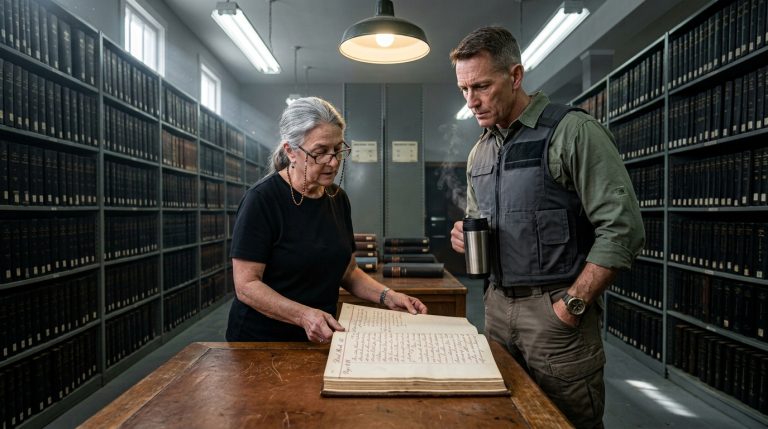
The rain was lashing against the office window, turning the view of the city into a blurred, gray mess of light and motion. Inside, the office of Weston Farr was quiet, smelling of coffee and the sharp, chemical tang of high-end toner. We had the package. It was a monolith of paper—organized, tabbed, highlighted, and indexed. It was the “Clean Package,” the culmination of four months of record-keeping, site documentation, and forensic accounting.
Weston sat behind his desk, his wire-rimmed glasses catching the harsh glare of his computer screen. He flipped through the stack of invoices, the only sound the rhythmic thwack of paper against paper.
“It’s good, Desmond,” he said, not looking up. “The paper trail for T&V Groundworks is airtight. We’ve got the invoices, the bank statements, and Sonia’s meeting notes. We have enough to open an investigation with the Attorney General, and the county civil court will have to look at the fiduciary breach. This is how you win an HOA dispute. You don’t scream; you document.”
I didn’t smile. I felt a knot of tension in my gut that had nothing to do with the work and everything to do with the reaction. I knew Patrice. I knew the way her mind worked—she wasn’t the type to go quietly, and she certainly wasn’t the type to accept a defeat that she couldn’t spin.
“She’s quiet, Weston,” I said, leaning forward. “Too quiet.”
“She’s cornered. That’s different.”
The next morning, the quiet ended.
I walked out to my mailbox just after dawn, the air sharp and clean after the storm. I opened the door to find the box stuffed with something that hadn’t been processed by the post office. It was a plain, unmarked envelope, hand-delivered. Inside was a single sheet of paper, printed on a standard home laser printer. No letterhead. No signature.
The text was a meticulously crafted lie. It claimed that I had been involved in “protracted and litigious property disputes” at my previous addresses, that I had a history of “hostile and erratic behavior,” and that my presence in Cedarbrook Estates was a deliberate attempt to undermine the community’s established order. It didn’t mention the Jacuzzi. It didn’t mention the bylaws. It attacked my character.
My pulse didn’t jump. I didn’t feel the heat of anger. I felt the familiar, cold precision of a man who’s been here before. I walked to the garage, pulled out the digital camera, and began my routine. Timestamp. Photograph. File.
Before I had finished, my phone buzzed. It was Remy Callaway, one of the few neighbors who had actually dared to speak to me lately.
“Desmond, have you checked your porch?” he asked, his voice strained.
“I’m looking at it now, Remy. I’ve got one in my box.”
“I have three,” he said. “They’re everywhere. Patrice is hitting every house on the street. She’s trying to poison the well before the election, before anyone can see your documents.”
The strategy was simple, and it was devastatingly effective. She couldn’t refute the ledger, so she was attacking the author. If she could paint me as a serial agitator, a “professional litigious nightmare,” then it didn’t matter what the invoices said. The neighbors would see a fight, not a forensic case. They would choose comfort and status quo over the messy, uncomfortable work of cleaning house.
I drove to Weston’s office, the binder on the passenger seat like a lead weight. When I showed him the letter, he read it twice, his mouth thinning into a hard line.
“Defamation, pure and simple,” he said. “If we can link this to her or the board, we have her on another front. But the damage is already happening, Desmond. She’s moving faster than we are. She’s turning the neighborhood against you by playing on their fear.”
“We move the filing up,” I said, my voice cutting through the office’s silence. “We don’t wait for the scheduled date. We send the package to the AG, the civil court, and Farah Osei at the Courier today. We stop fighting on her terms. If she wants to turn this into a public battle, we’ll give her the truth.”
“It’s a risk. If we go public before we’re fully ready, we might miss something.”
“We’ve got everything we need to win,” I said, my gaze fixed on the rain still streaking the window. “She’s banking on us being afraid of the mud. I’ve spent twenty years on job sites. I know how to work in the mud.”
I left the office, the plan solidified, but as I pulled back onto the main road, the neighborhood didn’t look the same. It felt like a trap. Patrice had raised the stakes, and for the first time, I felt the weight of the potential failure. If this package didn’t land perfectly—if the neighborhood rejected me as the ‘hostile outsider’—everything we’d built, every hour spent in the archives, every dollar paid to the attorneys, would be for nothing. The smear campaign was working, and the ground beneath me, once solid and certain, was beginning to feel like shifting, treacherous sand.
CHAPTER 6: THE TRUTH IN THE MAILBOXES
The Saturday was dry and unforgiving, the Texas sun bleaching the color from the manicured lawns. My boots felt heavy, the red clay dust from the pipeline days seemingly embedded in the very grain of the leather, a reminder that some things don’t wash off. I had three hundred flyers in a stack in my left hand—the “Truth Summary,” as Weston called it. It was a one-page document, stripped of all emotion, listing the math of the T&V Groundworks contracts, the dates of the board meetings, and the raw, staggering total of the overbilling.
Remy and Sonia were with me. We didn’t talk much. We moved in a slow, deliberate formation, hitting every mailbox on the block. The sound of metal doors snapping shut became the heartbeat of the afternoon—a rhythmic, sharp punctuation mark echoing down the silent suburban streets.
Every time I reached a house, I felt the phantom presence of Patrice’s influence. I could almost see her behind a window, clipboard in hand, noting our movements. But I didn’t care. The smear campaign had done its worst; the rumors about my “litigious history” were already circulating, but the flyers didn’t argue with rumors. They argued with numbers. And numbers, when laid out on a page for everyone to see, have a gravity that whispers cannot overcome.
We were near the end of the street when we ran into Walt Greer. He was standing on his porch, his beagle tethered to the railing. He watched us approach, his face a mask of leathery, sun-baked stoicism. I stopped, pulled a flyer from the stack, and held it out.
He took it. He didn’t read it immediately. He looked at me, then at the flyer, then back at the house behind me—Patrice’s house. “It’s about time,” he said, his voice as dry as the wind. “She’s been counting on the quiet. She thought silence was the same thing as agreement.”
“We’re making sure it’s not silent anymore, Walt.”
He looked at the flyer, his eyes narrowing as he scanned the lines. “T&V Groundworks. I remember when that contract first went through. Nobody asked for bids. Just slid it across the table like it was a gift.”
I felt a chill that had nothing to do with the heat. “Did you know?”
“I suspected,” Walt said. “But suspicion doesn’t hold up in court. And nobody wanted to be the one to start the fire. You’re the one bringing the gasoline, Desmond.”
He turned and went inside, the flyer clutched in his calloused hand. I kept walking, but the weight of the neighborhood had changed. It was no longer a collection of houses owned by strangers; it was a pressurized vessel. We were hitting the last few mailboxes when the website we’d launched, cedarbrooktruth.com, pinged on my phone. The hit count was spiking. People were reading. They were looking at the invoices. They were finally comparing the official board minutes to the reality they’d lived through.
But as I rounded the corner to finish the final loop, I saw the black sedan idling in the shade of a massive oak tree. It was Patrice’s car. She wasn’t holding a clipboard. She was on her phone, her expression a mask of concentrated, jagged intent. She saw me. She didn’t look away, and she didn’t feign ignorance. She simply held my gaze through the glass as she pulled away, the tires crunching slowly over the gravel.
“She knows,” Sonia said, watching the car disappear. “She knows it’s not just about the Jacuzzi anymore.”
“She knew that a long time ago,” I replied.
That night, the pressure finally cracked a seal. I was sitting at my kitchen table, the ceiling fan spinning a slow, hypnotic circle above me, when the phone rang. It was an anonymous tip—a homeowner from the far end of the development. They told me that Patrice had been going door-to-door, offering to “fix” the violation notices of anyone who would sign a pledge of support for her board slate.
It was desperate. It was transactional. And it was exactly the kind of move a cornered predator makes when the walls are closing in. She was trying to buy the election with the same fines she’d used to terrorize the neighborhood. I hung up, my hands steady, and started the spreadsheet for the new tab in my binder: “Election Tampering.”
I walked over to the patio and sat by the edge of the Jacuzzi, the water dark and still. I looked at the house across the street. The lights were on, casting a long, rectangular glow across the yard. I was the one who had started this, but I wasn’t the one who was going to finish it. The neighborhood was moving. The silence had been broken, and for the first time, I felt the cold, hard, rusted truth of the situation: this wasn’t about a water feature or a mailbox. It was about who owned the truth, and for the first time in eleven years, the owner wasn’t the woman in the laminated badge. It was the collective. And the collective was waking up.
CHAPTER 7: THE INJUNCTION OF DESPERATION
The marble lobby of the county civil court building echoed with the sharp, rhythmic click of heels and the dull thud of briefcases. It was a sterile, unforgiving place. The air smelled of floor wax and ozone, a clinical coldness that felt a world away from the humid, asphalt-scented streets of Cedarbrook Estates. I checked my watch. 8:45 a.m. The hearing was in fifteen minutes.
Weston walked beside me, his wire-rimmed glasses slightly askew, his pace clipped. He held a leather portfolio tight against his chest, the edges bulging with the weight of our defense.
“She’s playing a dangerous game,” he murmured, his voice barely audible above the lobby’s chatter. “She knows she can’t win this injunction, Desmond. But she’s trying to clog the system. If she can delay the election, even by a week, she disrupts our momentum. She’s trying to make the neighborhood think the vote is canceled.”
“She’s making a mistake,” I said, my gaze fixed on the elevator doors.
“She’s making a calculated gamble. She’s betting the average resident will see a ‘court order’ and stop paying attention. It’s the ultimate coward’s move: if you can’t win the debate, just break the platform.”
We stepped into the elevator, the doors sliding shut with a soft, final hiss. It was the last act of a dying regime, a frantic, high-stakes maneuver designed to create confusion in the final stretch. As we reached the third floor, I felt the familiar tightening in my chest—not fear, but the sharp, analytical focus that came with high-pressure work. Patrice had tried to hit me with fines, with police calls, with smear campaigns. This was just another barrier, another section of pipe that needed to be inspected before it could be bypassed.
The courtroom was small, paneled in dark, stained wood that made the room feel tight, airless. Patrice was already there, sitting at the plaintiffs’ table. She didn’t look like the woman who’d stood on my property line with a lanyard of authority. Her shoulders were hunched, her hands folded tightly in her lap. For the first time, she looked small. Beside her sat an attorney I didn’t recognize—a man with the polished, predatory air of someone who billed by the minute and didn’t care for the facts.
The judge entered, a woman with a sharp gaze and an expression that suggested she had very little patience for neighborhood disputes. She sat, adjusted her robes, and didn’t wait for pleasantries.
“I’ve reviewed the filing,” the judge said, her voice cutting through the room’s silence. “The plaintiffs argue that the election notice was not sent in accordance with the bylaws. I see a receipt for certified mail, dated twenty-two days prior to the election. The bylaws require a minimum of twenty-one.”
Patrice’s attorney started to stand, a practiced, indignant look on his face. “Your Honor, that timeline is contested—”
“The receipt is stamped by the United States Postal Service, Counsel,” the judge interrupted, her tone flat. “Unless you have evidence of fraud, the math is simple. Motion denied. The election will proceed as scheduled.”
The silence in the room was absolute. Patrice didn’t move. She didn’t look at her attorney. She simply stared at the judge’s desk, her face drained of color.
We were out of the building in minutes. The sunlight outside felt blinding, sharp and sudden. Weston let out a long, slow breath, his shoulders dropping two inches. “That’s it. There’s no legal path left for her to block the vote.”
“She’ll try something else,” I said, looking out at the city traffic. “She doesn’t know how to stop.”
“Let her,” Weston said, checking his watch. “She’s out of time. She’s out of arguments. And tomorrow, we’re going to give the neighborhood the final piece of the puzzle.”
But as I drove back to the house, the feeling of victory remained elusive. I realized then that Patrice’s desperation wasn’t just about the board seat. It was about the fact that once the vote was over, the audit would begin. The overbilling, the T&V contracts, the falsified minutes—it was all going to be laid bare. She wasn’t just fighting for power; she was fighting to keep the ledger from being opened.
My phone buzzed in the cup holder. It was Sonia. “Desmond,” she said, her voice shaking. “You need to come home. Something’s happened at the community center.”
I pulled over, my heart hammering against my ribs. “What is it?”
“She’s convened an emergency closed session,” Sonia said. “She’s trying to pass a special assessment. A fine against you, personally, for ‘conduct detrimental to the community.’ She’s trying to lock it in before the election.”
I looked at the dashboard, the numbers ticking over. The final barrier wasn’t the law; it was the sheer, reckless audacity of a woman who was willing to set the entire community on fire just to stay in the burning building. I didn’t say another word. I put the truck in gear and turned back toward Cedarbrook. The gloves were off, and the final fight of the election was about to begin.
CHAPTER 8: THE WEIGHT OF THE GAVEL
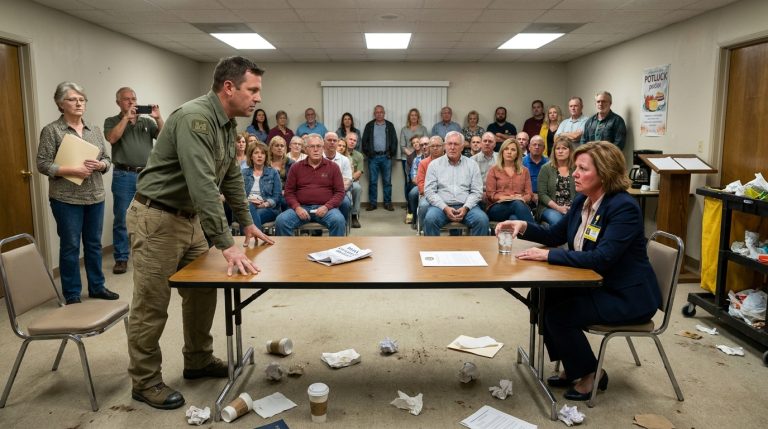
The community center room was stifling, the air thick with the smell of scorched coffee, damp wool, and the electric tension of a hundred people holding their breath. There were one hundred and fourteen of us—a crowd that had overflowed the folding chairs and spilled along the back wall. The fluorescent lights hummed a low, aggressive B-flat, vibrating in the center of my skull.
Patrice sat at the head of the board table, her lanyard pulled tight around her neck like a leash. She was motionless. Her clipboard was a prop now, a hollow shield. To her left, the other board members sat in a stunned, silent row. Gerald’s chair had been removed, and the empty space where he used to sit looked like a missing tooth in a grin that had finally stopped lying.
“Agenda item one,” Patrice said, her voice thin, brittle. “Approval of the prior meeting minutes.”
I stood. My movement felt slow, measured—the way you move when you’re carrying something heavy and you can’t afford to stumble. I didn’t rush to the microphone. I walked to the front of the room, my binder open to the final tab. I felt the eyes of the neighborhood on my back. I felt the weight of the last five months—the red clay, the Jacuzzi, the paint chips, the hours spent in Weston’s office, the anonymous letters. It all narrowed down to this.
“I move to amend the record,” I said, my voice cutting through the humid air. “Before we approve these minutes, I’d like to introduce a document into the record.”
I nodded to Sonia, who was in the second row. She stood and passed the copies along the rows. A hundred and fourteen people took the sheets. A hundred and fourteen people looked at the side-by-side comparison of the official records and the reality of the meetings. The room went dead silent. No one shifted. No one whispered. The sound of paper moving—a soft, dry rustle—was the only thing that kept the silence from becoming absolute.
“The document in your hands,” I continued, “is a comparison between the official meeting minutes submitted by this board and the contemporaneous, witness-verified records of the same meetings. You will notice that motions which were contested, which were voted down, or which were never discussed, are listed as ‘unanimous.’ You will notice the landscaping contract, which was awarded to a company owned by the board chair’s husband, contains no record of disclosure. No vote. No recusal.”
Patrice stood up. Her face was a mask of jagged, broken lines. “This is an illegal, defamatory—”
“Point of order!” Beverly Ashwood’s voice rang out from the third row. The retired school teacher stood, her folder clutched in her hands like a weapon. “The document is public record, Patrice. Are you telling us we don’t have the right to read the records of our own neighborhood?”
The room laughed. It wasn’t the kind of laughter that comes from joy; it was the sharp, jagged release of a community that had been held hostage and had finally found the release lever.
I looked at Patrice. She was looking at the room, at the rows of faces that had been quiet for eleven years. She saw the neighbors she’d fined, the residents she’d ignored, the people she’d treated like tenants in her own kingdom. She saw that the power wasn’t gone—it had just been returned to its rightful owners.
Theo, one of the two remaining board members, a quiet man who had spent most of the meeting staring at his hands, suddenly looked up. He pushed his chair back. “I think we should disclose it,” he said. His voice wasn’t loud, but in the silence of the room, it landed like a gavel strike. “I think the neighborhood deserves to know exactly how the landscaping contract was handled.”
Patrice sat down. She didn’t look at Theo. She didn’t look at the board. She just sat there, her clipboard sliding from her lap to the floor, where it landed with a dull, pathetic thud.
The election was a rout. Seventy percent for Remy, Beverly, and Garrison. When the final tally was announced, Patrice didn’t wait for the applause to die down. She didn’t offer a concession speech. She simply stood, gathered her bag, and walked toward the exit. The heavy steel door of the community center swung open, and for a second, a wedge of cool night air pushed into the room, smelling of rain and the promise of a new season. Then, the door clicked shut. It was a soft sound, smaller than the situation deserved, but it was final.
I stood there for a long time after the crowd began to drift out, the hum of the lights finally dying down as the maintenance staff started shutting off the power. I wasn’t thinking about the money, or the Jacuzzi, or the paint. I was thinking about the binder in my hands—the weight of it, the cold, hard, documented proof that a kingdom built on silence could not survive the truth.
I walked out into the parking lot. The stars were brilliant, wide, and uncaring. I got into my truck and drove home, the neighborhood quiet, the houses dark. For the first time, I didn’t look at Patrice’s house as I drove past. I didn’t need to. The fence was clear. The deed was paid. And the truth was finally, legally, and permanently on the record.