The Iron Covenant: A Gritty Tale of Cold Mountain Injustice, Rusted Sovereignty, and the Price of Survival
CHAPTER 1: THE FROST LINE
The metal inside my left knee didn’t appreciate a Colorado December. When the temperature dropped toward the negative digits, the damp cold settled deep into the hardware, turning every step across the gravel into a deliberate calculation of pain. I killed the truck’s engine, the dying rattle of the old diesel matching the silence of Pine Ridge Estates.
Three hours at the VA hospital in Denver just to get my blood drawn, and the reward waiting for me at the edge of my lot was a missing tooth in the landscape.
I stood by the tailgate, leaning my weight onto my good right leg, my eyes locked on the woodpile. I had stacked those two full cords of seasoned premium oak with the same geometric precision I used to lay out ammunition crates in Kandahar. Every log split clean, bark down, tight enough to keep the mountain wind from whistling through the rows. Now, a jagged V-shaped crater marred the center of the stack. A good third of it was gone. Cleanly lifted.
Down in the frozen dirt, the evidence was written in broad, heavy strokes. The wide, aggressive tread of premium all-season tires had spun into the slush, leaving deep, twin ruts that cut straight toward the main road. My neighbor Bob’s borrowed security camera sat in the lower pane of my workshop window, its little red indicator light completely dead. A clean blackout. Convenient timing for an electronic failure.
I didn’t go inside to take off my boots. I walked the perimeter of the pile, the scent of fresh pine sap and raw, split timber still hanging in the bitter air. That oak had cost me four hundred dollars—nearly a fifth of my monthly disability check. In these mountains, wood wasn’t an aesthetic choice; it was the line between a functioning home and a frozen pipe.
Ten minutes later, I was standing on the pristine marble porch of the largest corner lot in the development. The house loomed over the smaller, fixed-income properties like a concrete guard tower. When the heavy cedar door swung open, the blast of indoor heating hit me first, carrying the thick, cloying weight of expensive French perfume that made my stomach tighten.
Delilah Thornfield stood there in a cream cashmere sweater that looked like it had never touched a day of hard labor. Her blonde hair was perfectly smooth, her eyes tracking down to my scuffed work boots with immediate, practiced disdain.
“Marcus,” she said, her voice dropping into that smooth, transactional register she used when listing properties. “If this is about the lawn regulation notice from Tuesday, I suggest you take it up during the scheduled board hours next month.”
“My firewood pile was hit while I was at the hospital,” I said. My voice stayed level, low, retaining the flat cadence of an engineer reading a structural report. “A third of a cord. Whoever took it left luxury SUV tracks right in the mud by my shop.”
Delilah didn’t blink. She leaned against the doorframe, her manicured fingers tapping against the polished brass handle. Behind her, through the side window of her three-car garage, I could see the distinct, clean lines of professionally split oak stacked in suspiciously neat rows.
“I have absolutely no idea what you’re talking about,” she declared, her chin lifting slightly. “And quite frankly, your accusatory tone sounds rather threatening and aggressive. I had a delivery from my regular commercial supplier just this morning. I certainly have the receipts to prove it if the board ever required such documentation.”
“Mind sharing the name of the supplier?” I asked.
“I absolutely don’t need to justify my legitimate purchases to you or anyone else, Marcus. Is there anything else? Because it’s freezing out here, and I have a client call.”
“Just observing the tires on the Mercedes in the drive,” I said softly, my eyes shifting to the massive silver SUV idling quietly under the portico. The tread pattern was a perfect match for the ruts by my workshop. “They look like they manage the mud quite well.”
“Are you directly accusing the HOA leadership of criminal theft?” Her voice sharpened, the neighborly mask slipping to reveal the cold iron underneath. “Because that definitely constitutes targeted harassment of a board member. I suggest you remember your place in this community before your files are reviewed for non-compliance.”
The door clicked shut, the heavy deadbolt throwing into place with a definitive, mechanical thud. I stood on the porch for a second, the mountain wind catching the collar of my jacket. As I turned to walk down her salt-scraped stairs, a small glint of silver caught my eye in the pristine snow right beside her driveway. I bent down, my bad knee popping under the strain, and scooped it up.
It was a small, high-tensile steel hex bolt, the kind used to secure heavy-duty cargo tie-downs, coated in a fine, black residue that didn’t look like grease. I rubbed it between my thumb and forefinger; it felt completely dry, leaving a dark, velvety stain on my skin.
CHAPTER 2: PAPER TRAIL RECONNAISSANCE
“The red light didn’t just burn out, Marcus,” Bob Henley said, his voice flat as he dropped a heavy, steel-toed boot against the concrete floor of my workshop. He wiped a smudge of black motor oil across his grease-stained overalls, his breathing heavy from the walk across the frost-heaved asphalt of the lane. “The whole loop was scrubbed. Clean five-minute block right around sunrise. Someone knew exactly where the blind spot in the lens casing was.”
I didn’t answer right away. I kept my attention on the piece of split oak in my hands, using a wire brush to clean the grit from the deep, furrowed ridges of the bark. The wood was cold, holding the deep, dense chill of the mountain air. Every stroke of the wire bristles left a faint, metallic whistle in the quiet of the shop, the iron filings from the brush mixing with the fine, gray sawdust on the workbench.
“She didn’t do it herself,” I said, setting the log down on the stack with a dry, solid thud. “Delilah wouldn’t risk scuffing her boots in the mud. She’s got the boy doing the heavy lifting, and she’s got someone else holding the digital keys.”
“The kid’s fast,” Bob grunted, leaning his hip against my rusted drill press. He pulled a crumpled pack of cigarettes from his pocket, looked at the dry timber around us, and shoved them back down. “But he ain’t smart enough to loop a commercial security feed. That takes admin access to the local hub. The HOA office handles the neighborhood broadband routing.”
I reached into my pocket and pulled out the small, high-tensile steel hex bolt I’d pulled from the slush near Delilah’s driveway. I set it on the iron plate of the drill press. It sat there between us, a small, dark cylinder coated in that strange, velvet-fine residue. Bob bent his head, his weathered forehead wrinkling as he squinted at it through the dim light of the single overhead bulb.
“That didn’t come off her Mercedes,” Bob said, tapping the bolt with a blunt fingernail. The metal gave a dull, high-pitched click against the cast iron. “That’s an industrial cargo tie-down bolt. The kind they thread into flatbed rails to secure commercial pallets. And that black soot on the threads—that ain’t graphite grease, Marcus. That’s carbon powder. Ultrafine.”
“She said she had a delivery from her regular supplier,” I murmured, my thumb tracing the worn edge of my workbench where the wood had split from years of oil spills and dropped tools. “But regular suppliers don’t leave industrial tie-down bolts in a residential driveway. And they don’t drop charcoal dust on the snow.”
I walked over to the corner of the shop where three cardboard boxes sat stacked on a rusted metal shelf. They were filled with old, yellowing paper—the complete administrative archive of Pine Ridge Estates from 1987 to 2019, which I’d forced Delilah’s secretary to hand over by threatening a formal complaint to the state regulatory board. The pages smelled of cellar damp and old glue, the staples rusted into dark orange stains that bled through the margins.
For two hours, the only sound in the frozen room was the dry rustle of paper against my calloused palms. My engineering brain didn’t look at the words; it looked at the structure. Covenants are just technical manuals written by people who want to control where your trash cans sit. But when you compare an original manual to a updated version, the modifications always leave a scar.
“Look here,” I said, pointing a finger at Section 4.7.2 of the 2019 document Delilah had used to justify her citations. The print was crisp, done on a modern laser printer, but the formatting was slightly offset from the rest of the page. The margin was three millimeters wider than the preceding paragraphs. “She didn’t just interpret the rules, Bob. She pasted this in. The original 1987 charter doesn’t have a fire hazard clause for fuel storage. It has an open-ended utility allowance. Anyone with a chimney has the sovereign right to maintain three full cords on their deeded acreage.”
Bob leaned over my shoulder, the faint smell of engine degreaser coming off his jacket. “If the rule’s a fake, then every fine she’s levied against Mrs. Lucy for her woodboxes, and every threat she sent the Rodriguez family about their winter stash… it’s all paper tiger stuff.”
“It’s worse than that,” I said, turning the page to the financial ledger attachments from the recent emergency sessions. My eyes locked on the column listing ‘Thornfield Property Solutions’ as the sole contractor for community fire-break maintenance. The figures were rounded to the nearest thousand—a lazy man’s accounting method. “She’s using her fake rule to create compliance violations, then she’s hiring her own firm to clear the ‘hazards’ at the community’s expense.”
Before Bob could reply, the sharp, distinctive chime of his cell phone cut through the chill. He pulled it out, his thumb scrolling through a series of local notification alerts from a community forum he monitored for his barbecue business. His face went hard, the skin tightening around his jaw until his teeth clicked.
“Marcus,” he said slowly, turning the screen toward me. “Look at this listing on the county trading page. Posted twenty minutes ago.”
The image on the screen was low-resolution, taken in the gray light of dawn, but the geometry was unmistakable. It showed the rear bed of a commercial trailer loaded with neat, tightly packed rows of premium split oak. The bark down, the clean geometric alignment—it was the exact signature of my work. The caption underneath was short, written with the transactional brevity of a seasoned salesman: Premium seasoned mountain oak. Hardwood splits. Three hundred dollars a half-load. Delivery available within fifteen miles.
The seller profile didn’t use Delilah’s name. It used a generic handle registered to an estate liquidation business downtown. But in the background of the photograph, just over the edge of the wooden trailer slats, the corner of a distinctive double-wide brick driveway and the silver tail-light of an eighty-thousand-dollar SUV were clearly visible in the frost.
She wasn’t just clearing a neighbor’s yard for community aesthetics. She was running a commercial timber fence out of her own garage, using my winter survival to fund her inventory.
“That’s a felony amount if we string the past three months of missing loads together,” Bob muttered, his fingers tightening against the plastic case of his phone until it creaked. “We call the sheriff right now. We bring him down here with the ruts and the paper.”
“No,” I said, my voice dropping into the quiet cadence I used when the line went hot overseas. I reached down and picked up the wire brush again, the metal needles cold against my skin. “The sheriff works the county line, and Delilah’s lawyer knows how to bury a property dispute in civil motions for six months while my house goes cold. We don’t change our position. We let her think the perimeter is clear.”
I walked back to the window, looking out across the gray, desaturated landscape of the valley. The clouds were dropping lower, turning the peaks into jagged, white shadows against a leaden sky. The wind was picking up, rattling the loose corrugated iron on my workshop roof with a rhythmic, metallic shudder.
“She’s going to come back for the rest of the stack,” I said softly, watching a single crow fight the updraft over Delilah’s prime corner lot. “A thief who finds a lock that doesn’t click always comes back with a bigger truck. We just need to make sure the next thing she lifts is exactly what she deserves.”
CHAPTER 3: THE BLACK MARKET TWIST
The frost on the bed of my old truck didn’t melt; it just turned to a clear, slick glaze under the glare of the sodium security lights across the lane. I sat in the darkness of the unheated cab, my left leg extended straight across the transmission hump to keep the structural hardware from locking up completely. Through the cracked driver’s side window, the mountain air tasted of dry ice and diesel exhaust. It was 0430.
A low, guttural rattle vibrated through the gravel. It wasn’t the smooth, predatory purr of Delilah’s Mercedes. This was heavier—the uneven timing of an old commercial work van with a rusted tailpipe.
The vehicle cut its headlights fifty yards down the road, coasting into the shadow of my workshop on the momentum of its own weight. The doors didn’t slam. They gave two soft, metallic clicks as they unlatched. I watched through the side mirror, the reflective glass pitted with rust spots along the frame. Two figures stepped into the dim perimeter light. One was a tall, lanky kid—Delilah’s teenager, wearing an oversized designer hoodie that stood out against the gray grit of the lumber yard. The other was a thicker silhouette, a man wearing a grease-stained canvas jacket.
They didn’t hesitate. They went straight for the back edge of the woodpile, pulling heavy, industrial cargo straps from the rear of the van. The sound of nylon webbing sliding over dry oak bark was a sharp, dry rasp in the frozen silence.
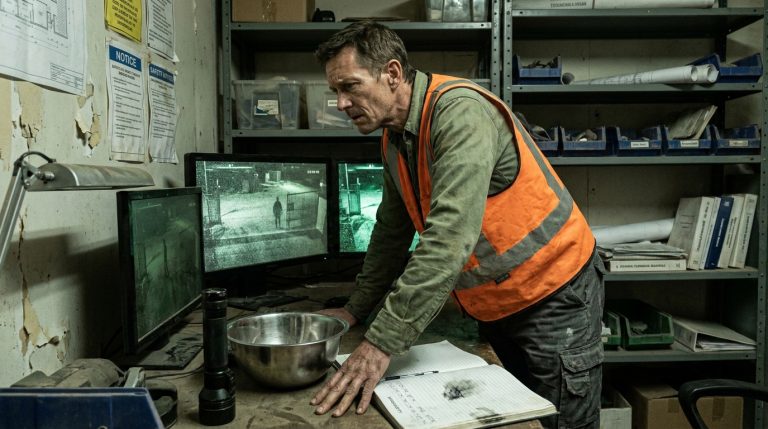
I didn’t move to stop them. My hand stayed on the cold iron of the unlit flashlight between the seats. An engineer doesn’t clear an obstacle until he knows the full depth of the minefield. Instead, I pulled my phone from my pocket, the screen brightness turned down to its absolute minimum, and activated the remote terminal link to the secondary lens Bob had tucked inside the hollow eaves of the shop.
The 4K feed came up in sharp, desaturated blocks. The camera was close enough to catch the frost coming off the kid’s breath as he lifted three heavy splits of my premium seasoned oak at a time, tossing them into the open cargo bay of the van.
“Move it,” the older man muttered, his voice carrying the flat, transactional weight of a city scrap dealer. “She said the whole pallet’s already paid for on the app. The buyer’s coming down from Castle Rock at noon. Six hundred bucks clear if we get the full half-cord loaded before the early shift starts driving.”
“The old man’s probably loaded up on VA meds anyway,” the kid grunted, his boots crunching loud against a patch of black ice near the stack. “He didn’t even notice the ruts from Monday.”
“Just watch the paint on the side panels,” the man said, pulling a heavy tie-down strap across the loaded wood. He reached down to thread a high-tensile steel hex bolt into the flatbed rail—the exact duplicate of the small, soot-covered cylinder sitting on my drill press right now. He pulled a heavy rachet wrench from his pocket, the rapid, mechanical clack-clack-clack echoing off the corrugated iron walls of my shop like small-arms fire.
I zoomed the camera lens in, tracking the man’s hands as he pulled a wrinkled delivery manifest from his pocket to verify the address. The paper was standard commercial carbon-copy stock, the top sheet bearing the distinct, purple-ink stamp of Thornfield Property Solutions. But it was the handwritten note at the bottom that made my thumb pause over the screen.
It wasn’t a residential delivery address. It was a regional distributor account number, linked to three separate Facebook Marketplace listings under the name High-Country Estate Management.
I pulled up the regional trading database on my secondary browser tab, cross-referencing the account number against the public county registry. The decoy secret dissolved under three seconds of basic systematic sorting. Delilah wasn’t just taking my logs to heat her own house or show off to her board members. She had converted the entire common property easement behind my workshop into an unlisted staging yard for a commercial firewood ring. My premium oak was simply the high-margin inventory she needed to fulfill her contracted winter bulk orders.
The van’s engine coughed back to life, spitting a thick cloud of charcoal-colored vapor into the frozen air. The vehicle pulled away slowly, its springs groaning under the weight of my timber, leaving fresh, deep ruts that crossed straight over the property line.
I stayed in the cab until the sound of the rusted tailpipe faded completely into the lower valley highway. My knee gave a sharp, grinding pop as I shifted my weight to open the truck door, my boots landing heavily on the frozen earth.
I walked over to the back of the stack, tracing the square gap they’d left in the darkness. They’d taken exactly twelve more pieces—the premium center cuts. I knelt down, the grit of the road salt biting through my denim, and picked up a small scrap of paper that had torn off the delivery manifest when the man pulled the tie-down strap tight.
It was the bottom corner of the carbon sheet, holding a single signature block. The name wasn’t Delilah’s. It was signed in a hurried, trembling script by the community association treasurer—a man who had supposedly retired to Florida six months ago. Below the signature, a small, printed compliance line read: Authorized asset liquidation under emergency receivership.
I stood up, the wind catching the dry bark shavings at my feet and scattering them into the dark. The decoy was clear—she wanted the neighborhood to think she was managing standard property enforcement using legal labor. But the paper in my hand didn’t look like an enforcement notice. It looked like a desperate paper trail left by someone who was running out of time, using a dead board member’s name to move assets before the state looked too closely at the books.
I turned back toward my dark workshop, the iron key cold against my palm. The trap I was building didn’t need more cameras. It needed the archives. If Delilah was liquidation-clearing properties under a receivership stamp, she wasn’t just a thief with a power complex. She was a landlord whose own foundation was already turning to ash.
CHAPTER 4: THE VOIDED TITLE
The brass lock on my garage door was frozen so stiff I had to scrape the frost out of the keyway with the edge of an old pocketknife. When the iron cylinder finally rolled, it made a dry, scraping sound that seemed to carry all the way across the silent lane. Inside, the single overhead shop light hummed, casting a dim, desaturated glare over twelve neighbors bundled in heavy canvas coats and grease-stained hunting jackets. The air inside smelled of old floor dry, kerosene, and the sharp, metallic tang of cold iron tools.
Patricia Mills sat on an upturned plastic milk crate near the workbench, a thick, accordion-style expansion folder resting across her knees like a shield. Beside her stood her daughter, Sarah, who was methodically sorting through a stack of certified state documents, her fingers stained black from cheap laser-printer ink.
“We don’t have to wait for Thursday’s scheduled board meeting, Marcus,” Patricia said, her voice dropping into that tight, unyielding cadence she used when the school board used to shortchange her classroom supply budget. “She doesn’t have the numbers anymore. And she doesn’t have the law.”
“The van took another twelve pieces before dawn,” I said, leaning my hip against the cold iron frame of the table saw. My left knee was a dull, thudding ache, the hard plastic and carbon fiber of the prosthetic stiffening from the draft rolling under the garage door. “They’re moving fast now. They’ve got a commercial buyer coming down from Castle Rock at noon today to clear out whatever inventory she’s staged behind her garage.”
“Let them try to clear it,” Sarah said, pulling a heavy, blue-stamped document from the bottom of her folder and laying it flat on the grease-smeared plywood of my workbench. She tapped a thick line of text highlighted in yellow. “This came through the Secretary of State’s corporate compliance database at midnight. I had to use my firm’s corporate credential override to pull the historical filing trail.”
Bob Henley leaned forward, his massive, calloused hands resting on the handles of a rusty pair of bolt cutters. “What are we looking at, Sarah? Speak plain. My brain doesn’t do Latin clauses before sunrise.”
“Colorado Revised Statute 7-128-207,” Sarah said, her voice dropping into the flat, analytical tone of a courtroom prosecutor. “Every homeowners association registered as a non-profit entity must file a comprehensive periodic report every twelve months to maintain corporate authority. If you miss three consecutive periods, the state enters a status of administrative dissolution. The corporation legally ceases to exist.”
She turned the page over, the dry paper rattling against the cold wood. The backside of the document showed a long, empty column under the heading Filing History.
“Delilah hasn’t submitted a single report or paid a compliance fee since November of 2020,” Sarah said quietly. The garage fell completely silent, save for the rhythmic, metallic ticking of the old kerosene heater in the corner. “For three full years, the Pine Ridge Estates Homeowners Association has been a legal ghost. It doesn’t exist on the state registry. It has zero authority to levy a fine, zero authority to issue a non-compliance lien, and zero authority to collect a single dollar of community maintenance fees.”
I picked up the blue-stamped sheet, the texture of the official state seal rough under my thumb. “If the entity is dead, what has she been doing with the three hundred and fifty dollars every household has been dropping into the board mailbox every January?”
“She’s been running an extortion ring disguised as property management,” Patricia said, her eyes narrowing as she pointed to a secondary ledger she’d compiled from her own banking records. “We cross-referenced the deposit routing numbers from the cleared checks. They didn’t go into a community maintenance trust. They were routed straight into an account held by Thornfield Property Solutions—the same shell company she uses to hire her son’s friends for ‘fire-hazard mitigation.'”
Sarah reached back into her folder and pulled out a certified notice of default from a regional mortgage bank. The address on the top line was unmistakable: Lot 1, Corner of Pine Ridge Drive and Timberline Way. Delilah’s pristine, professionally landscaped fortress.
“She’s ninety days behind on her own mortgage,” Sarah explained, her fingers tracing the red foreclosure stamp on the margin. “The bank is scheduled to auction the property on the courthouse steps in March. She didn’t just start stealing your firewood because she was greedy, Marcus. She’s been draining the neighborhood reserves and fencing stolen timber on the open market because she’s completely broke. The Mercedes, the cashmere, the double-wide driveway—it’s a rusted hull held together by stolen paper.”
Bob let out a low, gravelly whistle, the sound cutting through the damp chill of the room. “So the whole thing—the citations for Mrs. Lucy’s garden gnomes, the processing fees for the Rodriguez family’s porch repair—it was all a personal shakedown to keep her own roof over her head.”
“And she’s doing it under the color of authority,” I said, setting the document back down on the table saw. The engineering logic of her operation was complete. She had built a perfect mechanical leverage system out of fear and fabricated regulations, knowing the older folks on fixed incomes would rather pay a fifty-dollar processing fee than risk a legal battle that could threaten their deeds. “But a leverage system only works as long as the fulcrum stays pinned to the floor.”
“We go to the sheriff now,” Bob said, his hand tightening on the bolt cutters until his knuckles turned gray. “We have the corporate dissolution papers, we have the foreclosure notice, and we have her on 4K video lifting your oak splits.”
“No,” I said, my voice flat, holding the steady, low cadence of an engineer inspecting a structural defect before a demolition. “If we bring the county deputy down here now, her lawyer claims a technical misunderstanding on the corporate filings, pays a back-tax penalty to the state, and ties the theft up in small-claims arbitration for the next eight months. The neighborhood stays scared, and she keeps her title until the bank takes the house.”
I walked over to the back corner of the garage where my specialty woodworking crates were stacked under a dusty canvas tarp. I pulled the tarp back, revealing twelve pristine, identically cut logs of gas-fireplace oak I’d picked up from the commercial supplier downtown. They looked solid from five feet away—the bark rough and weathered, the grain split clean—but when I lifted one, it weighed less than two pounds. The interiors were completely hollow, bored out from end to end on my industrial lathe.
Beside the crates sat three heavy plastic tubs of Bob’s industrial-grade blacksmithing charcoal powder—ultrafine carbon dust that felt like grease between your fingers and billowed into a permanent, ink-black cloud the second it met an air current.
“We don’t call the county line until she’s already holding the evidence in her own hands,” I told the room, my thumb tracing the spring-loaded mechanical plug I’d machined for the base of the hollow shells. “She’s got a delivery van coming at noon to fulfill her marketplace contract. We’re going to give her exactly what she’s been looking for.”
Patricia looked from the hollow logs to the tubs of carbon dust, a slow, hard smile settling onto her face. “Professor Delilah’s master class in consequences.”
“Exactly,” I said, dropping the mechanical plug into the base of the first oak shell with a sharp, definitive click. “Let’s get to work.”
CHAPTER 5: THE CHARCOAL DETONATION
The black cloud didn’t rise into the mountain sky; it rolled flat across the frozen gravel, a pressurized wave of ultrafine charcoal powder that turned the midday glare into a desaturated smear of ash. It choked the crisp winter air, coating the pristine white wool of Delilah’s designer jacket in a thick, velvety soot and settling into the deep, fresh ruts of my driveway.
“You psycho!” she screamed, her voice cracking as she stumbled backward into the door of her idling Mercedes. “You tried to kill me! This is a terrorist attack!”
I didn’t move from the wooden steps of my workshop. I just stood there, leaning my weight onto my good right leg, my work-scarred hands tucked deep into the pockets of my canvas coat. The rhythm of the scene slowed down in my chest, the kinetic energy of the eruption settling into a cold, predictable ledger of cause and effect.
Delilah was coughing hard, her manicured fingers clawing at her throat as she tried to wipe the black dust from her face. Every motion only ground the soot deeper into her skin, turning her smooth, calculated mask into a jagged caricature of panic. Beside her, her son stood completely frozen, his arms still outstretched where he had dropped the heavy, hollowed shell of the third oak log. The spring-loaded mechanical plug I’d machined on my lathe was sitting in the gravel between his boots, its iron coils still vibrating with a faint, metallic hiss.
“Innocent community volunteers don’t usually clear code violations at dawn with a commercial flatbed trailer, Delilah,” I said, my voice dry as split pine.
Bob Henley materialized from the shadow of the woodpile, his weathered face hard under the brim of his greasy cap. He wasn’t hiding the professional video camera in his hands; he held it right at eye level, the red recording indicator tracking every frantic movement of her hands. Across the lane, Mrs. Rodriguez stepped onto her porch, her phone raised, her binoculars swinging from a strap around her neck like tactical hardware.
“Get that camera out of my face!” Delilah shrieked, lunging toward Bob. She tripped over a loose chunk of real oak, her leather boot sliding through the salt-bitten slush. “I am the president of this association! I have the legal right to abate fire hazards on private property!”
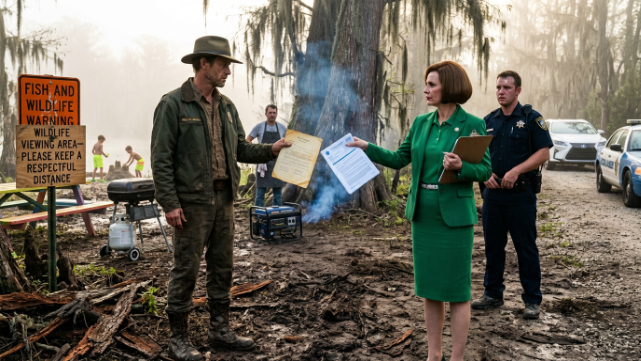
“You don’t have a title, and you don’t have a board,” Patricia Mills said, her boots crunching with slow, deliberate weight as she walked down the center of the lane. She wasn’t carrying a shovel or a tool; she was holding three identical copies of the certified corporate dissolution papers from the Secretary of State. She tossed them onto the hood of the Mercedes, where the heavy white sheets instantly began collecting a layer of drifting black dust. “The Pine Ridge Estates Homeowners Association was administratively dissolved in November of 2020, Delilah. You haven’t filed a compliance report in three years. You’re not an official, and this isn’t an abatement. It’s grand larceny under the color of authority.”
Delilah’s mouth opened, then snapped shut, her gray-streaked hair falling into her eyes. She glanced down at the documents on her hood, her fingers twitching toward the blue state seal before she pulled them back as if the paper were hot iron. “That’s a administrative technicality. My attorneys will have it reinstated by morning. You still assaulted a resident with an explosive device!”
“It’s food-grade activated charcoal,” I said, taking two steps down into the dirt. My left knee gave its familiar, mechanical pop, the sound sharp in the freezing quiet. “The health store down on Main Street sells it for ten dollars a jar. No heat, no sulfur, no permanent damage. Just an engineered indicator to mark where the inventory went.”
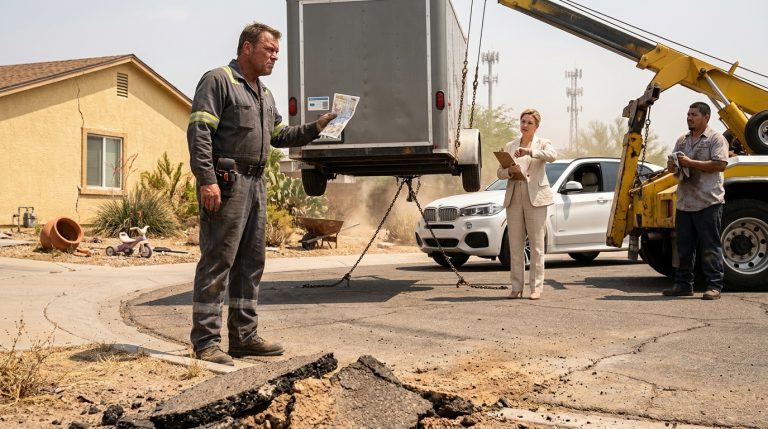
I pointed toward the open rear bay of the commercial van parked behind her Mercedes. Stacked inside, wrapped in heavy nylon cargo straps, were forty separate rows of my premium seasoned oak—every piece split clean, bark down, marked with my geometric signature. And smeared across the white leather panels of her eighty-thousand-dollar SUV interior were the clear, ink-black prints of her son’s soot-covered hands.
The low, rising wail of a county siren broke through the mountain ridge line, the sound echoing off the rock faces before the red and blue flashers cut through the drifting gray haze. Officer Martinez pulled his cruiser to a stop at the edge of my lot, his boots hitting the gravel with the steady, measured pace of a man who had seen enough combat zones to recognize a perimeter breach.
“What’s the situation here, Mac?” he asked, his eyes tracking from the black cloud settling on the snow to the loaded flatbed van, and finally to the soot-covered woman trembling against the Mercedes emblem.
“We caught a fencer moving stolen property across the deed line, Officer,” I said, handing him my phone. The remote terminal feed was still live, showing the 4K recording of her son lifting the logs while Delilah checked the manifest from her driver’s seat. “The GPS tracking logs show three separate commercial shipments moved from my workshop to her marketplace buyers over the last thirty days. Total value exceeds two thousand dollars. That makes it a Class 5 felony in this jurisdiction.”
Delilah took a step forward, her voice rising into a desperate, rattling pitch. “He’s an unstable veteran! He built weapons to attack community leadership! Look at my car! Look at my clothes!”
Martinez didn’t look at her clothes. He looked at the signature block on the delivery manifest tucked into the van’s visor, then glanced back down at the corporate default notices Patricia had laid out on the truck bed. His face remained completely expressionless—the hardened, impassive mask of an Iraq veteran who knew exactly what real corruption smelled like.
“Ma’am,” Martinez said, his hand resting casually on his utility belt. “Protecting property with non-lethal indicators isn’t a crime. But collecting thousands of dollars in unauthorized fees under a dissolved corporate title definitely violates three separate sections of the state fraud code. And the county bank filed a foreclosure detainer on this lot forty-eight hours ago. Your vehicle’s chassis number is already listed on the repossession log.”
The silence that followed was absolute. It was the weight of a structure completely collapsing from the foundation up, the fake regulations and manufactured authority turning to dust right in front of the people she had spent six years squeezing for fifty-dollar compliance payments. Delilah stood in the center of her ruined driveway, her hands dropping to her sides, the black soot on her fingers leaving dark, permanent stains against the cream cashmere of her coat.
Six months later, the lane was quiet again. The luxury SUV was gone, hauled off by a flatbed truck before the first heavy freeze of January. The big corner house sat empty, its double-wide driveway collecting drifts of white mountain snow that nobody bothered to clear.
But down at my end of the road, the air smelled of honest woodsmoke and hot cedar. Bob’s garage door was wide open, the yellow light inside warming the concrete where twelve neighbors stood around the splitter, the rhythmic thump-crack of the hydraulic wedge mixing with the sound of laughter and small-town talk. We didn’t have a board anymore, and we didn’t have a manual of imaginary regulations. We just had two cords of fresh oak, split clean, bark down, stacked tight enough to keep the winter wind out.