Frozen Iron and Quiet Defiance: How One Determined General Saved the Line When Command Went Blind
CHAPTER 1: THE SILENT FRONTLINE
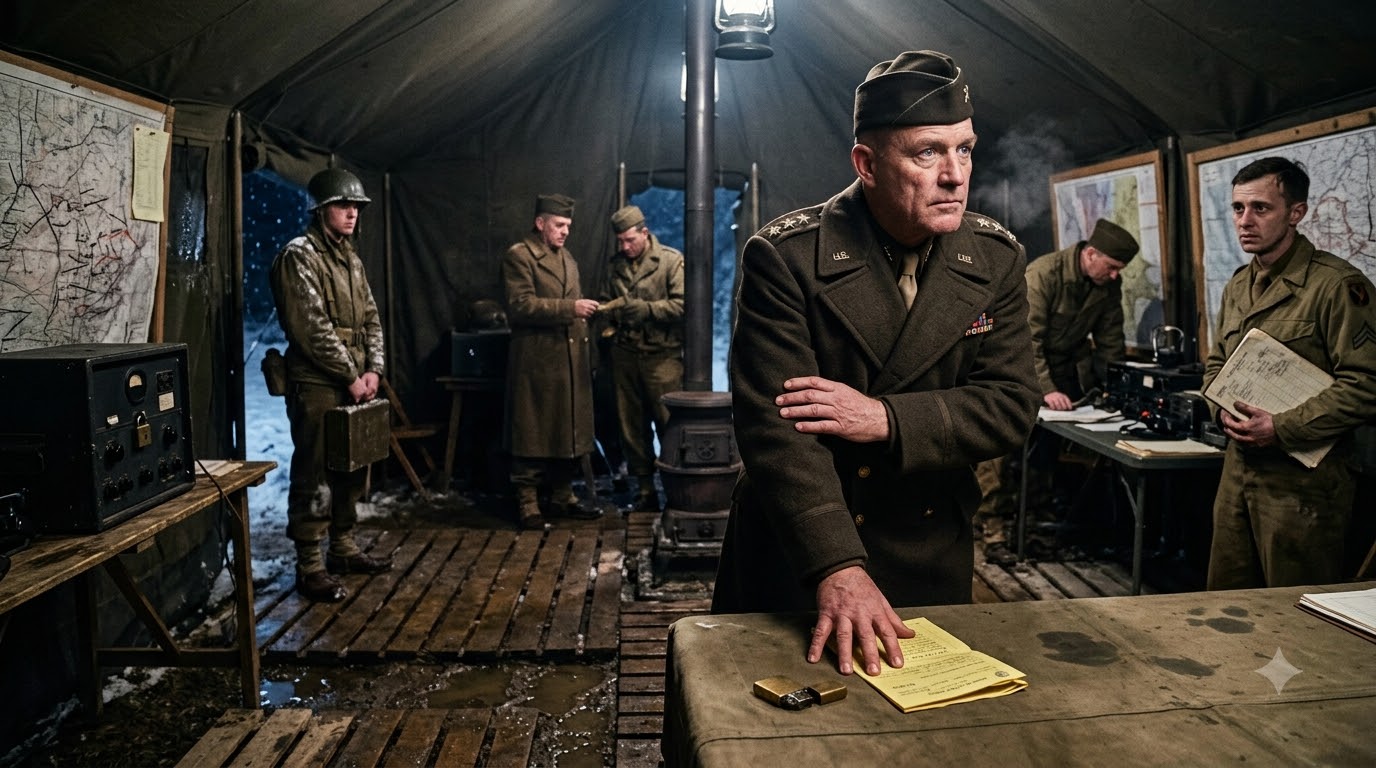
The leather map case was stiff with frost.
Ernest Harmon slapped it rhythmically against his thigh, the dull thud echoing inside the crowded command tent where breath fogged in the air.
Outside, the Ardennes forest was dead quiet.
It was the kind of quiet that precedes a drop in barometric pressure, heavy with damp wool, pine sap, and the bitter bite of December.
The stove in the corner ticked as the metal cooled.
Staff officers moved with deliberate, heavy steps across the duckboards, avoiding the muddy pools tracked in from the motor pool.
No one looked at the wall maps because the maps had stopped telling the truth three days ago.
Harmon dropped the case onto the folding table.
It slid across the canvas surface, stopping against an empty coffee mug encrusted with gray grounds.
“They are sitting there,” Harmon said. His voice was low, flat, and rasped with exhaustion. “Four miles from the water, and they have nothing to burn.”
A junior captain looked up from a grease-stained ledger, his fingers stiff from the cold.
“HQ insists the sector is secure, General. They say the enemy is consolidating further east.”
Harmon did not raise his voice.
He reached out, his knuckles raw and red from the wind, and tapped a blunt finger against the blue pencil mark denoting Celles.
Consolidating didn’t look like stalled iron freezing in a snowdrift.
The secure radio relay sitting silent on the side table was dead weight, its encryption dials locked tight and useless against the high-command blackout.
They were cut off from the direct wire to Supreme Headquarters, left to rely entirely on frontline scouts and common sense.
And common sense smelled like exhaust fumes and burning grease rotting in the snow.
CHAPTER 2: STALLED STEEL IN SNOW
The binoculars felt like two blocks of ice pressing against the bridge of Harmon’s nose.
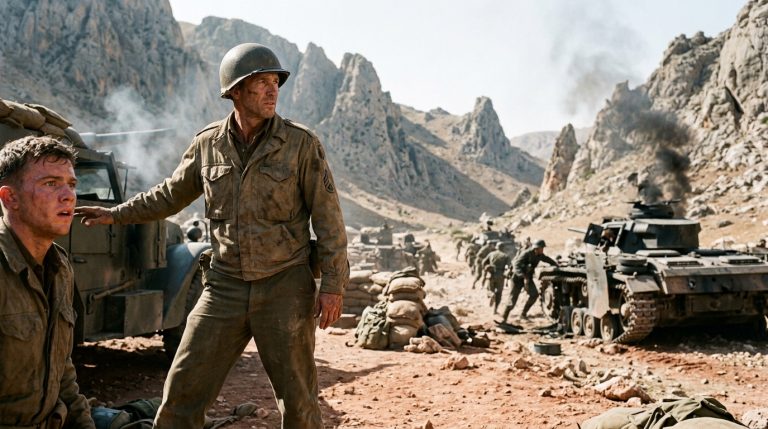
Out past the ridge line, the German 2nd Panzer column looked less like an elite vanguard and more like a row of abandoned monuments forgotten by the storm.
Not a puff of dark exhaust rose from their tailpipes.
The heavy King Tigers sat dead in the drifts, their tracks choked with frozen slush, crewmen huddled beneath canvas tarps that stiffened into plywood in the wind.
“They’re not moving because they can’t,” Harmon muttered, lowering the lenses.
The metal clicked against the buttons of his wool coat.
A stray gust swept across the clearing, lifting fine diamond dust from the crust and stinging the exposed skin around his eyes.
On the corner of the map table inside the tent, the unread grease-pencil dispatch lay untouched.
It bore a timestamp from three days prior—an operational note marked urgent by an intelligence officer four tiers removed from the mud, assuring everyone that the sector was a ghost town.
It was an administrative lie preserved in ink.
Harmon reached down, picking up the small brass lighter he had carried since North Africa, rolling it back and forth between thumb and forefinger with a mechanical rhythm.
“They think we’re tied down by their paper chains,” Harmon said, not looking up from the brass. “They want us staring at blank maps while the flank stays wide open.”
Staff Sergeant Miller shifted his weight, his boots crunching loud on the frozen boards.
“HQ’s courier hasn’t checked in since midnight, General. The line is dead silent.”
“The line has been dead since Christmas Eve,” Harmon snapped, his thumb halting its roll against the lighter’s hinge. “Pass the word to the battalion commanders. Warm the engines. We aren’t waiting for permission to look at what’s right in front of us.”
CHAPTER 3: THE FROZEN DIRECTIVE
The signal runner stood just inside the threshold, water dripping from his helmet rim onto the duckboards.
He held out a damp yellow flimsy, his fingers trembling slightly from the sub-zero draft.
Harmon took the paper without a word, his thumb scraping across the coarse ink.
The text was crisp, formal, and entirely detached from the freezing reality outside the canvas walls.
It was an explicit command from Montgomery’s headquarters, reiterating the standstill with bureaucratic precision.
No forward movement. No artillery initiation. No engagement with the stalled enemy column.
“They sent a major down from the northern sector to deliver it personally, General,” the runner said, wiping his nose with his sleeve. “He’s waiting by the motor pool jeep.”
Harmon stared at the signature at the bottom of the page, the ink flat and cold.
A sharp memory of North Africa flared behind his eyes—months of watching hesitation masquerade as prudence while good men paid for it in blood.
He folded the paper once, twice, and tucked it neatly beneath the heavy brass lighter on the table.
“Tell the major he missed the snowmelt,” Harmon said, his voice dropping into a dangerous, gravelly calm. “Tell him the sector is already moving.”
Staff Sergeant Miller looked up from the radio console, his hands hovering over the dead dials.
“Without the secure wire to Supreme, they’ll call this rank mutiny before the sun hits the ridge.”
“Let them talk to the wind,” Harmon said, reaching for his heavy wool scarf. “The enemy isn’t waiting for a dispatch rider, and neither are we.”
CHAPTER 4: THE SHATTERED MAP
The fabric scraped against Harmon’s stubble as he turned away from the entrance, his boots sinking an inch into the half-melted mud tracked across the floorboards.
Staff Sergeant Miller did not look up from the battery bank, his cold fingers fumbling with a loose terminal screw.
“The major from northern command is heading back up the ridge now, General,” Miller said, his voice flat with the weight of impending consequences. “He said you’re signing your own court-martial.”
Harmon reached into his pocket and pulled out the brass lighter, clicking the top open with a sharp metallic snap that cut through the whistling wind outside.
“He can take his paperwork back to Brussels and file it in the snow,” Harmon said.
The small flame flickered against the damp air, casting orange light over the deep creases carved into his face by decades of service.
He wasn’t fighting an army out there; he was fighting a desk.
The realization sat heavy in his chest—that the men running the war from warm parlors cared more about administrative neatness than the blood freezing in the Belgian ditches.
“We break the reserve lines at dawn,” Harmon said, snapping the lighter shut with a decisive click. “If they want a court-martial, we’ll give them a victory big enough they can’t throw away.”
CHAPTER 5: DAWN AT THE TREE LINE
The exhaust of thirty idling Shermans filled the ravine with a thick, choking veil of unburnt diesel.
Frost cracked off engine cowlings as metal expanded under sudden heat, the low rumble vibrating straight through the frozen sod into the soles of boots.
Staff Sergeant Miller leaned out from the turret hatch of the lead command vehicle, his face blackened by soot and windburn.
“The column is lined up three miles deep along the logging track, General,” Miller shouted over the roar of straining gears. “Not a peep from the northern relay. They still think we’re parked.”
Harmon hauled his heavy frame up onto the track tread, his gloved hand gripping the cold steel edge of the hatch.
“They’ll know we’re moving soon enough when the artillery opens up,” Harmon said, his voice clipped and tight against the biting air.
A sudden flash of movement caught his eye down the frozen valley—a courier motorcycle sliding sideways into the command post ditch, its rider flying off into the snowbank as the machine skidded out.
It was a late dispatch carrier, frantic and uninvited, holding a red-flagged envelope bearing Montgomery’s personal seal.
The antagonist’s final administrative trap had arrived precisely too late to stop the iron.
Harmon didn’t even turn his head to look at the fluttering paper in the ditch.
“Drive straight through the tree line,” Harmon ordered, dropping down inside the hull. “Let them chase us with their ink.”
CHAPTER 6: THE IRON COLLAPSE
The jolt threw Harmon back against the rubberized padding of the commander’s seat.
Outside, the dense pine forest erupted in a wall of fire and concussive sound as the coordinated artillery barrage walked straight up the frozen road.
The stalled enemy column was caught completely dead in its tracks, unable to pivot their heavy turrets fast enough to meet the flank assault.
Staff Sergeant Miller braced his shoulder against the bulkhead, his knuckles white as he watched through the periscope.
“They’re abandoning the heavy armor, General,” Miller shouted over the screaming whine of incoming shrapnel. “Foot patrols are scattering into the tree line.”
Harmon did not celebrate.
He reached into his pocket, his thumb brushing against the cold casing of the brass lighter.
The battle was unfolding exactly as common sense had dictated before the bureaucrats ever opened their mouths.
Within hours, the spearhead that had threatened to split the Allied armies was shattered into silent, smoking wreckage.
No amount of retroactive paperwork or press-conference credit could rewrite the smoking steel sitting in the Belgian drifts.
Harmon rested his palm flat against the cold interior hull, feeling the engine settle into a steady, victorious hum as the valley fell quiet.