Forge of the Desert Fox Trap: How an Untested American Gunner Broke the 10th Panzer Division
CHAPTER 1: FROST ON THE STEEL
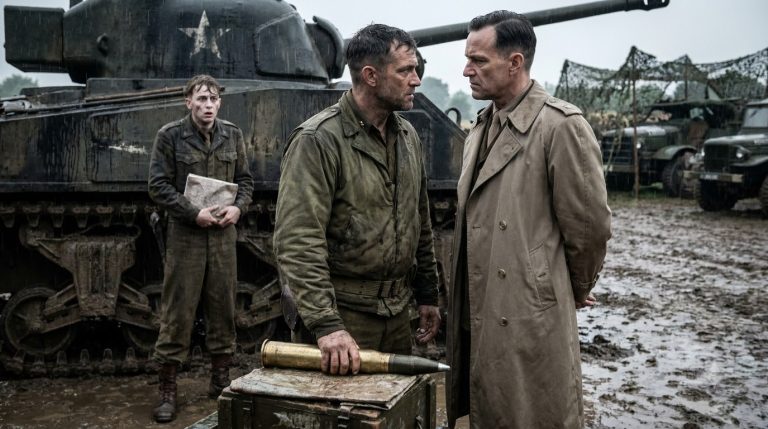
The desert air at 6:30 in the morning tasted like sulfur and cold iron.
I dragged my sleeve across my forehead, smearing sweat and dust into the rough wool of my jacket. My hands were blistered raw from swinging pickaxes through the rocky Tunisian soil all through the freezing night.
Sergeant John Noak didn’t have time to think about the blisters. Not when the horizon to the east was beginning to churn with a thick, yellowish-brown cloud of diesel smoke.
The 10th Panzer Division was coming.
Fifty-seven German tanks, backed by thousands of infantry and heavy self-propelled guns, rolled in a rigid square formation across the valley floor. They looked unstoppable. They looked like the hammer that had crushed our lines at Kasserine just thirty days ago.
I crouched lower behind the sandbagged side of our M3 halftrack.
The vehicle offered about as much physical protection as a tin can. A heavy rifle bullet could punch straight through its steel plates, and an 88 millimeter shell would turn us into vapor.
The radio beside me hissed with dead air. Static crackled through the handset, entirely useless. If we needed to coordinate with command, we had to rely on runners or shouting across the ridge.
I pulled a dented brass ammunition casing from my pocket, rolling it slowly between my thumb and forefinger. The metal was freezing.
Out in the gray distance, a single German motorcycle sputtered to a halt near a clump of scrub brush. The engine died, but no rider climbed off.
It sat there, idling in the empty space between our lines and theirs, completely abandoned.
CHAPTER 2: ENGINES IN THE DUST
The heavy roar of diesel engines slammed against our ribs before we even cleared the ridge.
Fifty-seven steel beasts advanced in a rigid, terrifying square formation across the valley floor, completely confident that the ground before them was already cleared of fight.
They thought we were still running. They thought Kasserine was the permanent shape of the American army.
I didn’t waste breath shouting. My fingers tightened around the cold metal of our 75-millimeter breech block, feeling the familiar, greasy film of gun oil and grit.
Beside me, Private Miller dropped onto his knees, his boots sliding slightly in the loose scree as he strained to haul a fresh ammunition crate from the floor of the halftrack.
The heavy wood banged against the thin steel hull with a hollow, echoing clatter that seemed far too loud in the morning air.
“Keep your head down until they clear the ridge marker,” I muttered, my voice barely cutting through the approaching mechanical thunder.
Miller didn’t answer; he just jammed a heavy green crate between his boots and wiped a smear of black grease across his chin with the back of his forearm.
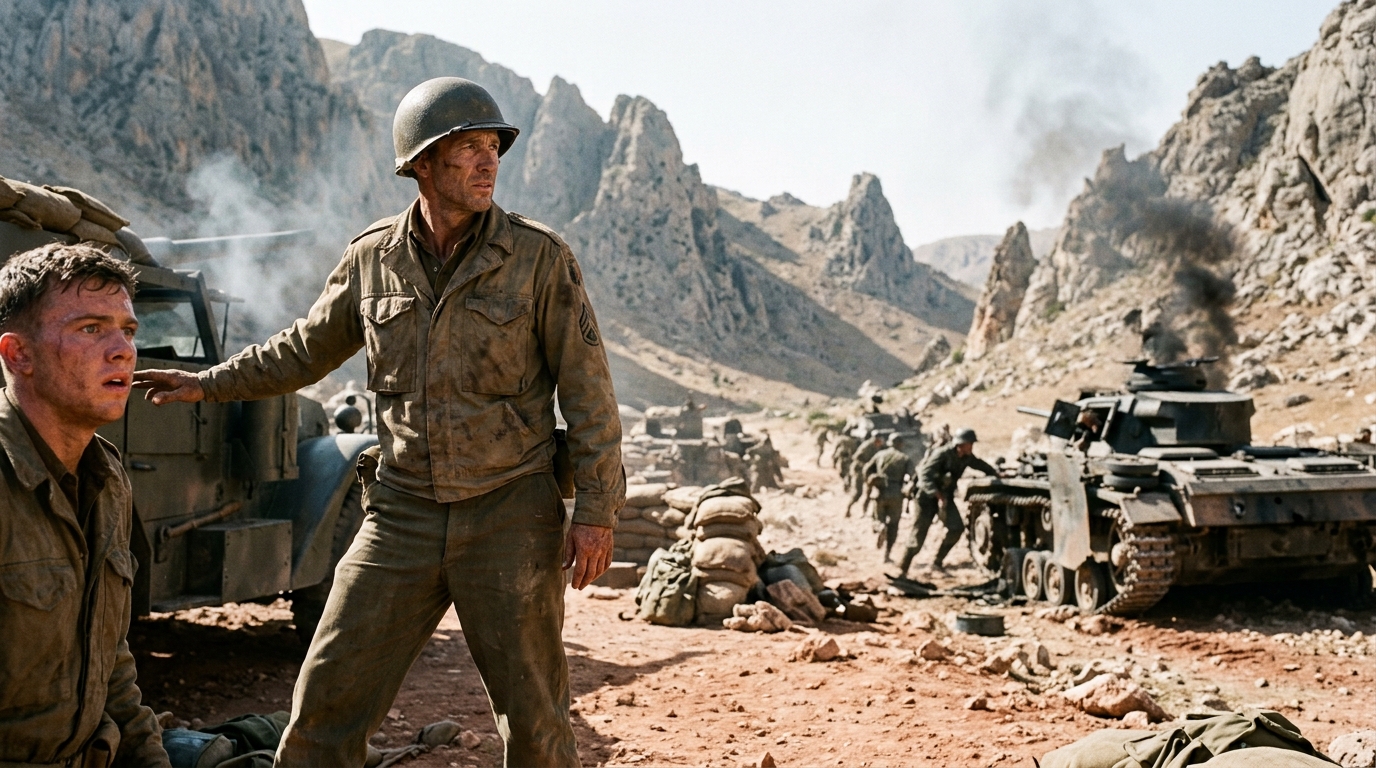
Out in the open scrubland, the leading panzers rolled right toward the hidden minefield we had spent the freezing night planting in the red dirt.
The first tank hit the boundary with a deafening, metallic shriek that echoed off the jagged limestone peaks of the Jebel Mountains.
A sheet of white-hot fire erupted from beneath its tracks, blowing the heavy steel road-wheels sky-high and instantly killing the forward momentum of the entire column.
The rigid square formation fractured in an instant, splintering into two chaotic groups as the trailing commanders desperately tried to steer their machines around the smoking wreckage.
Thirty tanks swung hard to the left along Highway 15, directly into the crosshairs of Company A, while the rest pressed straight ahead toward our position on the ridge.
I didn’t smile. I just pulled the brass casing back into my pocket and reached for the sighting lever.
The enemy was finally close enough to see.
CHAPTER 3: THE REVERSE SLOPE AMBUSH
The enemy turret swung around like the head of an iron beast hunting in the mist.
They didn’t see us tucked into the reverse slope of the ridge, and that blind spot was the only thing keeping us breathing.
Miller slammed his palm against the side of the 75-millimeter breech block, shoving a high-explosive round into the hot iron chamber with a sharp, metallic clang.
“Now!” I yelled, my voice cracking through the choking dust.
Our halftrack surged forward out of the trench, bouncing violently over the jagged rocks as we cleared the crest and exposed our flanks to the valley below.
The German commander was standing half-out of his cupola hatch, shouting orders into his throat microphone, his face locked in absolute arrogance.
He didn’t even have time to drop back down before our gun slammed into our shoulders with a force that rattled every tooth in our jaws.
The shell hit the panzer’s side skirt at point-blank range, blowing off a massive slab of armor and instantly locking up their treads in a cloud of black smoke.
“Back down! Move, move!” I shouted, yanking hard on the steering column as enemy machine-gun bullets began pinging off our thin steel plating like heavy hailstones.
We dropped back below the ridge line just as a return shell screamed overhead, tearing the top off a nearby sandbag emplacement and showering us in gritty red dirt.
My ears were ringing with a sharp, piercing whine, but out in the valley, the first wave of their armored column was throwing up its hands in sudden, uncoordinated panic.
CHAPTER 4: SHRAPNEL ACROSS THE VALLEY
The valley below turned into a smoking blender of red dirt and flying iron.
Our artillery batteries behind the line opened up all at once, sending high-explosive shells screaming through the morning air to burst directly above the infantry columns following the German tanks.
Private Miller clamped his hands over his ears, his shoulders hunched tight as the concussion waves hammered against our steel plating.
“Keep feeding the gun!” I yelled over the deafening roar, my throat burning from cordite and dust.
We didn’t have radios to coordinate the fallback, so we had to watch the ridge line manually, tracking every movement through the thick haze.
Out in the open scrubland, the German foot soldiers scattered like ants, trying to find cover in shallow shell craters that offered no safety against overhead air bursts.
A heavy shell landed fifty yards out, kicking up a wall of black smoke that briefly swallowed the burning hulks of their immobilized panzers.
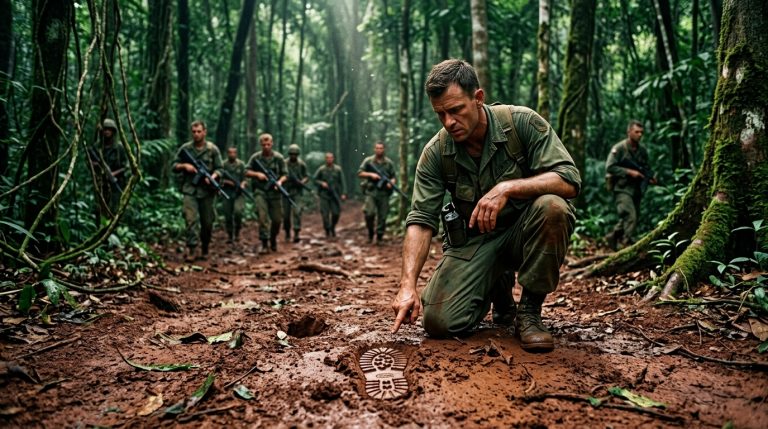
Through the stinging haze, I caught a glimpse of movement near the abandoned motorcycle we had spotted at dawn—its engine was completely dead, but a fresh set of boot prints now led away from it toward our northern flank.
The enemy wasn’t just massing armor anymore; they were trying a desperate end-run through the rocky gullies.
“Miller, shift the fire left!” I shouted, grabbing his shoulder to steady him against the violent shaking of the halftrack.
The boy nodded, his eyes wide with a grim, exhausted resolve as he heaved another heavy shell toward the breech.
CHAPTER 5: THE AFTERNOON COUNTERBLOW
The second wave came on faster, desperate and low to the ground.
German infantry surged out of the rocky gullies we had spotted earlier, rushing straight toward our flank with submachine guns raised and officers screaming orders through the smoke.
Miller dropped to one knee on the metal floor, struggling to clear a jammed ammunition belt while his breath came in ragged, whistling gasps.
“They’re bypassing the trench line!” Miller shouted, his hand slipping twice on the hot brass casing before he finally wrenched it free.
I didn’t look back; I cranked the elevation wheel until the crosshairs locked onto the lead enemy vehicle grinding its way over the crest.
The opposing commander leaned out of his hatch, waving his arm forward in a frantic, arrogant gesture that assumed our line was already hollowed out.
He didn’t know that every drop of fuel in their reserve tanks had already run dry miles back down the coastal road, leaving them with no way out if this charge failed.
“Let them have it!” I roared, slamming my thumb down on the firing pedal.
Our 75-millimeter gun leaped backward on its mounts, throwing a wall of fire and stinging cordite straight into the center of their advancing formation.
CHAPTER 6: SILENCE ON THE RIDGE
The roaring mechanical storm that had battered our hills since dawn finally sputtered out into a thick, choking stillness.
Out in the scorched red dirt of the valley, the remaining German panzers ground to a dead halt, their fuel lines completely empty and their arrogant formations broken into isolated heaps of smoking iron.
Miller dropped his heavy brass casing onto the steel floor with a dull, echoing clatter, his chest heaving as he wiped a thick streak of black soot across his forehead.
“They’re not getting back up,” Miller whispered, his voice cracking from the bitter cordite hanging thick in the air.
I didn’t answer right away. I just pulled the dented brass casing from my pocket, rolling its cold, scratched edges between my thumb and forefinger one last time.
The enemy had come here expecting us to run the way we did at Kasserine, relying on sheer intimidation and unearned entitlement to sweep us off the map.
They forgot that common men, pushed hard enough in the dirt, learn how to plant their boots and hold the line.
Slowly, I slipped the casing back into my pocket, leaned my aching back against the inside of the hull, and watched the rising desert sun finally burn through the smoke.