A Shadow in the Garden: The Long-Awaited Farewell to a Guardian Angel of History
CHAPTER 1: The Weight of Silence
The white canvas of the canopy snapped sharply in the wind, a sound like a rifle bolt clearing a chamber. Elias Vance sat in the front row, his back straighter than the mahogany chair supporting him. Around him, the elite of the nation sat in a cocoon of murmurs and soft, expensive fabrics. To them, the funeral was a choreographed dance of grief. To Elias, it was a funeral for a world that no longer existed.
He felt the heavy, textured wool of his suit against his skin—a fabric he had purchased decades ago, preserved with a care that bordered on obsession. His hands rested on his knees, gnarled fingers tracing the faint, jagged scar running across the back of his right palm. It was a map of a night in a jungle he could never name, a night that had cost the man in the casket his peace of mind.
Beside him, Sarah Thorne’s hand was a pale, fragile bird. She didn’t look at the casket. Her eyes were fixed on the rows of medals pinned to the cushions near the pulpit—a display of official valor that felt hollow, a curated reality.
“He never stopped talking about the silence,” she whispered, her voice barely a breath. It was a fracture in the mourning ceremony, an intrusion of intimacy into the public display. “Even in his sleep, Wally would wake up reaching for someone who wasn’t there.”
Elias turned his head, the movement slow and deliberate. He looked at the widow, noting the fraying edges of her silk scarf, the subtle tremolo in her voice. He saw the lifetime of questions she had been forced to bury for the sake of the General’s reputation.
“He carried a lot, Sarah,” Elias said, his voice a low, gravelly hum that seemed to absorb the ambient noise of the cemetery. “The weight didn’t come from the war. It came from what happened after.”
She looked at him then, her eyes searching his face, looking for the ghost of the man her husband had worshipped. “He told me you would come,” she repeated, and for the first time, the doubt that had clouded her expression for years seemed to dissipate. “He said if Mamba 5 came, it meant the truth was finally allowed to breathe.”
Elias felt the air shift. He hadn’t come for the honor, nor for the spectacle. He had come because of a letter that had arrived in a plain, unmarked envelope three days ago—a letter written by Wally Thorne’s own hand, dated the day before his death.
“The truth is a heavy burden to leave behind,” Elias said, his gaze shifting to the casket, draped in the heavy, stiff fabric of the flag.
He leaned forward, and in that movement, he felt the sharp prick of something hidden in the lining of his coat. It was a key. A small, cold, iron thing that didn’t belong in a funeral setting. It was the key to a locker at a bus station four states away—a locker that contained the final, unedited log of their existence. And as the chaplain stood to begin the final prayer, Elias realized the real danger wasn’t the ceremony, but the man in the second row, the one with the polished lapel pin who had been watching Elias with predatory intensity since the gates had opened.
The man was reaching for a phone, his thumb hovering over the screen, and the way he looked at the General’s widow suggested he knew exactly what that key opened.
CHAPTER 2: The Shadow of the Study
The funeral service flowed around Elias like a river around a stone. He sat motionless, his senses tuned not to the chaplain’s sermon on sacrifice, but to the subtle, discordant rhythms of the crowd. The man in the second row—a sharp-featured individual with a lapel pin that caught the low-hanging afternoon sun—hadn’t shifted his gaze from Elias’s profile for ten minutes. The phone remained in his hand, held at an angle that suggested the screen was shielded from everyone but his own eyes.
When the service finally dissolved into the rustle of standing bodies and the collective sigh of a mourning elite, Elias stood with an economy of motion that drew eyes despite his humble appearance. He moved toward the edge of the canopy, his intent clear: he was leaving.
“Mr. Vance,” Sarah Thorne’s voice was softer now, brittle as dried leaves. She moved toward him, her hand extended, though she hesitated before touching his arm. “There is a reception at the estate. Please. Wally would never forgive me if I let you walk away into the ether.”
Elias looked at her—really looked at her. He saw the genuine, raw ache of a widow, but beneath it, the quiet intelligence of a woman who had learned to read between the lines of her husband’s silences. He felt the cold iron of the locker key through his coat fabric, a sudden, heavy pressure against his thigh. If he stayed, he was entering the lion’s den. If he left, he was abandoning the only person who might actually understand the ledger he was carrying.
“I will come,” Elias said, his voice a low, steady rumble.
The drive to the Thorne estate was a blur of manicured hedges and winding lanes, the world outside the car window feeling increasingly unreal. Elias rode in the back of a black sedan, his mind drifting back to the heat. It was a sensory phantom, an intrusive memory of the Mamba unit—the smell of wet rot and ozone, the suffocating humidity of a jungle canopy that never let in the light. He felt the phantom weight of a rifle stock against his shoulder, the friction of the jungle air. He blinked, and the memory receded, replaced by the sterile, high-end upholstery of the car and the silent, watchful gaze of the driver.
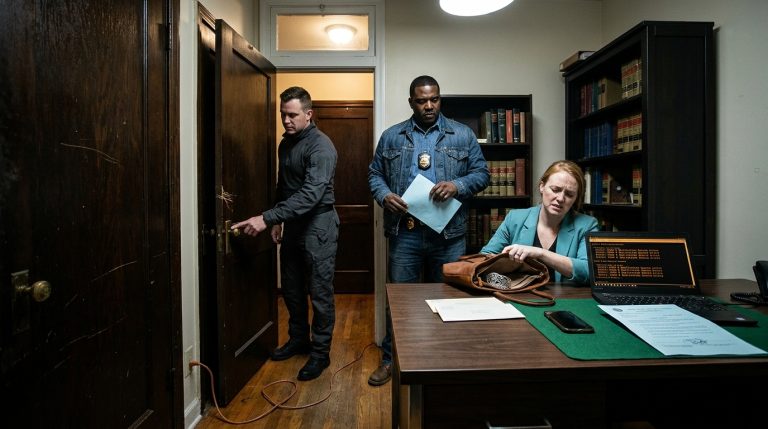
The Thorne estate was a fortress of refinement—stone walls, tall oaks, and an atmosphere of oppressive peace. Inside the study, where the air smelled of old paper and wood polish, the contrast was jarring. The room was lined with books, but Elias’s eyes were drawn to the mahogany desk. It was scarred, the surface marked by decades of use, an unexpected imperfection in such a curated space.
Colonel Davies entered the room, his uniform jacket removed, his collar unbuttoned. He looked older without the rigid posture of the cemetery. He poured two glasses of amber liquid and handed one to Elias.
“They’re asking questions, Sergeant Major,” Davies said, his voice low and serrated with fatigue. “The man from the second row—he’s from the oversight committee. He’s been breathing down my neck since the moment you were recognized. He wants to know what you’re doing here, and more importantly, he wants to know what you might have kept from the final report.”
Elias took the glass, his fingers calloused and steady. He didn’t drink. He felt the coldness of the key still resting against his leg, a silent promise. “The final report was a fiction, Colonel. You know that better than anyone.”
Davies stiffened, his eyes darting to the heavy oak door. “We’re in a room with walls that have ears. There are people who have spent thirty years ensuring that ‘Mamba’ remained a ghost story. If you’re here to wake the ghosts, you’re not just risking your own life. You’re risking the legacy of the man we’re here to bury.”
Elias walked to the window, watching the long shadows stretch across the garden. The texture of the velvet curtains felt thick, almost stifling, beneath his hand. He realized then that the oversight man wasn’t just tracking him—he was waiting for Elias to lead him to the truth. And Elias, by coming here, had unwittingly begun to unravel the very protection the General had built for his family.
“I didn’t come to wake ghosts,” Elias said, turning back to face the colonel. His voice was devoid of malice, but filled with a finality that made the younger man flinch. “I came because the General left me a map to the cage he’s been living in. And I think it’s time we let the sun in, Colonel. Whether you’re ready for the glare or not.”
Davies set his drink down, his hand trembling slightly—a momentary fracture in his professional veneer. “What did he give you, Elias?”
Elias didn’t answer. He simply reached into his pocket and placed the small, rusted key on the polished surface of the desk. The sound it made—a sharp, metallic clack against the wood—seemed to echo through the silence of the house like a gunshot.
CHAPTER 3: The Keeper of the Ledger
Colonel Davies stared at the small, rusted key. It was a mundane object—cheap, mass-produced, the kind of hardware store surplus that didn’t belong in a room furnished with heirloom antiques and the weight of history. But as he looked at it, his breathing grew shallow. He didn’t reach for it. Instead, he stepped back, as if the key possessed a heat that could scorch his skin.
“Where did you get this?” Davies asked, his voice strained.
“It was in the envelope,” Elias replied, his voice a low, steady anchor in the room. He watched the colonel’s face—the tightening of the jaw, the flicker of genuine fear in his eyes. “Wally didn’t write a long letter. He just gave me this key and the coordinates for a locker in a station that hasn’t seen an honest passenger in ten years.”
Davies moved to the window, pulling the heavy velvet drape aside just enough to peer out into the garden. The shadows were lengthening, turning the manicured lawn into a series of jagged, dark shapes. “You don’t understand, Elias. This isn’t just about a mission report. If that locker contains what I think it does—the original, unredacted logs of the Mamba unit’s final sweep—then half the people currently sitting in the reception hall are going to have their careers turned into dust. Including, God help me, the man they’re here to honor.”
Elias stood still, the scent of aged paper and leather-bound books thick around him. He leaned down and retrieved the key from the desk. It felt cold against his palm, a stark, uncomfortable reality in the warmth of the study. He noticed something then—the key wasn’t just rusted; it bore a manufacturer’s mark that didn’t match the modern lockers used by the transit authorities. It was a relic, a remnant of a protocol that had been phased out decades ago. It meant the locker hadn’t been touched in a long, long time.
“He carried the guilt of that mission like a stone in his pocket,” Elias said, his voice quiet. “He didn’t want to be remembered as a saint, Davies. He wanted to be remembered as a man who knew what he did and tried to balance the scales.”
“He was a four-star general,” Davies countered, finally turning back. His face was etched with a desperate, pragmatic frustration. “The world needs to believe the myth. You, of all people—the man who was his shadow—you know what happens if you pull that thread. The entire shroud of his legacy unravels.”
“The shroud is already rotting,” Elias said. He moved toward the door, his steps silent on the heavy carpet. “The man from the oversight committee is outside. He’s not here for the funeral. He’s here to make sure that whatever Wally left behind stays buried.”
Elias reached the door, but he didn’t exit. He paused, listening. There was a sound from the hallway—the soft, rhythmic click of heels on marble, accompanied by a low, persistent murmur of conversation. He recognized the tone. It was the tactical, predatory rhythm of men who were currently engaged in a coordinated sweep of the estate. They weren’t looking for the restrooms; they were searching for something specific.
“They’re coming here,” Elias whispered, the realization hitting him with the force of a physical blow. He looked back at Davies. “You didn’t just invite me here for a drink, did you, Colonel? You wanted me to bring the key so they could take it.”
Davies didn’t look away, but the shame that washed over his features was absolute. “They told me they were protecting his reputation. They told me you were a liability. I have a family, Elias. I have a career that was built on the foundation of the General’s success.”
“And you were willing to burn the only man who ever truly knew him to keep it standing?” Elias asked, his voice devoid of anger, filled only with a profound, soul-weary disappointment.
The door handle turned. Elias didn’t panic. He moved with the fluid, calculated precision that had defined his life as a shadow. He didn’t head for the door; he moved toward the heavy bookshelf behind the desk, his eyes scanning for the emergency egress he knew must exist in a study designed by a man like Wally Thorne. He felt the cold air against his neck, a draft behind the shelves.
He didn’t wait for the door to open. With a swift, firm shove, he pushed against the paneling behind the books. The shelf gave way with a low, mechanical groan, revealing a cramped, dusty corridor.
“Don’t follow me, Colonel,” Elias said, slipping into the dark, narrow passage. “And if you want to save yourself, stop looking for the truth. You don’t have the stomach for what’s at the end of this key.”
As he pulled the shelf back into place, the study door swung open. Elias stood in the pitch black of the hidden passage, his heart rate steady, his hand gripping the rusted key. He could hear the heavy, polished shoes of the oversight agents entering the room, their voices cold and demanding. He was deep in the house now, and he was finally, truly, moving toward the grave.
CHAPTER 4: The Dust of Accountability
The passage was a thin artery of stale, recycled air and damp concrete. Elias pressed his back against the rough, cold masonry, his breath shallow and controlled. Beyond the shelf, the muffled voices of the oversight agents were clipped and transactional. They weren’t looking for a conversation; they were tearing the study apart. He heard the thud of books hitting the floor and the sharp, metallic scrape of a letter opener being used to pry at the paneling.
He didn’t move. He let the darkness settle over him, an old, familiar comfort. He checked the key in his pocket once more, his thumb tracing the jagged teeth of the iron. If these men were here, it meant the General’s death had triggered a rapid, desperate sanitation of history. They were terrified of what was in that locker, and that fear was his only tactical advantage.
Elias began to move, his hands feeling along the damp surface of the wall until he found the mechanism—a simple, rusted lever that operated a secondary exit into the estate’s utility tunnels. The metal groaned with the friction of decades of neglect. He forced it down, the sound masked by the agents slamming a cabinet door in the room above. A small section of the wall swung outward, revealing a narrow crawlspace that led toward the estate’s outer perimeter.
He crawled through, his joints complaining in the damp air. The scent of ozone and iron filled his lungs. This was the underside of the prestige, the forgotten architecture of a home built for a man who spent his life hiding his true nature in plain sight. As he emerged into the utility corridor, a low, persistent hum buzzed in the fluorescent lights above. The corridor was lined with exposed pipes, their surfaces flaked with rust, dripping condensation that landed with a rhythmic plink into a pool of stagnant water.
He was moving, but he was exposed. He knew these tunnels—or at least, the logic behind them. They were designed to service the house, which meant they led to the exterior, to the gardener’s sheds and the vehicle bays. He pushed forward, his movements silent, his mind constantly assessing the structural integrity of the corridor. The walls here were thin, vibrating with the vibrations of the house above.
He reached a junction where a set of pipes groaned and shivered. A tremor rippled through the structure—the weight of a heavy piece of machinery being moved in the floor above. A crack appeared in the concrete ceiling, spilling a fine, gritty dust onto his shoulders. He didn’t break stride. He treated the instability as a variable to be managed, his path adjusting to avoid the most compromised sections of the tunnel.
He reached the hatch leading to the gardener’s shed and cracked it open just enough to peer out. The late afternoon sun was dying, casting long, bruised shadows across the garden. The primary search team was currently focused on the house, but a single agent stood near the shed, checking a tablet with the intensity of a man looking for a target.
Elias didn’t hesitate. He wasn’t going to fight his way out—not when his objective was the locker. He waited, his eyes tracking the agent’s movement. When the man turned to verify a coordinate on his screen, Elias slipped out of the hatch and into the dense thicket of the hedge maze. He moved like smoke, his presence defined not by sight, but by the subtle disturbance of the leaves.
He was outside the estate walls now, but the sensation of being watched remained. The agent’s attention shifted; he looked toward the hedges, his posture changing from idle to alert. He had heard something—the snap of a dry twig, or perhaps the slight rustle of displaced air. The agent started toward the hedge, his hand drifting to the side of his jacket in a gesture so rehearsed it was almost poetic.
Elias circled back, using the uneven, broken terrain of the landscaping to stay in the blind spot of the agent. He didn’t engage; he used the distraction to reach the service gate. He hopped the fence, his landing silent on the dirt road beyond.
He was out, but the weight of the realization hit him with a heavy, physical force. They weren’t just searching the house; they were sweeping the entire perimeter. They knew he had the key. The pursuit had evolved. He wasn’t just a mourner anymore; he was a target, and the distance between him and the locker at the bus station was closing, not in miles, but in the tightening web of the people who wanted to ensure the General’s history remained a lie.
He began to run, his pace steady, his breath rhythmic, moving into the gathering dark of the countryside, toward the only truth he had left.
CHAPTER 5: The Weight of the Secret
The bus station was a ghost of a building, a concrete shell clinging to the edge of an abandoned rail line. It smelled of wet asphalt and decay. Elias slowed his pace as the structure loomed out of the darkness, a hulking, featureless mass under a failing streetlamp. He kept to the periphery, his eyes scanning for the telltale glint of light from a parked car or the flicker of a cigarette—the signature of someone waiting.
He reached the locker bay, a corridor of dented, steel-grey doors that had seen better decades. He stopped, his chest heaving, listening. The silence of the station was absolute, broken only by the distant, rhythmic dripping of water from a broken pipe. He pressed his hand against the wall, the rough, grit-covered texture of the concrete scraping his skin. He needed to be precise.
His mind was a carousel of competing realities. For a split second, the rusted locker doors blurred, and he saw the jungle—the green, suffocating haze of the Mamba unit’s last mission. He saw the General, young and broken, handing him a packet of papers that should never have existed. He blinked, and the jungle vanished, replaced by the sterile, dim light of the station. The ghost of the past was beginning to intrude on the present, a symptom of the exhaustion that was starting to seep into his joints.
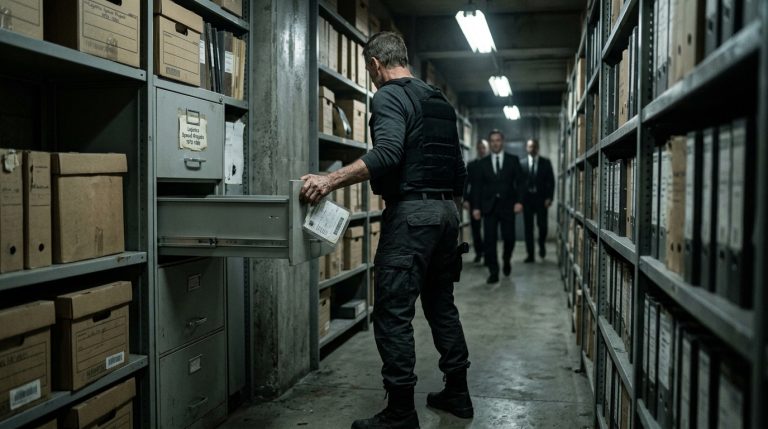
He moved toward locker 402, the number etched into the metal with a faded, white paint. He inserted the key. It felt heavy, a piece of forged history in his hand. It turned with a shriek of protesting metal that seemed loud enough to wake the dead.
He didn’t pull the door open immediately. He stood still, his heart hammering against his ribs. He knew what was inside—or rather, he knew what the General had claimed was inside. A journal. A ledger of names and events that would either vindicate the men they had lost or cement their betrayal forever.
He pulled the door open. Inside, tucked against the back of the locker, was a small, leather-bound book, its edges worn, the binding cracked. He reached for it, his fingers trembling—not from fear, but from the realization that this object represented a lifetime of penance the General had carried in silence.
As his hand brushed the leather, he heard it: the soft, crunching sound of footsteps on gravel outside the station entrance.
He didn’t grab the book; he didn’t pull it out. He froze. They were here. He had been followed, not by a tail, but by a net that had been closing around him since he left the estate. He shifted, his body turning to shield the locker, his eyes locked on the entrance. A silhouette emerged, framed by the pale, artificial light of the streetlamp outside. It was the agent from the estate, his posture relaxed, his weapon drawn with a practiced, casual elegance.
“Sergeant Major,” the agent said, his voice echoing in the hollow space of the station. “You’ve made this significantly more difficult than it needed to be. That ledger doesn’t belong to you. It belongs to the institution that’s been trying to keep your memory clean for thirty years.”
Elias stood in the shadows, the locker behind him acting as a cold, metal barrier. “The institution didn’t earn that ledger,” Elias replied, his voice a low, gravelly hum. “The men who died for it did.”
“They died for a concept,” the agent countered, taking a slow, steady step forward. “A concept you’re currently trying to tear down. The General knew that. He spent his life making sure people like you stayed in the dark, where you couldn’t do any more damage to the legacy he built.”
The agent’s words were a jagged, calculated strike. They were meant to shake him, to force him to doubt the purpose of his survival. Elias felt the ghost of the jungle heat again—the memory of the General’s eyes on that last night, filled not with glory, but with a terrifying, hollow understanding of what they were doing.
Elias didn’t retreat. He shifted his weight, his feet finding purchase on the cracked concrete floor. He was a shadow, and he was the only thing standing between the truth of that mission and its permanent erasure. He reached back and pulled the journal from the locker, the leather cool and firm beneath his hand.
“You’re right,” Elias said, his voice sharpening, taking on the tone of a man who had already accepted his outcome. “He did protect his legacy. But he also knew that he couldn’t keep a secret forever. And that’s why he left the door open.”
He tucked the journal into his coat. He was trapped in the bay, with only one exit and an armed man blocking it. The agent raised the weapon, his finger hovering over the trigger. The station felt like it was shrinking, the walls pressing in with the weight of decades of unspoken history. Elias felt the friction of the key still clutched in his left hand—a final, sharp weapon in a world that had forgotten how to fight for the truth.
CHAPTER 6: The Final Account
The agent’s finger tightened on the trigger, the plastic grip groaning under the pressure. Elias didn’t flinch. He watched the man’s eyes—not for aggression, but for the flicker of doubt. The agent was an instrument of a policy, a cog in a machine built to sanitize history, but he was currently facing a man who had already survived the end of his world.
“You pull that trigger,” Elias said, his voice quiet, carrying through the stale air of the station like a tolling bell, “and you don’t just kill me. You create a void. A void that will be filled by the very thing you’re trying to prevent. People will ask why. They will dig into the archives. And when they find this—” he tapped the leather-bound ledger against his chest “—they won’t just see a failed mission. They will see the institution that traded the lives of its best men to cover a bureaucratic error.”
The agent hesitated. The silence stretched, filled only by the distant, mournful whistle of the wind through the station’s shattered skylights. Elias saw the realization dawn: the agent had been fed the story that Elias was a rogue element, a danger to stability. He hadn’t been told that the ledger contained proof that the institution itself was the architect of the betrayal.
“Give it to me,” the agent demanded, though his voice lacked its earlier, lethal precision. “We can settle this. You can walk out of here. You can disappear again.”
Elias looked down at the journal. He opened the cover. The pages were yellowed, brittle, filled with the General’s frantic, tight handwriting. He didn’t need to read them to know the contents; he had lived them. He stepped forward, his movements slow and deliberate, placing the journal on the cold, pitted floor between them.
“The truth isn’t something you can trade,” Elias said, standing to his full height. “It’s a debt that eventually comes due.”
As the agent stepped forward to retrieve the book, his guard dropped for a fraction of a second. It was the only opening Elias needed. He didn’t strike the man; he stepped into his space, his hand catching the agent’s wrist with a grip honed by decades of survival. He twisted, the agent’s weapon clattering to the concrete with a hollow, metallic ring. Elias didn’t keep the gun. He kicked it across the room, into the darkness of the tracks.
The agent stared at him, stunned, his face a mask of confusion and mounting dread. Elias reached down, picked up the journal, and held it out. “Read it,” he said. “Read the final entry. Then decide if your orders are worth the weight of what’s written there.”
The agent took the book, his hands trembling as he flipped to the marked page. His eyes scanned the lines, and as he read, the color drained from his face. The rigid, professional posture he had maintained since the cemetery collapsed. He sank onto a rusted bench, the ledger heavy in his hands. He looked up at Elias, his gaze no longer filled with the intent to kill, but with a horrifying, clear-eyed recognition. He realized, in that moment, that he was holding the evidence of a rot that went all the way to the top of his command.
The confrontation ended not with violence, but with the quiet, suffocating realization of the truth. The agent closed the ledger and stared at the dark entrance of the station. “They’ll hunt you,” he whispered.
“Let them,” Elias said.
Elias walked out of the station into the cool, biting air of the night. He had no plan, no destination, and no protection. He walked until his legs ached, until the lights of the station were a mere smudge on the horizon. He found himself near a small, neglected plot of land—a memorial grove planted years ago in honor of forgotten soldiers.
He sat on a low, stone bench, his breath hitching in his chest. He pulled a small, silver item from his pocket—a damaged canteen cup he had carried for forty years, the metal dented and scraped from a hundred different terrains. He began to polish it with the hem of his coat, the rhythmic motion soothing the jagged edges of his exhaustion.
The struggle was over. The truth was no longer hidden in a locker, but held by a man who now had to decide whether to bury it or act on it. Elias felt a profound, aching peace settle over him. He was no longer a ghost; he was a man standing in the light of his own history. He placed the canteen cup back into his bag, stood up, and began to walk. The path ahead was dark, but for the first time in decades, he wasn’t looking behind him. He had fulfilled his final promise to the General, and in doing so, he had finally granted himself the permission to stop running.