The Dusty Bell Tower And The Single Shot That Shattered An Army
CHAPTER 1: THE REJECTED TOOL
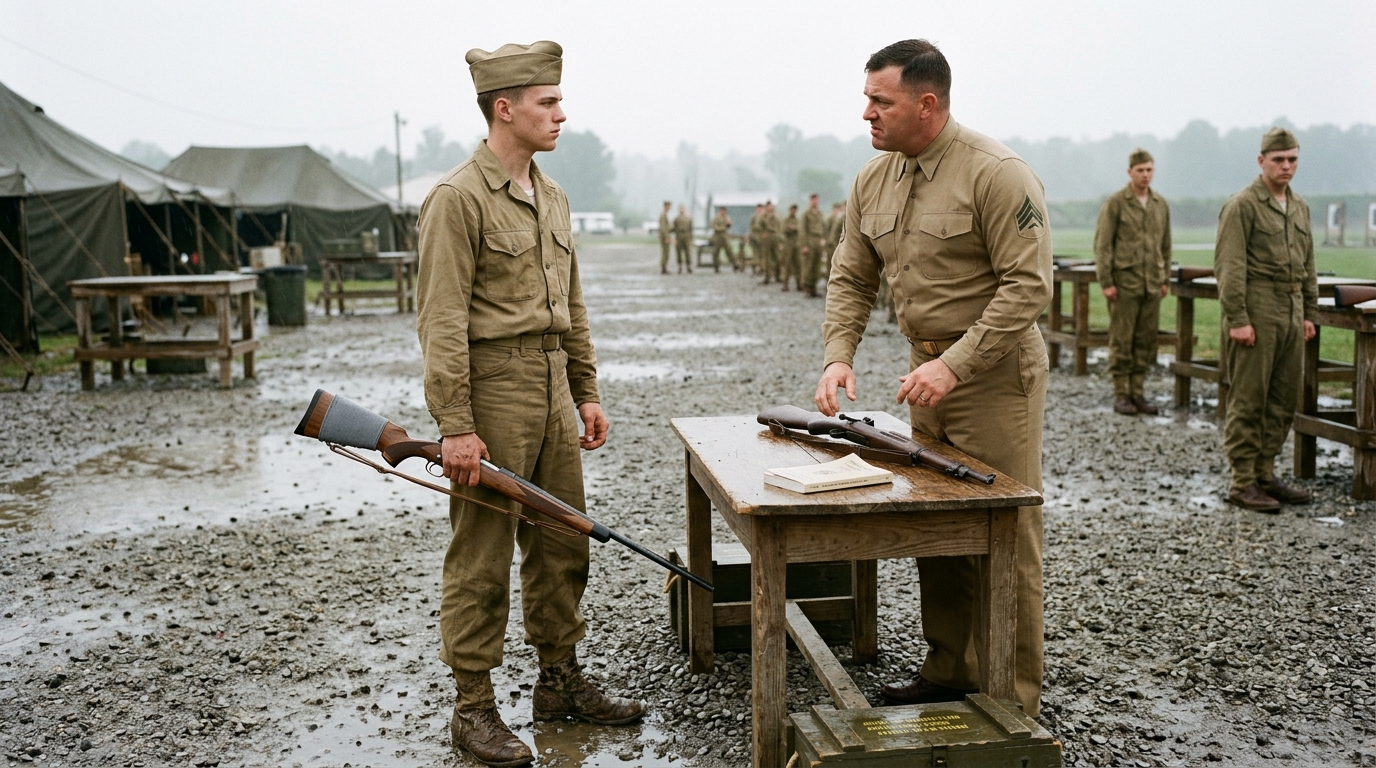
The gate at Camp Perry smelled of wet gravel and hot oil.
Henry held the wooden stock of his Winchester Model 70 against his leg, trying to keep the gray canvas wrap from sagging.
The instructor didn’t even look up from his clipboard.
What the hell is that, private?
My rifle, sir.
That’s not a rifle, private.
The instructor tapped a heavy Springfield M1903 against the wooden desk.
That’s a hunting toy. Put it away and get your proper issue.
Henry didn’t argue.
He unrolled the canvas just enough to let the afternoon sun catch the checkered walnut grip his father had hand-oiled back in the Shenandoah Valley.
The Springfield’s receiver felt heavy and square in his palm, completely foreign to his shoulder.
You’ll be lucky to hit a barn at five hundred yards with that civilian garbage, the instructor muttered, tossing a standard manual across the counter.
Henry wrapped the Winchester back up, sliding it deep into his personal duffel beneath three pairs of wool socks.
He didn’t say a word about the ten thousand rounds he had put through that barrel since his sixteenth birthday.
The army wanted uniformity, but Henry knew a machine only worked as well as the hands that fed it.
He walked out into the Ohio drizzle, carrying a rifle he didn’t trust, waiting for a war that hadn’t yet taught them the difference between standard issue and survival.
CHAPTER 2: THE BROKEN RIDGE
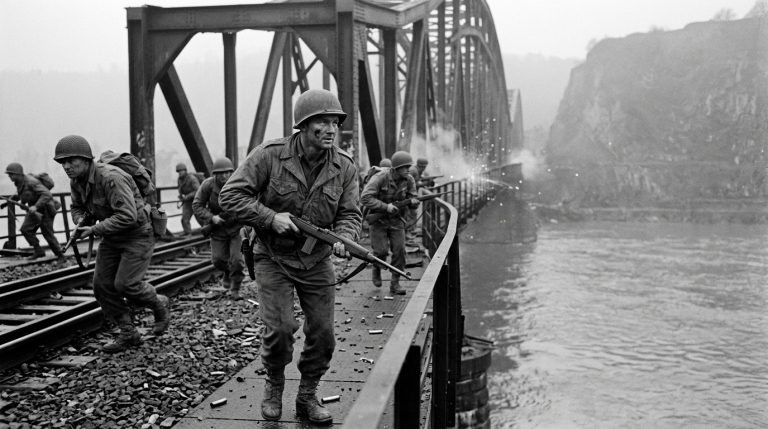
The rain over the low ridges near Brest didn’t fall so much as hang in the air, a gray curtain that coated every rifle bolt in a fine, gritty skim of mud.
Henry sat on an upturned ammunition crate, running an oily flannel patch down the bore of the Springfield the army had forced into his hands.
The trigger had a greasy hitch right at the second stage, a microscopic drag that felt like dragging a boot heel across gravel.
Captain Morrison dropped a grease-stained situation map onto the table, his thumb pressing hard against the contour lines marking the ridge.
Three platoons pinned down in the drainage ditches, Morrison muttered, his voice dropping into a flat, exhausted rasp.
Another flanking maneuver went out an hour ago, and the German machine guns were waiting before our boys even cleared the wireline.
Henry didn’t look up from his barrel, feeling the cold steel through his cotton rag.
Someone’s coordinating from behind the line, sir.
Not just coordinating, Lawson.
Morrison dragged a heavy red grease pencil across the map, carving a brutal slash through the German lines.
Every move we telegraph gets met before the ink’s dry on the orders.
A faint scent of damp wool and wood ash drifted through the canvas flap, though there was no stove for fifty yards.
Henry stared at the anomalous smudge of gray soot staining the corner of the map table, completely out of place in the damp mud of the forward command post.
The major general commanding that ridge isn’t guessing our playbook, Henry murmured, his thumb checking the crisp safety catch of his hidden Winchester tucked away in his duffel.
He’s reading our habits like an open ledger.
CHAPTER 3: THE FAILED TOWER
The radio operator’s handset crackled with static before the voice broke through, thin and breathless.
They missed short by twelve feet, sir.
Captain Morrison slammed his fist against the damp canvas table, rattling the brass casing of a spent shell.
And the tower?
Artillery opened up on them the second the muzzle flashed, Captain.
The operator looked up, his forehead slick with cold sweat.
Both snipers are crawling back through the drainage ditch right now, but the Weaver scopes couldn’t reach eight hundred yards in this mist.
Henry stood quietly in the corner, feeling the heavy, unyielding square of the military rifle across his shoulder.
The army’s standard gear had buckled under the exact conditions the Camp Perry instructors had laughed off.
It wasn’t just the distance; it was the blind reliance on factory specifications over true familiarity.
Henry reached down into his duffel, his fingers brushing the checkered walnut grip of his Winchester hidden beneath the wool.
They’re treating eight hundred yards like an artillery problem instead of a marksman’s equation, Henry said, his voice dropping into a flat, steady rasp that cut through the tent’s panic.
The two failed teams proved the Springfield’s limits, leaving only one dangerous option on the table.
CHAPTER 4: THE CAPTAINS GAMBLE
The oil lamp on the center crate flickered, casting long, wavering shadows across the captain’s weather-beaten cheekbones.
You’re out of your mind, Lawson, Morrison muttered, his hand hovering over the red grease pencil.
That deer gun won’t clear five hundred yards, let alone eight.
Henry didn’t blink, his fingers tightening against the hidden canvas wrap beneath his arm.
The Springfield teams used factory specs and guessed the wind, sir.
He leaned forward, letting the harsh truth settle into the heavy silence of the tent.
I’ve put ten thousand rounds through my Winchester since I was sixteen; I know how the barrel breathes when the temperature drops.
Morrison looked down at the casualty reports scattered across the wet wood—forty men lost in forty-eight hours because an unseen coordinator kept cutting their flanks to pieces.
Regulations forbid personal firearms in combat zones, private.
The captain let out a long, ragged sigh, rubbing his temples where a fresh vein pulsed under strain.
If you miss, you’re a dead man before you hit the ground.
I won’t miss, sir, Henry said, his voice dropping into an unyielding, flat register.
Morrison stared at him for three long, agonizing seconds before sliding the authorization pass across the stained map.
Get out of my sight, Sergeant—and don’t come back without that general.
CHAPTER 5: THE SILENT WAIT
The rubble inside crunched softly beneath his soles, smelling sharply of wet lime and ancient plaster.
Henry lowered his canvas bundle onto a flat block of masonry, his fingers stiff from the pre-dawn frost.
He didn’t light a match.
Instead, his hands moved with blind, practiced familiarity, unwrapping the Winchester and checking the bolt action in the dark.
The mechanism slid home with a clean, muffled click that felt entirely different from the heavy rattle of military issue.
Outside the jagged window frame, the first gray light of morning crept across the low French hills, touching the distant crossroads eight hundred yards away.
Henry set his heavy spotting scope on a stable pile of bricks, adjusting the focus until the German command post came into sharp, agonizing relief.
A drift of cold wind caught the hem of his wool coat, bringing that faint, inexplicable scent of wood ash dancing through the damp drafts of the tower.
He pulled out his small notebook, running a thumb over the pencil marks where he had charted the three distinct wind zones between his perch and the enemy lines.
The general’s staff car hadn’t arrived yet, but the rigid precision of their morning routine left zero room for error.
Henry gripped the checkered walnut stock, his breathing slowing down to match the steady rhythm of the distant cannon fire.
CHAPTER 6: THE LONG DISTANCE FALL
The staff car rolled to a halt by the crossroads, kicking up a thin, greasy spray of French mud.
General Schulz stepped out, his gray hair catching the pale morning glare as he strode directly toward the map table.
Henry exhaled slowly, letting his breath feather out into the damp tower air until his shoulders dropped dead flat.
He didn’t rush the second stage of the pull; his finger found the crisp, hand-tuned break his father had polished back in the Virginia valley.
The Winchester cracked with a dry, sharp snap that shook the loose mortar around the window frame.
A full second crawled past like an eternity of lead weight, the bullet dropping through three distinct wind zones before finding its mark.
The general collapsed straight across the unfolded maps, his officers scattering in blind panic without a single clue where the steel had come from.
Henry worked the bolt with a smooth, automatic motion, chambering a fresh round while his eyes scanned the empty road below.
No one rushed the bell tower; the enemy was entirely paralyzed by the sudden, crushing vacuum at the top of their command chain.
Within twenty-four hours, the German defensive line dissolved completely under the weight of its own leaderless confusion, opening the road to Brest for good.
Back at headquarters, Captain Morrison stared down at the report with a slow, disbelieving shake of his head.
That was eight hundred yards with a hunting rifle, Lawson—how in the world did you pull it off?
Henry kept his hands steady, feeling the familiar walnut stock resting safely against his kit.
The rifle didn’t make the shot, sir—ten thousand rounds of practice before the war made the shot.
Morrison signed the Silver Star recommendation without another word, officially appending an exemption for the civilian hardware onto the company ledger.
Henry walked back out into the gray afternoon drizzle, slipping his hand into his pocket to roll a scarred cartridge case between his fingers.
The war was moving forward, but the arrogant voices back at Camp Perry were history—replaced forever by the quiet, unyielding truth of a common-sense everyman who knew his tools.