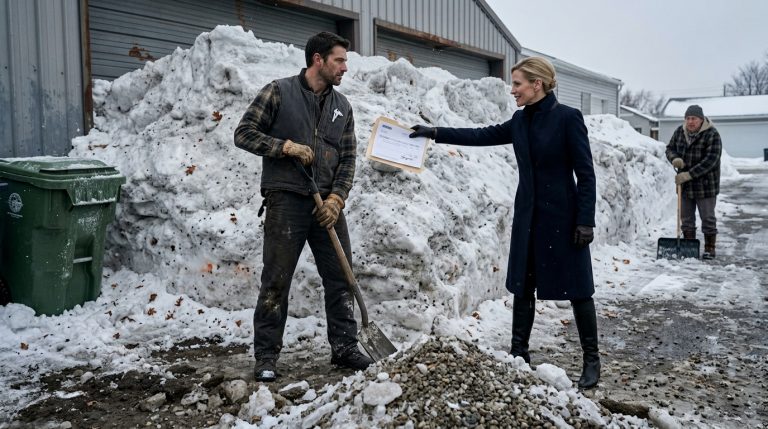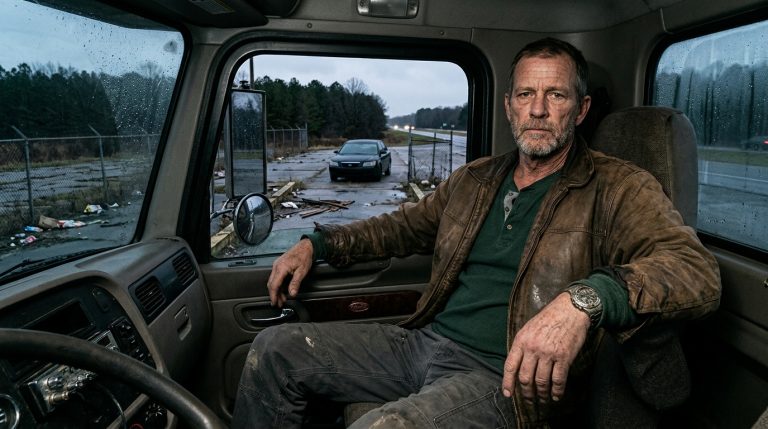
The Iron on Whisper Wind: A Hardboiled Tale of Land, Bloodlines, and Tactical Retaliation
CHAPTER 1: THE LINE IN THE MUD
The mist over the Whisper Wind River smelled of damp silt and rotting pine. Ten feet out, the water ran dark, cold, and heavy.
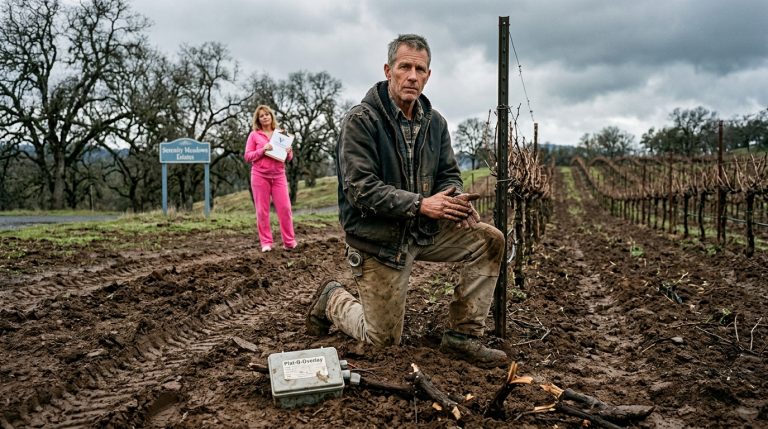
A shadow broke the tree line. Pastel pink. Human width. Moving with the stiff, deliberate rhythm of someone carrying a weapon they didn’t know how to clean.
I didn’t lift my chin from the water. I reached into my coat pocket, my thumb running over the worn glass face of my great-grandfather’s brass compass. The cold brass settled against my knuckle. Five hundred yards west. Granite marker on the flat. Oak tree on the rise.
“This is a designated community recreation area, Major Callahan,” the voice rasped. Syrupy. Dull saw on knotty wood. “Your exclusive fishing privileges have been revoked. Five minutes to vacate, or the fines begin.”
I kept my eyes on the line. The spool whirred. Smooth. Rhythm intact.
“You’re standing on dead grass, Karen,” I said. My voice didn’t rise. It didn’t need to. “And you’re four feet over the ditch.”
“Bylaw 7.4, subsection C,” she said. The heavy clip of her binder snapped shut like a small trap. “All riverfront access within the community boundary is classified as shared amenity space. Your fence line behind you is the new limit. The board ratified it Tuesday.”
I reeled in two turns. A seven-inch rainbow trout flashed beneath the scum line, panicked, and went deep into the weeds.
“The board,” I said.
“The board.” She stepped down off the embankment. Her sneakers sank an inch into the river mud—my mud. “You don’t own the water, Jack.”
“Never said I owned the water.” I set the rod butt against the toe of my boot. I turned my head just enough to catch her profile. Squeezed into that pink tracksuit, clipboard pressed against her ribs like armor. “I own the ground it sits on. Six feet below your soles, straight down to the bedrock.”
“That’s absurd.” Her mouth twitched. A sharp, ugly flex of the cheek muscle. “No one owns a riverbed.”
“Angus Callahan did in 1888,” I said. “The county clerk signed it. Parcel 7B.”
“This entire tract was annexed when River’s Edge Estates purchased the Miller lot,” she countered. Her tone sharpened, shedding the false polite edge. “The developer’s map overrides farm deeds from the nineteenth century. Pack your gear.”
I pulled the brass compass from my pocket. Unscrewed the casing with a dry click. The needle swung north, trembling, then locked solid.
“Your developer bought forty acres on the ridge,” I said, pointing the casing toward the hill where twenty-four beige McMansions sat stacked like storage crates. “My line ends at the granite flat. Your jurisdiction ends where the incline hits forty degrees.”
“We’ll see what the HOA attorney says about your granite,” she spat. She turned on her heel, her heavy treads tearing a chunk of wet turf out of the bank. “One hundred dollars a day, Major. Starting now.”
She marched back up the ridge, her pink jacket swallowed by the gray pine trunks.
I stood alone on the bank. The river gurgled over the river stones, steady and indifferent. I knelt, unhooked the trout, and let it drop back into the dark current.
Two days later, the cream-colored envelope arrived in my box. Thick stock. Embossed logo—a blue wave crashing into a green swoosh. Inside sat the formal citation. Unauthorized Use of Shared Amenity Space. Penalty: $100. Failure to comply within thirty days will result in property lien procedures.
I laid the paper on the oak table in my study. Beside it sat the thick, leather-bound folder I’d pulled from the fireproof safe. The 1888 deed was brittle, the black ink faded to the color of dried blood, but the words were clear: extending to and including both banks of the Whisper Wind River and the subaqueous land thereof.
My thumb found the edge of the brass compass on the desk.
I picked up the landline and dialed a capital city code I hadn’t called in three years.
“Thorne,” the voice answered on the second ring. Heavy, tired, sharp as a bayonet.
“Mark,” I said. “I’ve got a civilian sitting on my flank.”
A short pause over the wire. “Give me the coordinates, Jack.”
“Small-time HOA president. Wants my riverbed.”
Thorne let out a dry, barking laugh. “Tell me you didn’t shoot her.”
“Not yet,” I said, looking out the window toward the ugly line of fresh wooden survey stakes Karen’s men had hammered into my grass an hour ago. “I need the big guns first.”
CHAPTER 2: RECONNAISSANCE IN THE GRAY
“Give me forty-eight hours on the title search,” Mark Thorne’s voice growled through the receiver, heavy with the dry rattle of a three-pack-a-day habit he’d never quite quit. “If she’s trying to carve off Parcel 7B, she’s either fundamentally ignorant of state property law or she thinks you’re too old to bleed for six hundred square yards of river mud.”
“She thinks I’m a retired officer with a fishing rod and a pension,” I said. My thumb worked the brass edge of the compass in my palm, the metal warm from my skin. Out through the dirty glass of the study window, three raw pine stakes stuck out of the turf like broken bones. Five feet inside the mark. “She doesn’t know about the subaqueous deed.”
“Don’t show your hand yet,” Thorne warned. “Let her print her citations. Let her sign her name on the paperwork. Every piece of paper she generates with the word lien on it is another pound of lead in her own boots once we step into chancery court.”
I hung up the phone. The click of the cradle sounded sharp in the empty house.
I pulled open the middle drawer of the desk. The 1952 county survey map lay flat under a stack of tax receipts. My father had bought that survey after old man Miller—Karen’s house sat on his orchard now—tried to push a drainage ditch through the south pasture. I could still smell the copper-heavy scent of my father’s work coat, recall the way his knuckles turned white around a fence tool when Miller brought two deputy sheriffs to the gate. He hadn’t raised his voice. He had simply laid the parchment on the hood of the truck and pointed at the black line marking the Jurisdiction Line across the channel. The deputies had taken one look at the county clerk’s red wax seal and told Miller to fill the ditch back in.
I left the study, stepped out onto the porch, and let the screen door slap shut behind me. The air was cool, carrying the sharp bite of early woodsmoke from the ridge.
I walked down the slope toward the row of McMansions bordering my north fence. River’s Edge Estates. Twenty-four units finished in dry-stacked stone veneer and beige stucco, built so close together you could hear your neighbor clear his throat through the drywall.
At lot twelve, Eleanor Gable was kneeling in her flowerbed, a small plastic trowel in her gloved hand. She was seventy-eight, her spine curved like a willow branch, her fingers stiffened by fifty years of garden soil.
“Morning, Eleanor,” I said, stopping at the low cedar rail that marked her property line.
She flinched, looking up with a start before her eyes softened behind thick lenses. “Oh. Jack. You startled me.”
“Roses are coming along,” I noted.
Her chin trembled, just a micro-fraction, before she pressed her lips into a tight line. She looked past my shoulder toward the hill where Karen Miller’s two-story colonial sat over the development like a guard tower.
“They won’t be here next week,” Eleanor whispered. Her hand drifted down to the soil, her gloved fingers clenching into a small clod of earth. “I received a notice yesterday. Subsection 4.1. Non-conforming garden structures.”
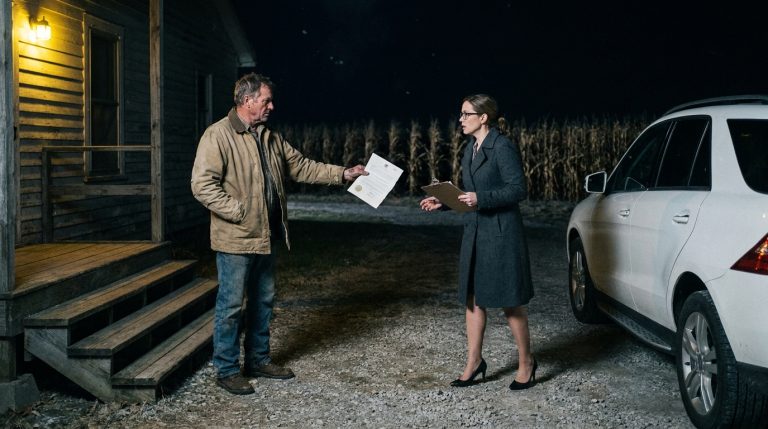
She reached into the pocket of her canvas apron and pulled out a folded slip of paper, holding it out to me with a hand that shook like a dry leaf in November.
I took it. Cream stock. Blue wave, green swoosh.
Violation: Installation of unauthorized avian feeding apparatus and non-approved perimeter flora.
CHAPTER 3: THE WIRE IN THE SILENCE
I didn’t sleep well on Wednesday night.
The wind blew down off the ridge, bringing the sharp, wet smell of autumn pine and the distant hum of traffic on the county highway. Every two hours, I pulled my jacket over my shoulders, stepped out onto the porch, and looked down toward the river.
By sunrise, the two workers Karen had hired were gone, but their work sat raw and green against the grey morning light.
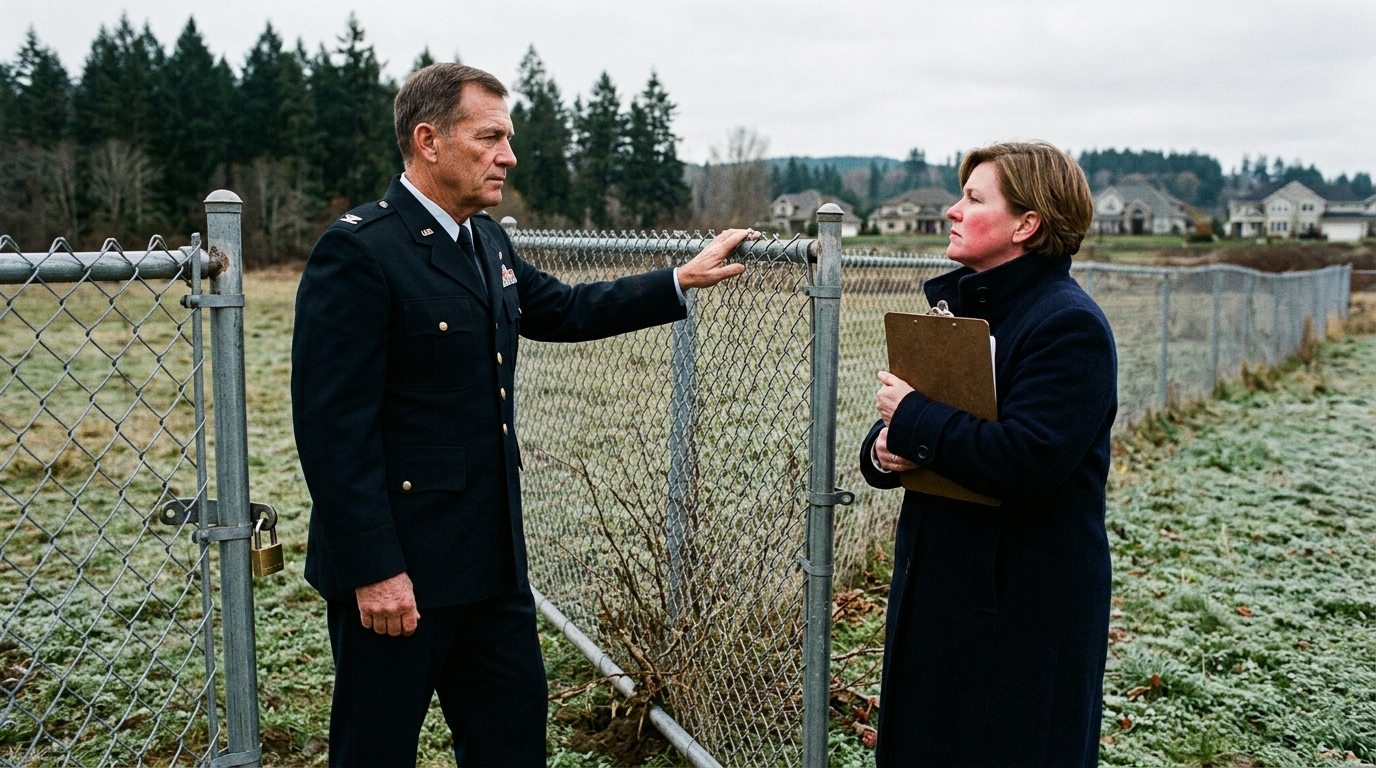
Eighty feet of heavy, galvanized chain-link mesh stretched between six pressure-treated posts, bisecting my lower pasture. The bottom rail didn’t hover above the ground; it was jammed two inches deep into the river silt, pinned down with steel staples driven into the mud. A cheap brass padlock hung from a heavy latch loop at the far end where the fence met the tree line.
They had built a cage. Five feet inside Parcel 7B.
I walked down the slope slowly, my work boots crunching through the frost-bitten clover. My thumb stayed locked on the brass casing of the compass in my pocket, the metal taking the warmth from my palm.
The bottom wire had sheared through three of my father’s wild berry bushes. Stems laid broken in the mud, dripping pale sap onto the galvanized zinc.
“You’re standing on community property, Jack.”
I didn’t jump. I didn’t turn right away. I let my gaze follow the line of the wire past the broken bushes to where Karen stood on her side of the ridge line. She was wearing a thick wool coat today, dark navy, but she still held the clipboard clamped against her ribcage like a riot shield.
“It went up fast,” I said, turning slowly.
“Contractors work quickly when they’re paid standard rates,” she said, her voice carrying clear through the still air. “The board approved an emergency expenditure for perimeter security at seven last night.”
“An emergency,” I repeated.
“Unsanctioned access to water features poses an immediate liability to the HOA’s insurance policy,” she said, tapping her pen against the top clip. “The fence stays. The gate remains locked until the surveyor completes his assessment tomorrow morning.”
“Your wire cut my thornless blackberries,” I noted, my voice level, stripped of heat. “My father planted those in sixty-two.”
Karen offered a curt, thin-lipped smile that didn’t reach her eyes. “Vegetation encroaching on the easement is subject to clearing under subsection 12.1. You’re welcome to submit a claim for the value of the plants to the architectural committee, though I doubt they’ll find it actionable given your delinquent fines.”
She stepped closer to the wire, her polished leather boots stopping an inch short of the mud. Her posture was rigid, chin lifted, projecting the cold confidence of an officer who believed her position was completely unassailable.
“I spoke with the HOA attorney this morning, Jack,” she added, lowering her voice slightly, letting the syrupy condescension leak through. “He assured me that old agricultural land grants carry zero weight against modern municipal annexation maps. You’re fighting a battle that was settled when the county approved our subdivision plat five years ago.”
I looked at her face—the high, flushed cheeks, the calculating glitter in her eyes, the tense set of her jaw. She didn’t look like a woman defending a neighborhood. She looked like a gambler doubling down on a broken hand because she couldn’t afford to walk away from the table.
“Where’s the rest of the board, Karen?” I asked softly.
Her pen froze mid-tap against the metal board. “Pardon?”
“Chen. The Rodriguez girl’s uncle. The fellow on lot four,” I said. “Emergency expenditures over five hundred dollars require a four-fifths quorum under your own bylaws. Did you call a meeting last night, or did you just write the check from the general maintenance fund?”
A microscopic twitch caught the corner of her left eye. Her hand tightened on the clip until her knuckles turned waxy white.
“The executive committee has broad discretionary powers regarding property safety,” she snapped, her voice losing its smooth polish for a sharp, jagged second. “I don’t need to justify administrative procedure to someone who isn’t even a member of this community.”
“You do if you used their dues to pay for thirty yards of illegal fence on private soil,” I said.
She let out a dry, high-pitched laugh. “Illegal? Tomorrow at ten o’clock, Mr. Henderson from Valley Surveying will be here with a satellite rig. He’ll stamp the official boundary map, file it with the county recorder, and this entire tiresome performance will be over.”
I pulled my hand from my pocket, leaving the compass behind. I reached out and rested my bare palm against the top rail of the chain-link wire. The cold zinc bit into my skin.
“Ten o’clock,” I said.
“Ten sharp,” she replied, stepping back up the incline toward the paved road. “Don’t be late, Major. It’s bad form to miss your own eviction.”
She turned and marched up the rise, her heels clicking sharp against the asphalt driveway above.
I stood by the fence for a long time after her car engine started and faded down the road.
I didn’t touch the padlock. I didn’t go back into the house for a wire cutter or a crowbar. I pulled my pad from my jacket, jotted down the exact time, the name of the contractor printed on the yellow warning tag hanging from the latch, and the serial number on the brass lock.
Then I pulled out my phone and dialed Thorne’s office again.
“He’s coming tomorrow at ten,” I said when the clerk put me through. “Valley Surveying. A man named Henderson.”
“Henderson?” Thorne’s voice lost its dry, languid edge, snapping into sharp focus. “David Henderson?”
“That’s the name on the truck card she mentioned.”
A heavy silence stretched over the line for three seconds, followed by the wet rustle of paper being pulled from a file folder.
“Jack,” Thorne said, his tone dropping an octave. “David Henderson spent six years as a staff surveyor for the state highway department before he went private. He holds a Class-A commercial license. If he files a fraudulent plat map, he doesn’t just face a civil board audit—he loses his seal and faces state perjury charges.”
“She thinks she can talk him into shifting the line,” I said.
“Then she’s about to hand us the rope on a silver platter,” Thorne said grimly. “I’m driving down tomorrow morning. I’ll be parked at the crossroads by nine-thirty.”
“Bring the red wax seal copy,” I said. “The one from fifty-two.”
“I’ve got the fifty-two survey, the eighty-eight land grant, and a signed affidavit from the county clerk’s chief registrar,” Thorne replied. “Don’t touch that wire, Jack. Let the posts sit in your dirt until the camera sees them.”
“They’re sitting,” I said, looking down at the broken berry vines trapped beneath the bottom rail. “They aren’t going anywhere.”
I hung up, slipped the phone back into my pocket, and sat down on the cold granite flat at the river’s edge. The Whisper Wind rushed past my boots, dark and steady, carrying tiny flecks of yellow willow leaves down from the mountains toward the valley below.
The wire was up. The line was drawn. Tomorrow at ten, the trap would spring.
CHAPTER 4: THE AMBUSH AT PARCEL 7B
By nine-forty-five Thursday morning, the mist over the Whisper Wind River had turned to a thin, cool drizzle. I didn’t leave the riverbank. I sat on the damp granite marker, watching a white pickup truck with Valley Surveying & Mapping painted on the cab roll slowly down the asphalt cul-de-sac above.
It pulled off onto the shoulder. David Henderson climbed out, his knees popping audibly in the quiet air. He wore a faded orange vest and a dirt-stained baseball cap, his face sun-baked and lined like dried leather.
Before he could pull his tripod from the truck bed, Karen Miller’s navy wool coat swept down the incline.
“Mr. Henderson,” she said, her voice high and fast, cutting through the idle rattle of the truck’s diesel engine. “Over here. The line starts at the newly installed fence post.”
Henderson didn’t move toward the fence right away. He reached into his cab, pulled out a rolled paper blueprint, and unrolled it against the hood of his truck. “Morning, Mrs. Miller. I have the county subdivision plat right here, but I need to locate the benchmark on the lower riverbank first.”
“The benchmark is irrelevant,” Karen said, her tone sharp, stepping directly into his line of sight. “The HOA board established the perimeter boundary relative to the development’s eastern easement. The fence line is the boundary. You just need to shoot the vector down to the water and log the coordinates.”
Henderson paused, his heavy eyebrows pulling together. He wiped a drop of rain off his nose with the back of a canvas work glove. “Ma’am, that’s not how a boundary survey works. A developer’s easement doesn’t override a recorded property description unless there’s a court-ordered lot modification.”
“The modification was recorded in our board minutes,” she insisted, her voice tight, vibrating with an unyielding edge. Her thumb tapped furiously against her clipboard. “The previous owner signed off on the development perimeter. The old farm parcels were swallowed during the municipal annexation.”
I stood up from the granite flat. My boots sank three inches into the river mud with a thick, wet suction sound.
“That’s a lie, Karen,” I said, my voice carrying clear up the rise.
Henderson turned his head toward the water. Karen’s posture went rigid, her mouth pressing into a thin, white line.
“Stay back, Jack,” she called out, gesturing dismissively toward me with her pen. “This is an official land survey. You’re interfering with a licensed contractor.”
I didn’t answer her. I walked up the bank, stopping three feet short of Henderson’s truck.
“David Henderson?” I asked.
The surveyor gave a short, cautious nod. “Yes, sir.”
“Major Jack Callahan, retired Army Corps,” I said, holding out my hand. He took it—his grip hard, rough, and cautious. “You’re standing on Parcel 7B. And the woman who hired you is asking you to commit survey fraud under state code section 44.”
Karen sputtered, her cheeks turning a blotchy, mottled red under her pale foundation. “How dare you! That is slander!”
“It’s not slander if it’s documented, Karen,” a new voice rang out from the road.
Mark Thorne was stepping out of a dark green sedan parked behind Henderson’s rig. He wore a crisp charcoal suit beneath a tailored trench coat, carrying a thick, leather-bound briefcase in his left hand. He walked down the incline with the unhurried, measured pace of a man walking into a courtroom he already owned.
Henderson looked from Thorne’s tailored coat to my faded field jacket, his eyes darting down to the rolled paper on his hood. “Who are you?”
“Marcus Thorne. Senior partner at Thorne, Blackwood & Associates,” Mark said smoothly, stopping beside Henderson. He opened his briefcase and pulled out a heavy, red-wax-sealed folder. “Mr. Henderson, before you drive a single stake or set up your total station, you need to review these public records.”
Mark unfolded the 1888 deed and laid it directly over the HOA’s subdivision map on the truck hood. Beside it, he laid the 1952 certified county survey, its blue lines sharp, its red wax seal gleaming under the rain.
“This is the original Callahan grant,” Thorne said, his finger pressing firmly onto the parchment. “Extending to and including both banks of the Whisper Wind River and the subaqueous land thereof. And this,” he tapped the 1952 map, “is the Jurisdiction Line confirmed by the county clerk seventy-four years ago. It encompasses every square foot where that chain-link fence currently sits.”
Henderson leaned over the hood, adjusting his glasses. He read the metes and bounds descriptions silently, his jaw slowly setting into a hard, rigid block.
“This is a recorded subaqueous deed,” Henderson muttered, his voice dropping into a low, whistle-like sigh. He looked up at Karen, his eyes cold. “Mrs. Miller… you told my office this was a standard boundary dispute over an unrecorded rear yard easement.”
“It is an easement!” Karen snapped, her voice cracking as her composure fractured. Her hands were shaking now, the clipboard rattling against her coat buttons. “The developer assured us—”
“The developer didn’t own Parcel 7B,” Thorne interrupted smoothly, reaching into his coat pocket and pulling out a small, sleek digital recorder. “And as president of this association, you were formally served with a notice of non-inclusion when River’s Edge Estates was built five years ago. You knew this property was excluded. Yet you directed workers to build a fence inside this boundary, and now you are attempting to induce a state-licensed surveyor to file a falsified plat.”
Henderson backed two steps away from Karen as if she were carrying a contagious fever.
“I’m done here,” Henderson said abruptly. He grabbed his unrolled blueprint from the hood and shoved it into his truck cab. “I don’t touch active title disputes without a court order, and I damn sure don’t override recorded county seals.”
“You can’t just leave!” Karen shouted, stepping into his path as he reached for his truck door. “I paid your company a fifteen-hundred-dollar retainer!”
“You’ll get a refund minus my travel fee, ma’am,” Henderson said, his voice flat as iron as he shoved his driver’s door open. “And if you use my firm’s name on any filings regarding this line, my attorneys will meet yours at the licensing board.”
He climbed into the cab, slammed the door, and fired the diesel engine. The truck threw a spray of gravel as it backed out of the cul-de-sac, leaving Karen standing alone in the rain beside her ugly wire fence.
Her face was white. Her breath came in short, ragged hitches. She looked at Thorne, then turned her frantic glare onto me.
“You think you’ve won something?” she hissed, her voice barely a whisper against the patter of the rain on the pine needles. “You think a handful of dusty papers makes you untouchable? I will levy special assessments on every home in this neighborhood to fund this litigation, Jack. I will tie your land up in chancery court until you can’t afford the property taxes.”
I pulled my great-grandfather’s brass compass from my jacket pocket. I didn’t open it. I just held it in my palm, feeling the cool, heavy weight of the metal.
“You won’t get the chance, Karen,” I said. “Because by five o’clock tonight, your board isn’t going to be taking your calls.”
CHAPTER 5: THE FRACTURE OF THE BOARD
Karen didn’t move for three full minutes after Henderson’s truck vanished around the bend. She stood in the wet grass, the rain sticking her dark hair to her forehead, her eyes wide and blank as she stared at the empty space where the surveyor’s rig had been.
“Get inside, Karen,” I said, my voice low. “You’re getting soaked.”
She didn’t answer. She turned on her heel, her leather soles slipping twice in the river mud before she caught her balance, and marched up the incline toward her house without looking back.
Mark Thorne adjusted his trench coat collar, stepping over the cheap chain-link wire onto my side of the mud. “She’s going to ground. She’ll lock herself in her office and try to scrub the digital minutes before anyone asks for an audit.”
“Not if Chen gets the files first,” I said.
We walked up to my porch, the rain dropping heavier now, drumming a steady rhythm on the tin roof. Inside the study, the wood stove was throwing off a warm, dry heat. I pulled my work coat off and hung it over the back of a chair, my hand reaching into my pocket out of habit to set the brass compass on the desk.
Thorne pulled out a slim tablet, unlocked the screen, and placed it next to the 1952 survey map. “I sent the draft lawsuit to David Chen, Sarah Miller, and Tom Vance twenty minutes ago. Personal service via certified digital delivery to their home addresses.”
Before I could answer, my landline on the desk rang. A harsh, mechanical chime.
I picked it up on the second ring. “Callahan.”
“Major… it’s David Chen.” The man’s voice was thin, rattling with a dry, terrified tremor. “What is this? I just opened an email from a law firm in the capital. It names me personally. It lists personal asset forfeiture under joint liability.”
“You signed the authorization for the fence expenditure, David,” I said, leaning over the oak desk, my eyes locked on the red wax seal of the deed. “You sat in that room.”
“She told us it was a routine easement cleanup!” Chen stammered, his background noise echoing with the sound of frantically shuffled paper. “She brought us a printed email from the developer’s legal team saying the riverbank was dedicated open space! She said if we didn’t enforce the perimeter, our insurance carrier would drop the whole subdivision!”
“The developer’s legal team never sent that email,” Thorne said into the speakerphone, stepping closer to the desk. “This is Marcus Thorne, Mr. Chen. We cross-referenced the domain header on the copy Mrs. Miller filed with your property manager. The domain was registered four months ago through a proxy registrar in the Bahamas. It’s a dummy domain registered under her maiden name.”
A suffocating silence fell over the phone line. I could hear Chen’s sharp, ragged breathing over the speaker.
“She… she forged an attorney’s statement?” Chen whispered.
“She forged a legal document to induce you to authorize association funds for a private land grab,” Thorne replied coldly. “And because you passed that river bylaw without a seventy-five percent member quorum, every fine issued under subsection 7.4 is an act of conversion under state law. You, personally, are on the hook for treble damages.”
“My God,” Chen breathed. “My wife… we just refinanced.”
“You have a way out, David,” I said, my thumb tracing the worn steel latch of the brass compass. “An emergency board meeting tonight. Seven o’clock at the clubhouse.”
“She won’t call a meeting,” Chen said desperately. “She controls the official notice portal.”
“You don’t need her to call it,” I said. “You, Sarah, and Tom constitute a three-fifths majority of the sitting board. Article Nine, section four of your own bylaws allows a board majority to convene an extraordinary session in the event of active officer misconduct. You call the meeting. You strip her executive authority.”
“And the lawsuit?” Chen asked, his voice barely audible.
Thorne leaned over the receiver. “If the board passes a formal resolution acknowledging the validity of the 1888 Callahan Subaqueous Deed, rescinds every fine issued under subsection 7.4, and orders the immediate removal of that wire fence at the association’s expense… my client will drop all individual board members from the filing. The liability stays where it belongs—on Karen Miller.”
“Seven o’clock,” Chen said immediately, his tone dropping the panic, settling into a cold, desperate resolve. “I’m calling Sarah right now. We’ll post the physical notice on the clubhouse door within the hour.”
The line went dead with a sharp click.
I stood up, stepping over to the study window. Down on the riverbank, the cheap chain-link wire stood grey and wet against the dark current of the Whisper Wind. Across the water, on the far ridge, a light flickered on in the top-floor window of Karen’s house.
Thorne folded his tablet into his briefcase. “She knows the board is meeting. She’ll either try to gavel them down with procedural noise or she’ll bring her own attorney.”
“She won’t bring an attorney,” I said, picking up the brass compass and slipping it into my pocket. “Attorneys cost money, and Karen’s out of chips.”
“Seven o’clock, Jack,” Thorne said, offering a tight, grim smile as he reached for the door. “Let’s go end a kingdom.”
CHAPTER 6: THE CHECKMATE TRIBUNAL
Rain rattled against the high metal roof of the River’s Edge Estates clubhouse like loose gravel dropped from a bucket.
Inside, the air smelled of wet coats, commercial floor wax, and stale coffee. Forty metal folding chairs lined the hall, and every single seat was taken. Residents stood three-deep along the rear wall—Miguel Rodriguez near the back doors, Eleanor Gable in the second row, her gnarled hands folded tightly over her purse.
At seven-o-two, Karen Miller slammed her palm onto the folding table at the front of the room.
“This gathering is an unauthorized breach of community protocol!” her voice shrieked, echoing off the bare drywall. She stood behind the president’s mic, her navy wool coat buttoned to the collar, her cheeks pale, her knuckles white as she gripped a heavy oak gavel. “Mr. Chen has no standing to call a session. I am declaring this meeting adjourned before it begins!”
David Chen didn’t flinch. He sat at the long table to her right, a thick manila folder spread open before him. Sarah Miller and Tom Vance sat beside him, their expressions set like poured concrete.
“Article Nine, Section Four,” Chen said into his microphone. His voice was steady, the panic of the afternoon completely gone. “A three-fifths board majority can convene an extraordinary session to address executive malfeasance. The quorum is verified, Karen. Sit down.”
“You have no authority!” Karen spat, swinging her gavel toward the crowd. “You are being manipulated by an outsider! A man who doesn’t even pay dues to this association!”
She pointed the handle of the gavel straight at me where I sat in the front row next to Mark Thorne.
I didn’t answer her. I reached into my coat pocket, pulled out the brass compass, and laid it flat on my knee. The needle quivered, caught the magnetic north, and locked still.
Mark Thorne stood up. He didn’t raise his voice, but the entire room fell dead quiet the moment his wingtips hit the linoleum floor. He pulled two heavy paper documents from his leather briefcase and laid them on the board table.
“My name is Marcus Thorne, representing Major Jack Callahan,” he said, his voice carrying with effortless courtroom resonance. “Mrs. Miller has spent six months asserting that Parcel 7B—the half-mile riverbank parcel owned by the Callahan family since 1888—was annexed into this development. Tonight, we place the public record on the table.”
He tapped the first document. “This is the 1888 Callahan Subaqueous Deed. It explicitly grants full title to both banks and the riverbed. And this,” he tapped the second sheet, “is the 1952 County Survey establishing the exact Jurisdiction Line.”
Karen made a desperate grab for the papers, but Sarah Miller swept them out of her reach, spreading them across the table in full view of the front row.
“It’s a fake!” Karen shouted, her voice straining into a jagged rasp. “The developer’s plat overrides farm papers from a hundred years ago! I have the developer’s legal opinion right here in my records!”
“You don’t have a legal opinion, Karen,” Thorne said calmly, pulling a printout from his folder. “You have a forged email generated from a Bahamian domain registered under your maiden name. You used that fake email to trick this board into passing an unratified, illegal bylaw under Subsection 7.4. And you used four thousand dollars of community maintenance funds to hire a contractor to build an illegal wire fence on private soil.”
A sharp, collective gasp rippled through the thirty residents standing at the back.
“She fined me a hundred dollars for Arthur’s bird feeder!” Eleanor Gable called out from the second row, her voice cracking with decades of stored anger.
“She threatened a lien on my house over a swing set!” Miguel Rodriguez shouted from the rear doors, stepping forward into the aisle.
“Quiet!” Karen screamed, her arm swinging down. The oak gavel struck the table with a wood-splitting CRACK. “You are all subordinate to the covenants you signed! You owe this association your compliance!”
“No, Karen,” David Chen said quietly into his mic. “We owe this community an accounting.”
Chen leaned forward, flipping a page in his folder. “I move for an immediate vote of no confidence regarding President Karen Miller under Article Twelve. I further move that all fines issued under Subsection 7.4 be formally rescinded, every dollar refunded from the reserve fund, and that Mrs. Miller be personally assessed for the four-thousand-dollar fence installation and removal cost.”
“Seconded,” Sarah Miller said immediately.
“Seconded,” Tom Vance added.
Karen stood paralyzed behind the microphone. Her chest heaved. Her eyes darted from Chen to Vance, then out to the wall of angry, resolute faces staring back at her. The illusion of her suburban kingdom shattered right there beneath the flickering fluorescent tubes.
“All in favor,” Chen said.
Every hand in the board raised. In the audience behind them, thirty-five hands went up in unison.
“The motion carries,” Chen declared flatly. “Karen Miller is removed as president, effective immediately. You are stripped of all administrative access.”
Karen looked down at the table. Her lips moved, but no sound came out. She dropped the oak gavel—it rolled uselessly off the edge of the table and clattered onto the linoleum floor. Without a word, she grabbed her purse, shoved her way past the folding chairs, and fled out the double doors into the pouring rain.
No one chased her. The room didn’t cheer; it simply breathed out a long, collective sigh of exhaustion and relief.
By eleven o’clock the following morning, the rain had cleared.
A crew from a local fencing company—hired and paid directly by the HOA board—was already on the riverbank. The pneumatic post-puller groaned as it yanked the six pressure-treated timbers out of my soil. The cheap galvanized wire was rolled up, tossed into the back of a flatbed truck, and driven away.
By noon, the dirt where the fence had stood was raked smooth.
I sat on the granite flat at the river’s edge, my work boots resting on the wet silt. A fresh cup of black coffee sat beside me on the stone.
The Whisper Wind River ran fast and clear, swollen by the overnight rain, its dark current swirling over the smooth gravel bed. Five hundred yards west, the old oak stood tall against the autumn sky. To the east, the granite marker sat solid, embedded four feet deep into the earth.
I pulled my great-grandfather’s brass compass from my pocket.
The hinge was loose, clicking faintly when I touched the casing. I pulled a small, narrow-blade screwdriver from my shirt pocket and carefully tightened the tiny brass screw on the side frame until the movement was firm and precise again. I wiped the glass face against my sleeve, set it in my palm, and opened the lid.
The needle swung, vibrated once, and pointed true north.
“Grandpa?”
I turned my head. My ten-year-old grandson, Leo, was walking down the muddy slope from the house, carrying his small fiberglass rod in one hand and a plastic tackle box in the other. He wore his red boots, his pants tucked into the tops.
“Hey, pal,” I said.
He scrambled down the bank, his boots crunching over the clover, and sat beside me on the granite marker. He looked out over the dark water, then down at the wet ground beneath his heels.
“Is this where that lady built the fence?” he asked, pointing at the fresh, raked patch of earth.
“That’s where it was,” I said.
“Why did she put it there?”
“She thought she owned the line,” I said, leaning back against the granite slope.
Leo looked up at me, his eyes solemn, trying to grasp the spatial logic of the river. “Do we own the river, Grandpa?”
“No,” I said, putting my arm around his small shoulder. “Nobody owns the water, Leo. The water belongs to whoever needs a drink downstream. But the ground it touches right here—the mud, the rocks, and the deep silt under the current—that’s Parcel 7B. Angus Callahan bought it in 1888. My dad protected it, I protected it, and someday it’ll be yours to hold.”
He thought about that for a long second, then reached down and pulled a fresh nightcrawler from his bait tub. “Can we fish now?”
“We can fish now,” I said.
I helped him thread the worm onto his hook and watched him cast his line out into the main channel. The bobber hit the dark water with a soft splash, floating steady against the current.
The river was quiet again. The line was clean. The land was safe.