The Unruly Paratrooper Who Defied Army Bureaucracy And Stood Alone Against Seven Hundred Enemy Soldiers
CHAPTER 1: THE FORT BENNING CLASH
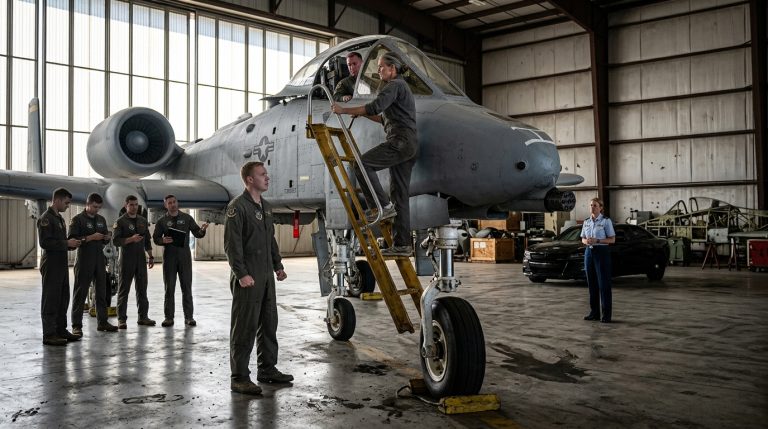
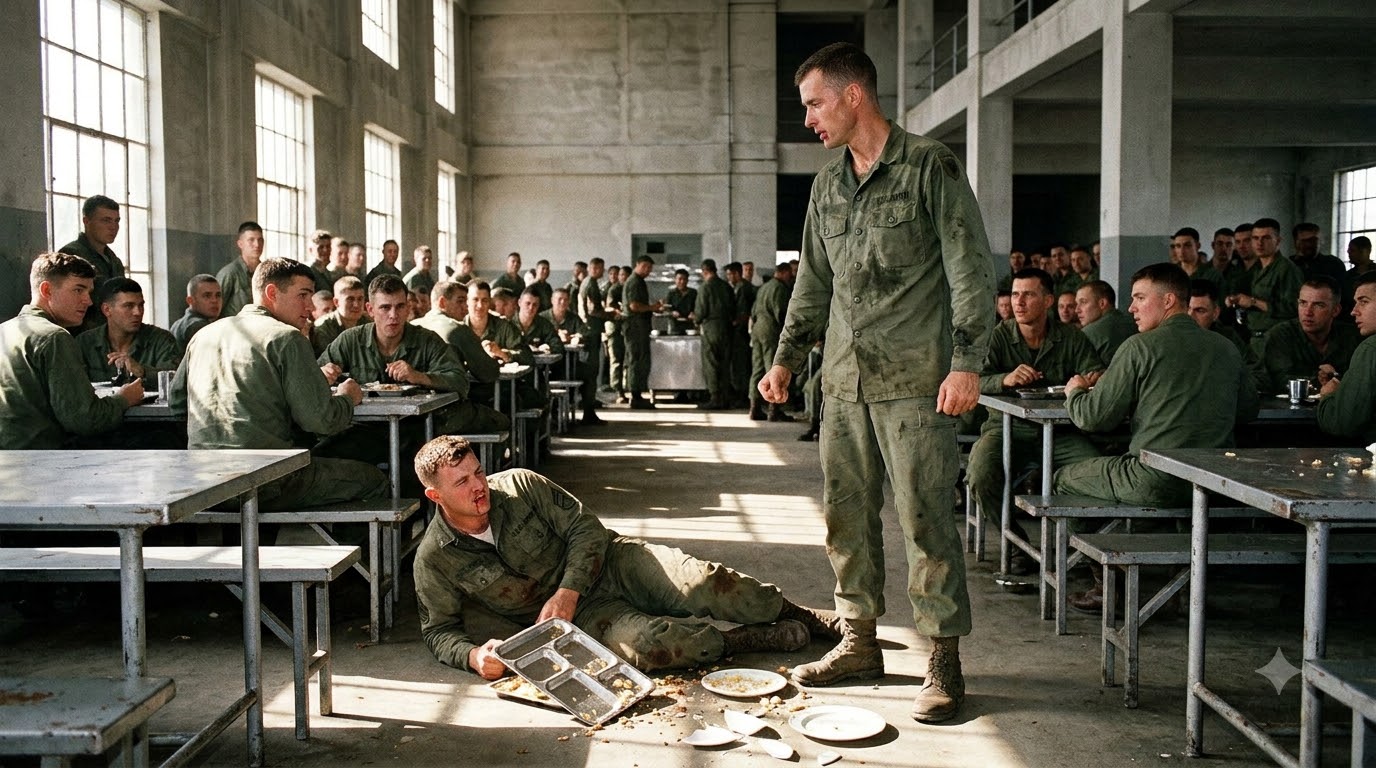
The grease on the mess hall table smelled stale, mixed with cheap coffee and damp wool. Jake did not blink as the staff sergeant reached across the chipped tin tray and snatched the butter ration away.
Rules on paper were written by men who never spent a winter digging frost out of an Oklahoma ditch. Jake reached down, his fingers curling around the cold edge of the metal cup, feeling the dense weight of it against his palm.
The sergeant laughed, leaning back with a sharp smirk that showed too many teeth. Sit down and shut up, soldier, you are not special here.
Jake stood up without a word. The chair legs screeched against the concrete floor, a harsh, grating sound that cut through the morning noise of the mess hall. He did not yell or wind up for a dramatic display; he simply measured the distance with the cold, flat gaze of a man who hunted rabbits before he could spell.
His fist moved straight and hard, connecting with the bridge of the nose with a dry, muffled crack. The sergeant dropped instantly, his tray clattering onto the floor as white ceramic plates shattered into dozens of sharp fragments.
The room went dead silent. Around them, two hundred men froze mid-chew, watching the blood pool across the gray linoleum. Jake shook out his knuckles, feeling the dull ache of bone against bone, and reached down to pick up his stolen butter.
CHAPTER 2: POACHING THE ENGLISH COUNTRYSIDE
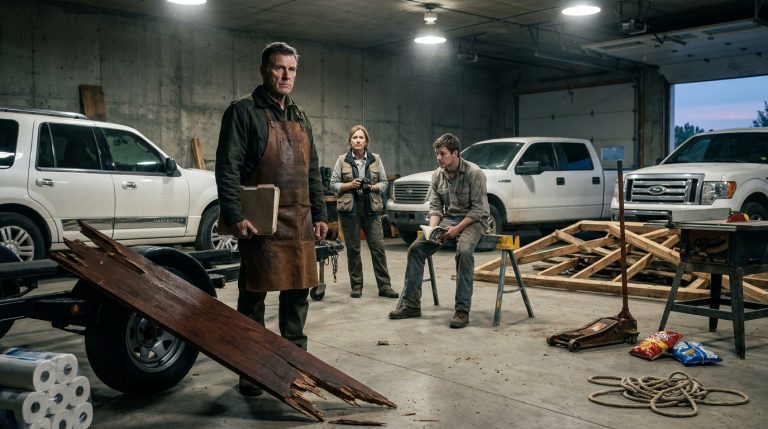
The British ration portions sat on the wooden bench like an insult, thin and pale against the gray wool of a field jacket. Jake looked down at the meager cube of meat, his jaw tightening as the memory of Oklahoma winters ground against the artificial scarcity of a foreign island.
Rules on paper were designed by men who never had to march sixty pounds of steel through mud on an empty stomach. Jake reached for his M1 Garand, his thumb checking the safety catch with a dry, mechanical click that broke the quiet of the barracks.
Jack Whmer looked up from the corner, his heavy coal-miner shoulders shifting beneath a torn sweater. The landowners down the lane think they own every rabbit between here and the coast.
Jake slid the bolt forward, feeling the solid resistance of the steel chambering a round. They only own what they can protect.
The forest behind the base was damp and quiet, smelling of rotting leaves and damp pine needles that clung to the soles of their boots. They moved without formation, each man slipping through the brush with the quiet efficiency of predators who knew the cost of making noise.
A sharp rustle broke the silence to their left, and Jake froze, his hand coming up to signal a hard halt. Through the thick veil of green ferns, a heavy-antlered deer stepped into a narrow clearing, its head lifting as it caught the foreign scent in the air.
Jake did not hesitate, raising the stock to his shoulder with a smooth, practiced motion that ignored every rule in the British statute books. The shot cracked through the morning air, sharp and clean, dropping the animal instantly into the damp moss.
Within minutes, the heavy carcass was slung over a stout branch, hoisted between two men as they trudged back toward the barracks before the local constabulary could catch the scent of woodsmoke and roasting venison.
CHAPTER 3: FALLING INTO NORMANDY FIRE
The air rushed past with the roar of a freight train, tearing the breath from his lungs before he could even register the altitude. Jake twisted in the dead-weight drop, his hands gripping the deployment ripcord as tracer rounds cut glowing red lines through the dark clouds above.
The parachute jerked open with a violent jolt that bruised his ribs against the canvas straps. One panel fluttered uselessly, shredded by shrapnel from the anti-aircraft battery down below.
He didn’t waste breath shouting into the empty sky. His boots smashed into the freezing, waterlogged mud of the French marsh with an impact that drove the knee cartilage hard against bone.
The heavy equipment harness immediately turned into a trap, dragging him under the black, stagnant water. The nylon straps wrapped around his shins like thick vines, pulling him deeper into the dark silt.
Jake kept his eyes wide open beneath the surface, burning with mud and stagnant weed. His right hand dropped to his belt, finding the worn grip of his combat knife with practiced ease.
He sliced through the tangled nylon in two clean, desperate strokes, his boots kicking upward against the weight. His head broke the surface just as a burning piece of aircraft tail section splashed twenty yards away, sending a wall of hot spray across his face.
He dragged himself out onto the raised embankment, water streaming from his canvas jacket as he checked the bolt of his rifle. The weapon was choked with gray river mud, but the steel was intact.
Across the flooded ditch, another soaked figure crawled out of the weeds, spitting water and wiping mud from his eyes. Jack Whmer looked up through the dark, his breath coming in ragged gasps.
We are scattered all over this valley, Jake—
Keep moving, Jake muttered, wiping the grit from his sights. We find the rest before the patrols find us.
CHAPTER 4: HOLDING THE BLOODY RIDGE
The slope was steep, bare clay and jagged roots that offered zero cover for anyone moving upward. Jake squinted through the gray morning mist, his finger resting lightly on the cold trigger guard of his M1 as the first gray shapes of the opposing force materialized through the fog.
They moved in a tight, unyielding pack, weighed down by standard regulations and blind obedience to an officer who stayed safely at the bottom. Jack Whmer spat a mouthful of dust into the trench, his knuckles white against the stock of his Browning automatic rifle.
They are bunching up right where the path narrows—
Let them come, Jake muttered, his eyes tracking the lead officer’s stride. Don’t waste a round until they hit the choke point.
The enemy infantry surged forward, shouting commands that bounced off the stone walls of the ruined bridge below. They assumed the high ground was empty, misled by their own arrogance and the comfort of superior numbers.
Jake raised his hand slowly, measuring the exact distance through the cold mountain air. Now.
The ridge erupted in a deafening wall of fire. The thirty-caliber machine guns tore through the front ranks with relentless mechanical precision, cutting down the leading line before they could raise their barrels.
The enemy scrambled in panic, slipping backward down the slick clay, their orderly formation dissolving into a panicked scramble under the relentless crossfire. Not a single man on the ridge flinched, holding their ground against the overwhelming tide through sheer grit and cold geometry.
The officer down below waved his arms frantically, screaming new orders to push the flank, refusing to accept that raw numbers meant nothing against a prepared defense. Jake chambered another round, his shoulder aching from the recoil but his focus absolute.
They think they can just take what they want because there are more of them, Jake whispered, cycling the bolt with a sharp metallic snap. Let them try climbing again.
CHAPTER 5: GUIDING THE FROZEN SKY
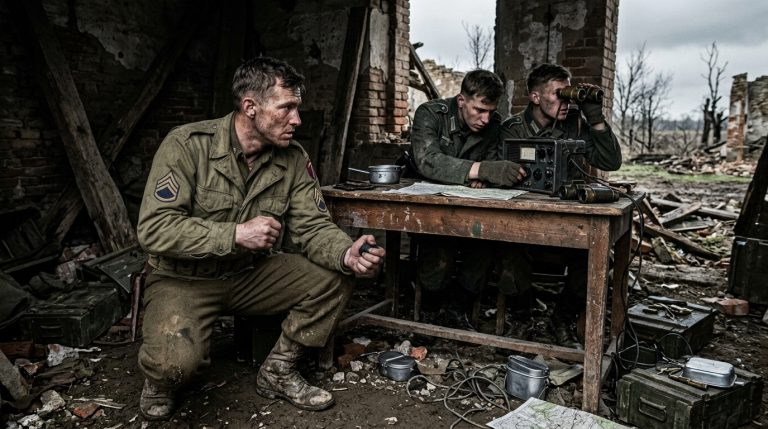
The wind howled through the skeletal frames of blown-out apartment buildings, carrying the sharp sting of ice crystals. Jake adjusted the frequency dial with numb, freezing fingers, his eyes locked on the static-filled vacuum tube of the transmitter.
Outside, mortar shells thumped against the frozen earth, shaking plaster dust down from the cracked ceiling. The enemy command knew the resupply signals were coming from somewhere inside this pocket, and they were methodically sweeping every block to shut the frequency down.
Jack Whmer crouched by the doorway, his rifle low, watching the swirling gray wall of snow outside. They are moving down the alley—two squads clearing every basement from the east.
Let them look, Jake muttered, his voice flat and steady against the background rumble of artillery. They are looking for a stationary target.
Instead of keeping a single transmitter active, Jake had split the signals across three shattered buildings, bouncing the static between them to trick the enemy’s direction finders into chasing ghosts. Every time the enemy patrol closed in on one corner, Jake shifted the broadcast frequency to the opposite block, drawing them deeper into a tactical maze of ruined masonry and freezing mud.
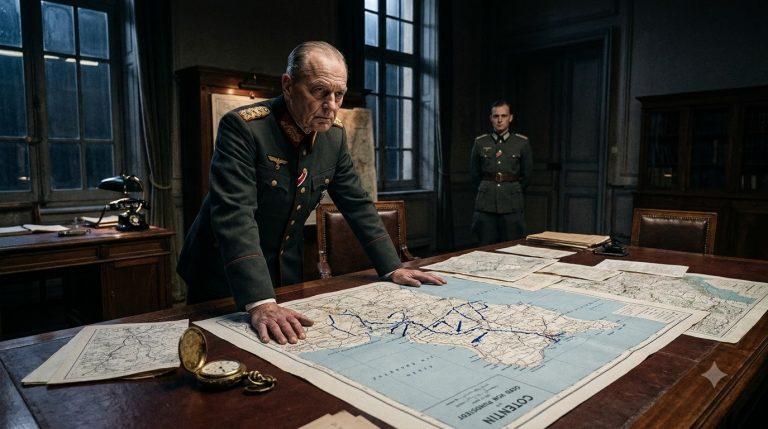
The enemy commander outside grew frantic, screaming orders through the wind to tighten the cordon, refusing to accept that a handful of freezing paratroopers were outsmarting their entire grid. They doubled down, pushing harder into the open street, straight into the crosshairs of Jake’s calculated layout.
The heavy C-47 transport engines roared overhead through the blinding white blanket, guided entirely by the steady, invisible pulse of Jake’s hidden beacon. The sky opened up, dropping heavy wooden crates of ammunition and medical supplies right into the American perimeter.
The enemy tried one last desperate push to overrun the windowsill position, their rifles barking through the snowstorm, but Jake held the ground with cold, unyielding friction.
They aren’t giving up the sector, Jack warned, chambering a round as another wave surged forward.
Neither are we, Jake replied, his thumb locking the radio dial into place. Let them come close enough to see what they can’t break.
CHAPTER 6: SORTING LETTERS IN SILENCE
The envelope slipped beneath Jake’s thumb with a dry, papery rustle that felt miles away from the roar of transport engines and freezing artillery shells. Decades had smoothed the rough edges of his knuckles, but the calluses remained thick and stubborn against the polished wood of the sorting desk.
Outside the window, small-town traffic rolled past at a lazy pace, peaceful and completely unaware of what it took to keep that quiet morning standing. A customer stepped up to the counter, tapping a ring against the linoleum with an impatient, entitled rhythm that demanded immediate attention.
You are a bit slow with these forms, aren’t you, the man complained, leaning over the partition with an irritating smirk. I need this package mailed right now, and I don’t care about your rules.
Jake looked up, his expression flat, measuring the man with the cold, unblinking gaze he once used to read a ridge line. His fingers traced the edge of an unmailed letter resting beneath the blotter pad, feeling the quiet weight of memory before he pushed it aside.
The rules are here for a reason, Jake said, his voice level and entirely unbothered by the petty display of arrogance. You wait your turn, or you take your box somewhere else.
The customer flushed, opening his mouth to argue, but the sheer immovable wall of Jake’s quiet composure stopped the complaint dead in its tracks. There was no anger left in Jake, no need to shout or prove a point to a man who had never seen the dark side of a midnight sky.
He stamped the paperwork with a heavy, deliberate thud, sliding the receipt across the counter without a word. The customer snatched the paper and stormed out, leaving the post office to settle back into a deep, steady calm.
Jake reached down, lifting a stack of local letters, his movements smooth and economical as he sorted them into their proper slots. The noise in his head was gone, replaced only by the steady rhythm of work and the warm morning light stretching across the floor.
He had spent years surviving things that were supposed to kill him, trading chaos for a simple life where a man could eat breakfast and watch his children grow without a shadow overhead.
He closed the wooden sorting drawer with a soft click, picked up his coffee mug, and looked out at the street.
The quiet was hard-earned, and he intended to keep it.