The Weight of Quiet Water: A Suburban Retribution Novel of Broken Earth and Black Sky
CHAPTER 1: THE MUD GRAVE
The paper party hat was still stapled to my hair when the truck engine cut out. It was green, printed with faded cartoon trucks, jammed onto my skull by a three-year-old whose fingers were still sticky with strawberry frosting. I didn’t take it off. I just sat there in the cab, the keys heavy and cold against my palm, listening to the absolute, unnatural absence of sound.
Eighteen years teaches you the rhythm of a piece of land. You learn the specific, metallic hum of the low-voltage water pump hidden beneath the limestone shelf. You learn the fat, wet slap of a twelve-inch orange Ogon breaking the surface near the lily pads when the shadow of the truck passes the garage.
There was none of it. Just the smell of hot diesel exhaust from an engine that wasn’t mine, and the thick, suffocating stench of turned-up river silt.
I got out of the truck. My knees didn’t pop this time; the cold in my joints was drowned out by a sudden, rhythmic pulsing behind my ears. I walked down the side gravel path, the heels of my Sunday shoes sinking into the turf.
The pond wasn’t gone. It had been murdered.
Where the gray stone tiers used to climb toward the porch—stones I hauled one by one from the creek bed back when Sarah’s hands were still strong enough to hold the level—there was only a flat, heavy tongue of gray construction fill. Crushed limestone dust mixed with wet, yellow clay, leveled off with the cold precision of a skid-steer blade. The tire tracks were wide, deep-grooved, still bleeding dark water into the grass.
Right in the middle of the mound, driven into the clay like a flag on a dead hill, was a pointed survey stake. Zip-tied to the wood was a sheet of laminated paper, the black ink bold and unblinking under the late afternoon sun: Unauthorized water feature removed due to health and safety concerns. Per Order of Maple Ridge Estates HOA.
I didn’t scream. I didn’t drop my keys. I just moved toward the edge of the fill where the limestone rockery met the grass.
A flash of safety-orange caught the glare of the setting sun. It was half-buried under three inches of compacted gravel, the heavy lateral scales of my oldest Kohaku choked with silt. The gill covers were static, pinned down by the weight of the dirt, but the tail fin gave one slow, agonizing twitch against the mud.
I dropped to my knees, the gray silk of my trousers soaking through instantly with cold muck. I didn’t use the shovel from the shed; there wasn’t time. I dug with my bare fingers, tearing my nails against the sharp road-base gravel, pulling the heavy stones away until the fish slid free into my hands. The skin was dry, sand-papery, the vibrant white pattern stained a dull, bruised purple.
Across the fence, three houses down Ashbury Lane, a white golf cart idled near the curb.
Gerald Whitmore didn’t look over. He sat behind the plastic steering wheel, his polo shirt a bright, crisp yellow against the graying sky, his thumb tapping a steady rhythm against a metal clipboard. He wasn’t watching the yard; he was watching the road, his mirrors adjusted just enough to catch my silhouette kneeling in the mud. He knew the schedule. He’d known exactly when the cake would be cut.
The Kohaku grew cold in my palms, its final shiver traveling through my wrists before the body went stiff.
I let the fish slide back into the silt. My fingers were caked in gray clay up to the second knuckle, the skin raw and bleeding where a jagged piece of limestone had caught the flesh. But as I pulled my hand back, my knuckles hit something hollow beneath the surface—something that didn’t belong to the stone tiers I’d built.
It was a clean, black edge of heavy-gauge PVC pipe, snapped perfectly at a ninety-degree angle, completely separate from my filtration line. It was dry on the inside, completely free of the algae that thirty years of groundwater leaves behind, yet it ran straight toward the main neighborhood easement. Someone hadn’t just filled the hole; they had plumbed something into it while the house was empty.
CHAPTER 2: THE CHESS BOARD
“You’re trespassing on common area, Martin.”
The voice came from behind me, clipped and thin, cutting through the heavy smell of the turned-up silt before I could pull my hand back from the broken black PVC edge. I didn’t jump. When you spend forty years timing the intake valves on industrial turbines, you don’t startle at a sudden rattle. You just calculate the pressure change.
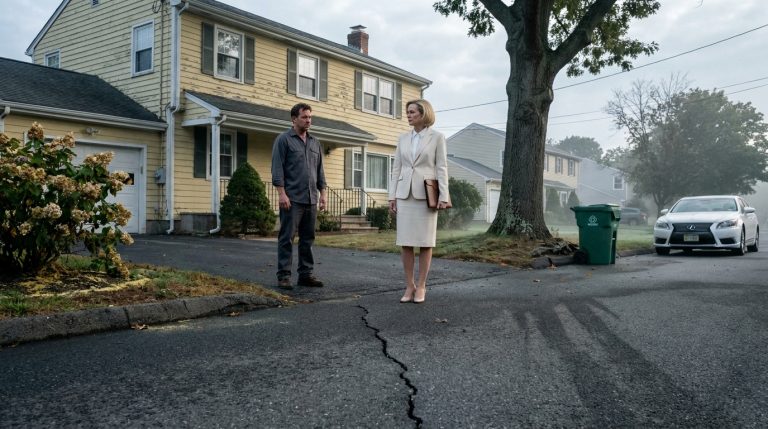
I stood up slowly, letting my knees lock one by one, keeping my mud-caked fingers curled slightly inward so the jagged edge of the skin didn’t show the drip. Gerald Whitmore stood exactly three feet inside my property line, his rubber-soled loafers leaving neat, shallow indentations in the rye grass Sarah and I had sown three autumns ago. His yellow polo shirt was tucked so tightly into his khakis that the fabric across his chest didn’t move when he breathed. In his right hand, the aluminum corner of his clipboard glinted under the graying clouds.
“This isn’t common area, Gerald,” I said. My voice sounded low, thick with the smell of barbecue smoke and the stale sweetness of my grandson’s cake that still clung to my shirt. “The property line extends ten feet past the limestone ledge. Your crew crossed it by six.”
Gerald didn’t look down at the mud. He kept his eyes leveled straight at the bridge of my nose, his pupils small and sharp like pinpricks in a sheet of black plastic. He had the face of a man who spent his life auditing corporate supply chains—devoid of malice, but entirely drained of blood.
“The Maple Ridge Estates covenant outlines an immediate easement for structural remediation when a private feature threatens the foundational stability of adjoining plots,” he said. He tapped the metal clip of his board with a thumb that had a perfectly manicured nail. “Section Four, Paragraph Two. The drainage from your unpermitted excavation was back-pressuring the main culvert under Ashbury Lane. We gave you thirty days to file the engineering certification. You ignored the notices.”
“The notices were for grass height uniformity, Gerald. You never sent an inspector.”
“The inspector is the board,” he replied smoothly. He took one step closer, his eyes shifting for a fraction of a second toward my hand, tracking the gray clay that was drying into white crust around my knuckles. “And the board has a fiduciary duty to preserve the market value of this subdivision. We have three families on Ashbury trying to refinance. A stagnant, two-thousand-gallon bio-hazard in the center of the block doesn’t clear an appraisal.”
The calculated coldness of it was a physical weight in the air. He wasn’t an idiot running a small-town fiefdom; he was a machine executing a protocol. He had waited until my daughter posted that photograph from the restaurant—the one with the balloons and the tiny smash-cake—before he brought the skid-steers down the side easement. He had timed the diesel runtime to the hour, ensuring the fill was compacted before my truck headlights hit the driveway.
“The water wasn’t stagnant,” I said, keeping my breath steady, feeling the cold wind from the north beginning to whip the tops of the sweetgum trees. “The three-stage biological filter cycled the entire volume every forty minutes. The water running out of my overflow channel into the municipal line was cleaner than the tap water in your kitchen.”
Gerald let out a short, dry sound through his nose that might have been a laugh if there were any heat behind it. “The county maps don’t show a biological filter, Martin. They show a hole in the ground. And a hole in the ground is a liability. The board has voted to assess the removal costs to your property account. Seven thousand, four hundred dollars. The invoice will be in your box by morning.”
He turned on his heel, the rubber of his loafers making a wet, sucking sound as he stepped out of the mud and back onto the clean concrete of the sidewalk. He didn’t look back. He climbed into his white golf cart, the electric motor whining into life with a high-pitched, metallic hum that lingered in the street long after he disappeared around the corner of Ashbury Lane.
I didn’t follow him. I walked back to the edge of the gray fill mound, my Sunday shoes heavy with three pounds of yellow clay.
The wind was shifting now, dropping three degrees in less than five minutes as the sky turned the color of a bruised iron pipe. A historic deluge was coming down from the ridge—the weather band had been flashing orange on my truck radio all the way from the city—and the first heavy drops were already hitting the dry limestone stones that hadn’t been buried.
I looked down into the small hole I had torn with my fingers. The broken PVC pipe wasn’t an overflow. Now that the light was flat, I could see the interior wall of the black plastic; it was thick, rated for high-pressure industrial line, not standard residential drainage. Gerald’s contractors hadn’t just poured fill into the basin; they had brought an excavator with a hydraulic ram to shatter the limestone base, and then they had driven that black line straight through the throat of the old culvert.
They had done it deliberately, while the house was empty, because they needed to seal something before the storm hit.
I stood there as the rain began to fall in earnest, the cold drops hitting the gray paper party hat on my head until the cardboard began to soften and sag against my forehead. I pulled it off, crumpled it into a tight ball of wet pulp, and dropped it into the mud beside the dead Kohaku.
Gerald thought he was insulating the neighborhood from a lawsuit. He thought he had buried my hobby under ten tons of road-base. But as the water began to pool in the deep groove of the skid-steer tracks, rising an inch every three minutes because the compacted clay didn’t have a single pore left to breathe, I knew exactly what lay beneath the topsoil of Maple Ridge Estates. I knew the grade of the hill. I knew where the old creek bed used to run before the developers poured the concrete foundations for seventy identical houses.
I reached out and touched the iron valve assembly of my old intake pump, the cold metal biting into my raw skin. I didn’t call a lawyer. I didn’t call the county sheriff. I just walked back onto my porch, sat down in the wicker chair that Sarah had painted green twenty years ago, and watched the dark water begin to crawl across the bottom step.
CHAPTER 3: THE BROKEN PIPE
The flash-flood water reached my shins by two in the morning, freezing, thick with floating lawn mulch and the bitter chemical tang of street oil. My old flashlight died twice before I slammed its brass butt against the heel of my palm to shock the filaments back together. The beam flickered, cutting a dim, yellow cone through the sheets of rain that lashed sideways off the Ashbury Lane ridge.
I was on my stomach in the yellow clay, my hip boots dragging like anchor weights as I clawed my way back toward the edge of the fill dirt. Every breath tasted like wet limestone dust and sulfur. The storm wasn’t hitting the subdivision; it was drowning it. Across the lawn, the steady, rhythmic roar of the rising runoff sounded like a freight train idling over a hollow trestle.
My fingers, raw and split from the afternoon’s excavation, struck the slick wall of the black PVC line I had found earlier. The rain had washed away the top layer of gray road-base, exposing the work Gerald’s contractors had hurried to finish while I was cutting birthday cake.
I leaned down, shoving my forearm into the freezing pool that was swirling over the pipe. My knuckles tracked the plastic contour until they dropped into a ragged, gaping void.
It wasn’t just snapped. It had been intentionally pierced through the side wall with a clean, three-inch auger bit before it was driven into my culvert.
I pulled my arm back, the skin scraped white, my teeth rattling so hard I had to bite the collar of my canvas jacket to stop the noise. The tactical reality clicked together in my head with the hard, cold snap of a breaker switch. This line wasn’t meant to carry water away from my property. It was engineered to pull water out of the neighborhood’s main storm trunk and dump it straight into the heart of my buried basin, back-filling the limestone foundation until the weight of the clay liquefied and collapsed the slope beneath my porch.
Gerald hadn’t just removed a code violation. He had laid a trap. The moment the city inspector arrived to document the damage tomorrow morning, the water wouldn’t look like a neighborhood backup. It would look like my private pond system had failed from internal structural neglect, washing out the common easement and sticking me with the legal liability for every flooded basement on the street.
A sudden, sharp metallic bang echoed from the dark.
I swung the flashlight beam toward the side fence. The white golf cart was gone, replaced by a dark figure standing under the overhang of the neighborhood utility shed thirty yards away. The yellow glare of a slicker caught the light for a single microsecond before the figure stepped back into the shadow of the sweetgum trees. Gerald wasn’t in bed. He was watching the gauges. He was waiting for the basin to breach.
I reached down into the mud, my hand searching until my fingers locked onto the frozen iron handle of my old drainage key—a three-foot T-bar I’d used to clear the lower filtration lines back when Sarah’s tea roses still lined the path.
The weight of the steel was solid, cold, a physical certainty in a world turning into soup. I jammed the prongs of the key down into the mud, searching for the sub-surface bypass valve I had welded into the main line fifteen years ago. If I could turn it, I could reverse the pressure, forcing the runoff back up the grade toward Ashbury Lane before the clay mound dissolved completely.
The steel prongs bit into something hard. I leaned my entire seventy-year-old frame against the crossbar, my boots slipping through the slick clay, my shoulder grinding against the buried limestone shelf until the skin under my jacket went hot with blood.
The valve didn’t move. It was rusted tight, frozen by a decade of quiet water and the weight of the fill dirt pressing down from above.
I closed my eyes, the cold rain hitting my face like small pieces of glass. Across the yard, the water line had reached the third step of my porch. The wicker chair Sarah painted green was already floating against the railing, its legs clicking rhythmically against the wood like a metronome counting down the seconds before the basement windows blew inward under the weight of the lake.
I shifted my stance, wedging my boot against the solid edge of the black PVC pipe to find leverage. I didn’t think about my knees. I didn’t think about the seven-thousand-dollar invoice waiting in my mailbox. I just thought about eighteen years of weekend labor turned into a muddy grave because a man in a yellow polo shirt didn’t like the color of my fish.
I threw my weight into the steel bar one more time.
A loud, metallic crack vibrated through the length of the tool, the vibration tearing through my wrists and up into my collarbone. For a terrifying half-second, I thought the steel had snapped in my hands. But then came the sound—a deep, gurgling suck from the bowels of the earth as the old iron valve finally gave way, turning three inches to the left.
The pressure didn’t drop. It shifted.
The water in the hole began to boil, air bubbles screaming through the yellow foam as the municipal runoff met the newly opened path. But instead of draining into my basin, the brown current suddenly halted, spinning into a tight, violent vortex that began to drive the mud backward, away from the porch, sending a steady, rhythmic thrumming down the subterranean lines that ran straight toward the lowest intersection of Maple Ridge Estates.
I stood up, the drainage key still heavy in my hand, wiping the mud from my eyes as a sudden chorus of car alarms began to wail two streets over.
CHAPTER 4: THE PRESSURE RIDGE
The ground beneath my boots did not simply soften; it hummed. It was a low, industrial vibration that traveled through the rubber soles, up the marrow of my shins, and settled behind my breastbone like the thrum of a multi-stage compressor running at critical load. The car alarms two streets down down shifted from rhythmic chirps to a single, overlapping wail—a chorus of mechanical panic bouncing off seventy vinyl-sided walls.
I didn’t move from the edge of the limestone ledge. The yellow beam of my flashlight caught the exact microsecond the gray construction mound began to tear. It didn’t wash away; the compacted road-base split cleanly down the center, a jagged three-inch lip forming in the clay as the trapped water beneath hydraulic-ed against the underside of the barrier. The black PVC pipe Gerald’s men had driven into my drainage run didn’t drain. It buckled upward, the plastic joint shearing with a sound like a pistol shot over the roar of the downpour.
The water didn’t stop at the easement. The reverse pressure from the iron valve I’d forced open was driving the subterranean runoff backward through the lines, turning the neat, concrete storm grates at the intersection of Ashbury Lane into active geysers. Three-foot columns of brown, muddy water erupted through the iron bars, lifting the hundred-pound castings clean out of their brick collars.
Through the rain, the twin halogen beams of a county utility truck cut across my front yard, the tires tearing deep ruts into the grass before the engine died. Two men in reflective orange parkas scrambled out, their boots splashing through six inches of standing water on the asphalt. Behind them, the white golf cart idled crookedly on the curb, its plastic canopy shaking against the wind.
Gerald Whitmore didn’t step out into the rain. He sat behind the wheel, his yellow slicker pulled tight to his chin, his face illuminated by the pale blue back-light of his phone. His thumb was moving across the glass, jerky and fast, his head snapping up every time the industrial dehumidifiers two houses down groaned under the brown current rising toward their foundations.
“Martin!” the first county man shouted, his voice nearly lost to the sound of the main culvert roaring beneath the pavement. He had a heavy aluminum measuring rod in one hand and a laminated plat map sealed in plastic under his arm. He didn’t look at the mud mound; he looked at the water marks on my foundation line. “Who touched the overflow gate? The pressure drop just took out the low-point trunk line three streets over!”
I stepped off the stone shelf, the cold mud grabbing at my ankles with every step. I didn’t point at the golf cart. I pointed at the jagged black throat of the ruptured PVC pipe still gurgling in the hole.
“The board’s excavation crew,” I said, my voice flat, empty of the heat that had carried me through the midnight hours. “They rammed a high-pressure line through the limestone basin yesterday afternoon while I was out. They wanted to close the retention loop.”
The engineer didn’t argue. He dropped to his knees at the edge of the split clay, jamming his aluminum rod into the gap until it struck the buried stone foundation. He didn’t look back up at me; his fingers went straight to the corner of the plat map, peeling back the plastic sleeve until the paper caught the yellow beam of my flashlight.
“This isn’t a loop,” he muttered, his thumb tracing a faint, uninked gray boundary line that ran straight across my property line and split the entire block into two distinct halves. “There’s an unrecorded drainage easement on this parcel. It was omitted from the county tax registry in ninety-eight when the developer cleared the grade.”
The second man, an older inspector with a copper-plated surveyor’s level slung over his shoulder, wiped the rain from his eyes and spat into the mud. “They didn’t omit it. They hid it. If the county had logged this plot as a primary regional flood basin, the infrastructure development tax would have killed the profit margin on the entire eastern section of the subdivision. They left it as a private lot so the buyer would carry the structural liability for the entire hill.”
The revelation sat there between us, cold and heavy as a block of set concrete.
Gerald hadn’t been protecting property values. He hadn’t been enforcing a aesthetic guideline. The board had uncovered the unrecorded tax maps months ago during an insurance audit. They knew that if my koi pond—the two-thousand-gallon basin that had spent eighteen years quietly slowing the descent of the ridge water—was ever inspected by a state engineer, the legal designation would revert instantly. The HOA would have been forced to buy out my parcel at current market rates and spend half a million dollars turning the center of Maple Ridge Estates into a dedicated, gravel-lined drainage ditch.
They had tried to bury the evidence before the state inspectors checked the culverts after the spring storms. They had wanted the failure to look like mine.
A sharp, grinding crunch cut through the wail of the alarms. Across the yard, the pressure ridge in the gray fill dirt finally broke. A fifteen-foot section of the compacted clay liquefied completely, sliding down the slope toward the side fence like wet mortar. But it didn’t touch my porch. The water followed the original, ancient line of the creek bed I’d spent two decades reinforcing with river stone, dropping into the deep limestone throat of the old basin and disappearing into the sub-grade municipal main with a hollow, metallic roar.
The pressure on the steps dropped three inches in thirty seconds.
The engineer stood up, his orange parka streaming with mud-speckled water. He looked from the map to the empty white golf cart on the curb. Gerald was gone. The cart’s engine was still ticking, its headlights cutting two clean paths through the heavy rain, but the yellow slicker was a moving spot of bright fabric retreating up the dark incline of Ashbury Lane, his loafers slipping on the wet asphalt as he ran toward the rising water in his own basement.
I walked back up to the porch, my hands shaking slightly as I hung the iron drainage key on its old peg beside the door. The green wicker chair Sarah had painted was still wedged against the railing, its woven seat dark with grease and silt, but the water had left the top step.
The rain was slowing now, turning into a thin, gray mist that smelled of wet slate and the cold iron of the earth. Down in the valley, the blue emergency lights of the county vacuum trucks were already turning the corner, their massive pumps starting up with a collective, low-frequency hum that signaled the beginning of the cleanup.
I sat down on the top step, my mud-caked boots dangling over the edge of the stone path, watching the brown water drain perfectly through the rocks I’d laid with my own hands. The fish were gone, but the ground was still mine.
CHAPTER 5: THE INVOICE AUDIT
The fluorescent tubes in the township annex basement didn’t hum; they buzzed with a dry, rhythmic click that made the back of my skull ache. The table between us was six feet of particle board covered in faux-walnut laminate, sagging under the weight of three blue-line blueprint rolls from 1998 and an unsealed cardboard box that smelled of damp cellar mold and old staple rust.
“Look at the margin on sheet seven, Martin,” the county engineer said. His name was Miller, his fingers thick and yellowed at the tips from tobacco, tracing the edge of a faded purple stamp that had been struck through with a single red grease pencil line. “The developer didn’t just miscalculate the elevation. They filed a revised drainage profile with the regional office on a Friday afternoon at four-fifty p.m., three days before the grading permits were released. This sheet never went into the public master index.”
I didn’t answer right away. I was looking at a three-page internal memorandum stapled to the inside lid of the board box—a document subpoenaed four hours ago by the county prosecutor’s office from the personal desk of the Maple Ridge Estates treasurer. The paper was crisp, expensive twenty-pound bond, bearing the embossed gold seal of the neighborhood association.
The date on the memo was March twelfth. Three months before the skid-steers tore up my turf.
“…Regarding the private obstruction on Lot 42,” the text read, the type clean and cold. “Engineering counsel advises that public discovery of the unindexed retention area will trigger an automatic municipal reassessment under state stormwater regulations. Estimated structural conversion costs to the association exceed four hundred thousand dollars. Immediate remediation via total basin compaction is recommended before the seasonal county inspection window opens in June. Execute via emergency health and safety citation to limit property owner appeal timeline.”
Across from me sat Arthur Vance, the HOA vice president—a man who owned four dry-cleaning franchises in the township and usually wore loafers without socks. Today he wore heavy, laced work boots that were still stained with the yellow Ashbury Lane clay, his hands buried deep in the pockets of a zippered windbreaker that rattled every time he shifted his weight.
“We were acting on legal advice, Martin,” Vance said. His voice was lower than Gerald’s had been, devoid of the bureaucratic arrogance, replaced by the thin, vibrating tone of a man calculating the deductible on his personal umbrella insurance policy. “The board didn’t create the 1998 maps. We inherited them. If the township retroactively declares the entire center of the block a regional flood zone, the titles on twenty-two homes become unmarketable overnight. We have a duty to protect the equity of the collective membership.”
“My fish weren’t part of the equity, Arthur,” I said.
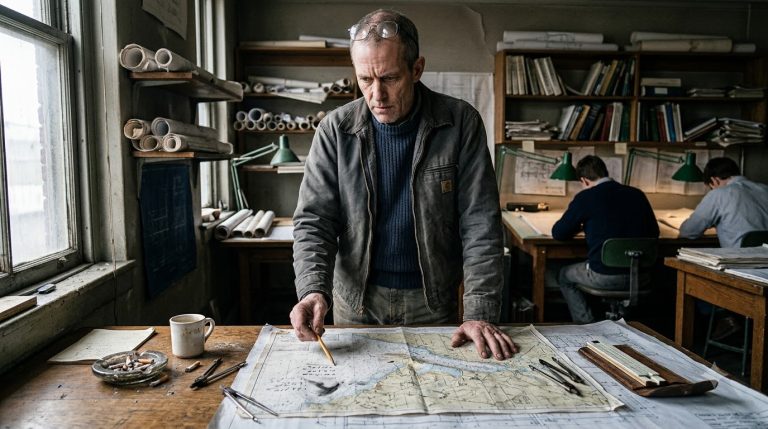
I reached out and touched the edge of the blue-line print. The paper was cold, stiff from twenty-eight years in a dark drawer, but the lines were sharp. The ink showed the exact grade of my backyard—not as an accidental low spot, not as a decorative garden feature, but as a engineered, high-volume sink designed to absorb the velocity of a hundred-year storm before the runoff could undermine the foundations of the houses built along the ridge.
They had known it for three months. Every violation notice Gerald had dropped in my box—every petty citation for grass height, natural landscaping, and visual distraction—had been a tactical setup, a paper trail engineered to establish a history of property neglect before they brought the diesel equipment down my side path.
“The state environmental protection division has already flagged the file,” Miller said, pulling a fresh yellow pad toward him and writing a sequence of eight-digit case numbers with a heavy felt-tip pen. He didn’t look at Vance. “This isn’t an HOA dispute anymore, Arthur. Once you puncture a municipal storm culvert to accelerate a private burial, you’re looking at a third-class misdemeanor for unauthorized modification of public utility infrastructure. The state doesn’t care about your bylaws.”
Vance’s face didn’t go pale; it went gray, the color of the wet limestone dust outside in the trench. He looked at me, his eyes tracking the dark, dried line of the split skin across my knuckles where I’d torn my hands on the gravel forty-eight hours ago.
“We can establish a restoration fund,” he muttered, his voice dropping into a flat, transactional drone. “A private settlement, Martin. Complete excavation of the fill mound, private contractors of your choice, full reimbursement for the livestock. We can pass a board variance that immunizes Lot 42 from any future aesthetic enforcement. We just need the township to hold the formal violation notice until we can re-grade the lower street intersection.”
I stood up, the legs of the metal chair scraping against the linoleum floor with a sharp, metallic screech that made Vance flinch. I pulled the blue-line prints toward myself, rolling them into a tight, hard cylinder that felt like a club in my hand.
“The storm isn’t over, Arthur,” I said, looking down at the gold seal on the memo. “The county guys are bringing a vacuum rig and an industrial auger to my yard at eight tomorrow morning. They aren’t looking for my filtration lines anymore. They’re digging until they find the original developer’s survey pins at the bedrock layer.”
I walked out of the annex basement, the heavy fire doors clicking shut behind me with a solid, pressurized thump that left the two men sitting under the buzzing light with twenty-eight years of paper lies.
CHAPTER 6: THE DISCOVERY OF LAYER 2
The diesel exhaust from the county’s three-ton vacuum rig hung so thick over my yard it turned the morning fog into a greasy, yellow smudge. The machine was screaming, a high-pitched mechanical howl that rattled the loose panes in my kitchen window every time the suction nozzle hit a layer of river stone.
I stood on the bottom step of my porch, my fingers dug into the pockets of my oiled canvas jacket, watching the massive hydraulic arm of the track excavator swing over the center of the fill mound. Every time the teeth of the bucket bit into the gray limestone road-base Gerald’s contractors had packed down, a shudder traveled through the sod beneath my boots.
“Hold it right there!” Miller shouted. His voice cracked through a battery-powered megaphone, sharp enough to cut through the piston roar of the diesel engine. He was standing waist-deep in the trench his men had sliced through the center of my yard, his bright orange vest coated in slick, wet yellow clay. “Swing that boom left. Clear the silt away from the low-pressure casing by hand.”
The excavator engine dropped an octave, idling with a heavy, rhythmic chug that smelled faintly of burning oil. Two county workers jumped into the pit with short-handled iron spades, their movements methodical, scraping the sticky silt away from the base of the old limestone tier I’d laid twenty years ago.
I walked down the path, my boots sinking three inches into the turned-up earth until I reached the edge of the red safety tape. The light was flat, gray, filtering through a sky that still looked like a sheet of unpolished zinc.
“What did you hit, Miller?” I asked, leaning over the wooden bracing boards.
The engineer didn’t answer right away. He was using a steel wire brush to clear a flat, metallic surface that had been pinned down beneath the lowest layer of bedrock gravel. The scratching sound of the wire bristles against the metal was sharp, rhythmic, like teeth grinding in a dark room.
“It’s not an infrastructure pipe, Martin,” Miller said, his voice dropping into a flat, raspy register as he reached down to wipe away the slurry with his bare thumb. He held his flashlight inches from the exposed surface. “Look at the composition. This is cast marine brass. Six-inch diameter, flanged collar, anchored into the limestone ledge with four-inch cold-rolled steel drift pins.”
The beam of the flashlight caught the etched markings on the face of the brass disk. It wasn’t a utility valve. It was an official state survey benchmark, dated 1994, bearing the deep, stamped seal of the Department of Environmental Protection. Across the center of the brass, someone had taken a cold chisel and struck three heavy, jagged gashes across the serial numbers, trying to render the data unreadable from a simple aerial scan.
“The 1998 plat maps filed by the developer showed this exact coordinate as stable limestone shelf,” Miller muttered, his fingers tracing the cold, scarred edges of the brass flange. He looked up at me, his eyes small and tight behind his mud-splattered safety glasses. “But this marker isn’t for a ledge. This is a baseline hydrology monitor for a protected regional aquifer discharge. A Grade-A wetland throat.”
The tactical landscape shifted beneath my feet with the hard, heavy weight of an unlatched iron gate.
The decoy secret—the internal HOA memos about an unrecorded drainage easement to avoid a four-hundred-thousand-dollar conversion tax—was just the top layer of the dirt. The real reality was a structural fraud that went all the way down to the deeds of the houses on Ashbury Lane. The original development company hadn’t just omitted a drainage run; they had built seventy high-density suburban homes directly on top of a major, federally protected underground spring system, using my specific parcel as the single, hidden pressure-release valve for the entire hill.
They had driven those four-inch steel pins into the brass marker thirty-two years ago to hide the state’s hydrology readings. If the state had known the true flow volume of the discharge beneath my yard, the land would have been legally locked from residential grading forever.
A shadow moved near the corner of the property line.
I turned my head, my jaw tightening as I saw the white golf cart idling forty yards away under the sweetgum trees. It wasn’t Gerald Whitmore behind the wheel this time. It was an older man in a charcoal wool overcoat, his silver hair immaculate against the dark collar, his hands resting lightly on a thin, leather attache case. It was Vance’s corporate counsel—the senior partner of the firm that represented the development group’s holding company.
He wasn’t looking at the county workers or the roaring vacuum rig. He was looking straight at the brass disk in the bottom of the pit, his face completely expressionless, his mouth set in a thin, hard line that looked like a scar.
The county inspector with the surveyor’s level climbed out of the trench, his boots dripping gray mud onto the grass. He didn’t look at the lawyer. He walked straight to the utility truck, pulled a heavy, red-bordered state quarantine notice from his clipboard, and slapped it against the main electrical junction box near my garage.
“The whole block is going on a temporary structural hold, Martin,” the inspector said, his voice dropping into a transactional whisper that carried over the drone of the idling excavator. “The pressure drop from yesterday’s storm didn’t just back up the streets. The hydraulic head beneath Ashbury Lane is starting to lift the concrete slabs on three garages up the ridge. The houses are shifting on the clay because the water has nowhere left to discharge except through your basin.”
I looked down into the trench, where the water from the deep spring was already beginning to bubble up around the edges of the brass marker, clear and cold, washing the yellow clay off the stones Sarah and I had placed one weekend at a time. They had tried to bury my pond because they knew the water was patient. They knew that if they didn’t crush the system under ten tons of dirt, the earth would eventually open up and reclaim the entire beige kingdom they’d built on top of a lie.
I reached down and picked up a broken piece of the limestone rockery, the sharp edge cutting into the white callus of my palm. I turned my back on the lawyer under the trees and walked back toward the porch, the heavy sound of the spring water rising behind me like a clock ticking in an empty house.
CHAPTER 7: THE FINAL SETTLEMENT
“The numbers on page four aren’t up for debate, Arthur.”
The folder I slid across the kitchen table was a thick, black-vinyl binder, its metal corners scratching lightly over the clean polyurethane finish of the oak surface Sarah and I had built out of salvage timbers. Inside, the white sheets of the environmental contractor’s budget proposal sat under the morning light, crisp, unblinking, and detailed to the penny.
Arthur Vance didn’t touch the binder immediately. He sat with his hands wrapped around a ceramic mug of black coffee, his knuckles white against the dark glaze. His silver-flecked hair was slightly damp from the fog outside, his wool overcoat draped across the back of the empty chair beside him. Through the double-hung kitchen window, the high-volume drone of the state’s excavation crew had settled into a steady, metallic rhythm—the sound of iron shovels slicing through wet yellow clay down in the newly cleared basin.
“Seventy-four thousand dollars for mature Japanese stock, Martin?” Vance’s lawyer said, his voice coming from the corner of the room near the pantry. He hadn’t sat down. He stood with his leather attaché case propped against his knee, his eyes trained on the tiny, hand-drawn map of the aquifer discharge lines I had pinned to the refrigerator. “The insurance carrier is going to dispute the replacement value of live animals without verified import manifests.”
“The manifests are under tab three,” I said, without looking back at him. I took a slow sip from my own mug, the heat of the liquid bitter and solid against my tongue. “Every Kohaku and Ogon they suffocated with that road-base was documented by the regional veterinary inspector three years ago for the state wildlife census. If the carrier wants to take it to a bench trial, the state’s hydrology team will be happy to introduce the 1994 marine brass survey marker as exhibit A.”
The silence that followed was heavy, filled only with the distant, muffled thump-thump of the track excavator’s diesel piston clearing the lower easement fence.
Vance pulled the binder toward himself. His thumb hooked the edge of the first page, the paper turning with a sharp, dry rattle. His eyes didn’t look at the cost columns; they tracked the bold, black lettering of the legal clauses at the bottom of the indemnity section: Permanent, non-revocable infrastructure exemption for Lot 42. Full release of structural drainage liability to the Maple Ridge Estates Association. Immediate retraction of all outstanding aesthetic citations.
“If I sign this,” Vance said, his voice dropping into a flat, raspy vibration that didn’t carry past the edge of the table, “the township suspends the third-class misdemeanor filing against the board members?”
“The township suspends the filing the moment my biological filtration network is verified by Miller’s office,” I replied, leaning my forearms against the table, feeling the hard edge of the oak wood press into my skin. “The water from the ridge needs to clear my basin at twelve hundred gallons a minute before the next front crosses the line on Thursday. If the clay mound isn’t fully excavated by sunset tonight, the hydraulic head under Ashbury Lane will split the main water line beneath your driveways anyway.”
The lawyer stepped forward, his polished oxfords making no sound on the linoleum. He reached over Vance’s shoulder, his gold fountain pen already uncapped, the nib resting against the signature line of the third copy.
“Sign it, Arthur,” the lawyer muttered, his eyes remaining fixed on the kitchen window, where the yellow boom of the county machine was lifting the final load of contaminated gray construction fill out of the trench. “The developer’s holding company dissolved its liability shield in 2004. If the state opens a formal fraud file on the original plat maps, the association doesn’t just lose its insurance coverage—the bank calls the development bonds on the remaining common ground.”
Vance’s hand shook for a fraction of a second before the black ink hit the paper. He signed his name three times, the metal clip of the binder clicking open and shut as I pulled the executed copies back across the table. He didn’t finish his coffee. He stood up slowly, his movements heavy, looking out through the glass toward the backyard where the water was already beginning to clear, running cold and glassy over the newly laid limestone tiers.
“Gerald is resigning this afternoon,” Vance said, his hand lingering on the brass door latch. He didn’t look back at me. “He’s putting the house on Ashbury up for short sale before the structural assessment is filed with the county clerk.”
“Tell him to leave the golf cart,” I said, closing the vinyl binder with a definitive, flat snap. “The association owes the excavation crew forty hours of diesel runtime.”
They were gone two minutes later, the front door clicking shut behind them with a tight, pressurized seal that left the kitchen completely quiet again.
I walked out onto the back porch, the morning fog finally breaking into thin, golden needles of light across the damp rye grass. Down in the basin, the water chemistry had already stabilized, the dark overflow channel drawing the excess runoff down into the subterranean main exactly where the geography had intended it to go thirty years ago.
Miller was standing near the red safety tape, his megaphone slung over his shoulder, watching two workers clear the last of the clay from the marine brass benchmark. He looked up at the porch, gave me one brief, tight nod of his head, and walked toward his utility truck.
I reached down into the pocket of my canvas jacket, my fingers curling around the cold, heavy iron of the old drainage key before I hung it back on its peg by the door. The yard was scarred, the turf torn into deep, black lanes of wet earth, but beneath the mud, the limestone was solid. The neighborhood outside was still humming with the sound of generators and industrial pumps, seventy houses trying to dry out their basements before the sky turned black again, but down along my rock wall, the water was running perfectly clear.