The Iron Gyroscope: A Weary Commander Battles Unyielding Bureaucracy and His Own Deadliest Weapon in the Formosa Strait
CHAPTER 1: THE DEFECTIVE ARSENAL
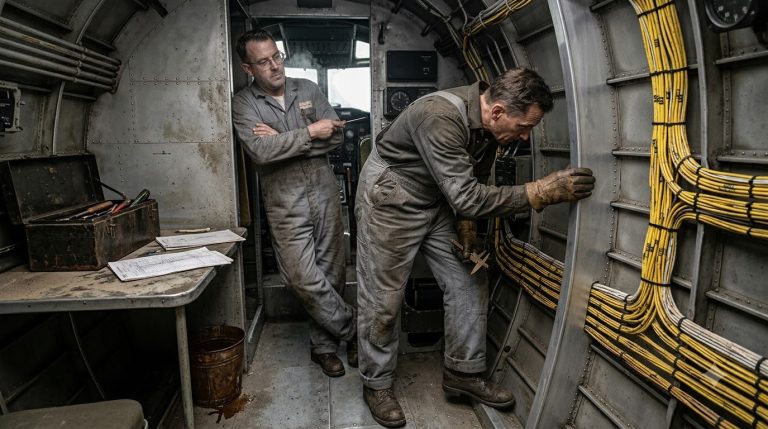
The machine shop floor smelled of hot cutting oil and damp concrete.
I rolled the brass gyroscope casing across the scarred workbench, watching the precision housing catch the pale fluorescent glare overhead.
Lieutenant Murray Frazee didn’t look up from his grease-stained calculation sheets, his thumbabsentmindedly tracing the edge of a micrometer.
We weren’t supposed to be here taking apart ordnance restricted by the Bureau of Ordnance.
Regulation manuals sat in a stack by the door, heavy with red tape and completely blind to what was happening out in the cold Pacific water.
Every report coming back from the patrol zones talked about fish running erratic, missing marks, or turning back toward the sound of their own wakes.
The brass in Washington called it pilot error.
They sat behind mahogany desks in climate-controlled offices, trusting pre-war laboratory tests performed on calm inland lakes while our crews were coming home empty-handed or not coming home at all.
I picked up a spare flywheel, feeling its dead weight against my palm.
If the gyroscope doesn’t achieve twenty thousand revolutions per minute before the steering vanes engage, the correction signals go entirely wrong.
It starts with a two-degree drift in heavy seas.
Then five degrees.
Then a full circle.
Frazee wiped his hands on a rag and looked at the figures scrawled across the paper.
The math didn’t care about naval rank or what rear admirals wanted to believe.
A weapon turning at sixteen thousand revolutions per minute in turbulent water is no longer a tool of war.
It is a floating trap waiting for the right moment to bite the hand that launched it.
I set the housing down with a dull metallic thud that echoed off the concrete walls.
The paperwork requesting a live-fire test was sitting on a desk across the base, destined for a rejection stamp before the ink even dried.
We had to take the Tang out with what we had, knowing the machine beneath our feet had a hidden pulse that could turn against us if the sea conditions weren’t perfectly flat.
I slipped the stopwatch into my pocket, the metal cold against my thigh.
There was no use arguing with men who refused to step onto a rolling deck.
We would have to learn the hard way, or not at all.
CHAPTER 2: NIGHT HUNT OFF TRUK
The radar scope hummed a dull, rhythmic pulse inside the darkened conning tower.
Lieutenant Savadkin leaned over the illuminated screen, his knuckles white against the rubberized housing.
We didn’t have the automated firing computers working tonight; every range and bearing had to be calculated by hand on grease-pencil slates while the deck pitched beneath our boots.
The sea state was rough, throwing short three-foot chops against the bow that made every surface maneuver a test of raw endurance.
Through the salt-caked optics, the Japanese convoy appeared as jagged gray shadows against the black horizon sixty miles north of Truk.
Four heavily laden cargo ships and two escorts were steaming south without zig-zag patterns, relying on the darkness to hide their hulls.
They thought the open water protected them from silent threats.
They didn’t know we were riding the surface right beside them, invisible to their lookouts but tracked clearly on our radar sweep.
I checked the compass bearing and wiped a layer of condensation off my sleeve, my fingers stiff against the cold brass of the stopwatch.
We didn’t need automated data links to close the distance to nine hundred yards.
We needed patience, steady nerves, and a crew that didn’t panic when the waves tried to tear the deck plates out from under them.
Savadkin pointed a gloved finger at the glowing pip on the scope, his breath frosting in the damp air.
The lead freighter was drifting slightly off its course, exposing its flank directly to our torpedo tubes.
The conditions were far from ideal for an electric fish launch, but we had no choice if we wanted to choke their supply lines before dawn.
I gripped the edge of the periscope shears, feeling the cold iron vibration of the diesel engines thrumming deep through the hull.
“Bring us in closer,” I whispered over the roar of the wind.
The sea offered no mercy, and neither did we.
CHAPTER 3: THE BUREAUS BLINDNESS
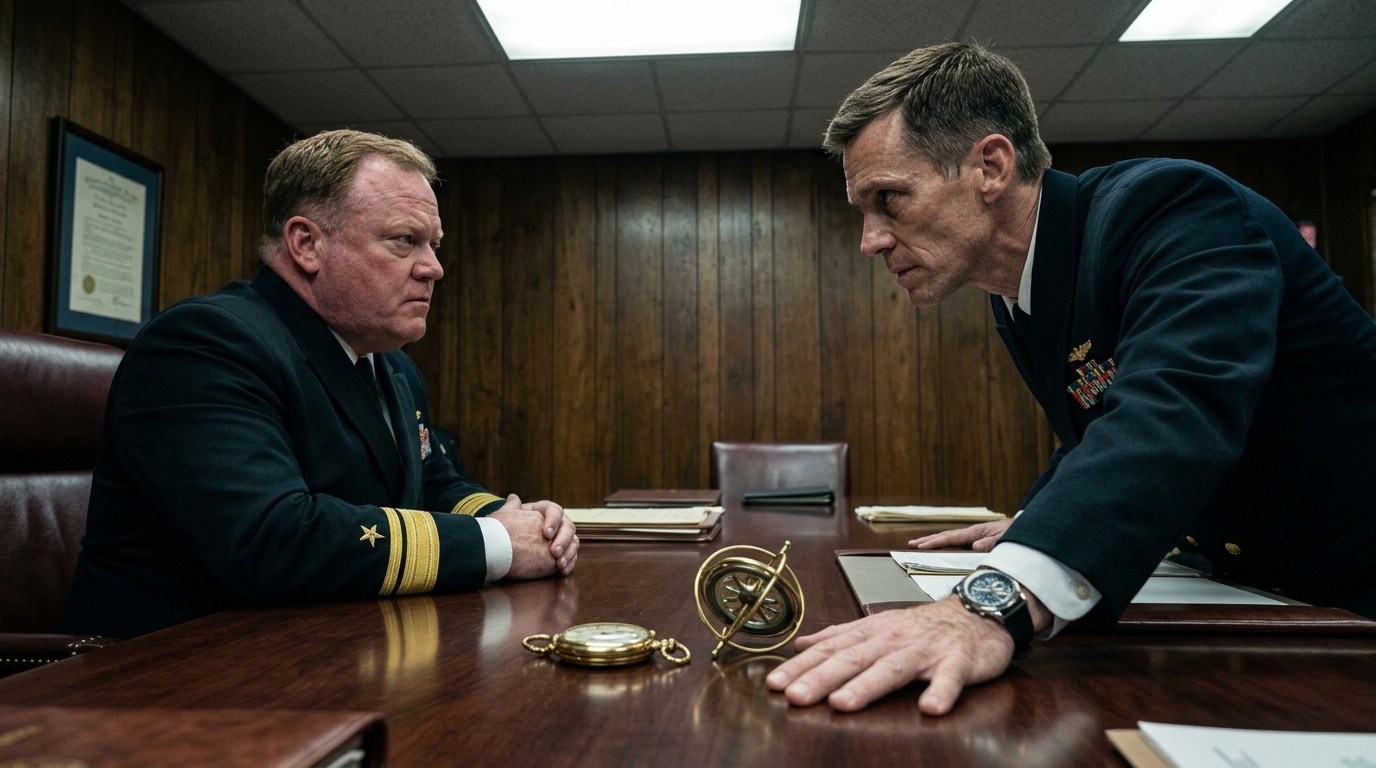
Captain John Cromwell tapped a heavy leather-bound report against the mahogany table, his eyes narrow and dismissive under the overhead light.
We had brought the data logs from three separate patrols, detailing every erratic run and unprovoked turn we had logged on the water.
Cromwell didn’t even look at the grease-pencil graphs.
—That is a paranoid delusion, Commander, — he barked, slamming his palm against the wood so hard the coffee cups rattled.
You’re accusing the Bureau of Ordnance of negligence that’s supposedly killing our own men based on sheer coincidence.
The room filled with murmurs from officers who had never spent a single night dodging depth charges in a heavy swell.
They wanted simple answers, clean victory curves, and a weapon system that never questioned its own engineering.
I set the brass stopwatch down on the table, the metallic clink cutting straight through their noise.
The Bureau claimed their pre-war tests at Newport were absolute law, refusing to acknowledge what was happening out in the real world where decks roll and gyros stumble.
Cromwell leaned forward, his voice dripping with condescension about military discipline and proper protocol.
—Our torpedoes don’t malfunction, O’Kane. Your crews are just missing their marks under pressure.
I gripped the edge of the table, feeling the cold weight of exhaustion dragging at my shoulders.
It wasn’t poor shooting that was sinking us; it was an institution too proud to admit a flaw in a spinning wheel.
Admiral Lockwood sat quietly at the end of the long table, saying nothing to defend us, offering no comfort against the tidal wave of bureaucratic arrogance.
—Take Tang back to war, Commander, — Lockwood finally stated, his voice flat and unreadable. —We will evaluate your theories based on your results.
That was all the approval we were ever going to get from men who hid behind desk stamps while our hulls took the beating.
CHAPTER 4: THE FINAL PATROL BEGINS
The dock smelled of bunker oil and wet hemp ropes.
We had fifty-one days of hard patrol behind us and a fresh set of orders burning a hole in my pocket.
The crew was moving along the deck in silence, hauling supplies and locking down watertight hatches for another run into the Formosa Strait.
There was no cheering crowd this time, just the cold realization that our tubes were loaded with weapons past their inspection dates.
Lieutenant Frazee stood by the main ballast control, his fingers tapping an anxious rhythm against a clipboard holding our maintenance logs.
—These two fish in tubes one and twenty-four have been sitting wet for over a month, — he muttered, pointing a grease-stained pencil at the manifest.
We both knew the Bureau’s manual required a complete overhaul every thirty days, but supply crates were scarce and the admiralty wanted every hull back on the firing line immediately.
I set my canvas kit bag down on the steel decking, feeling the damp chill soak right through the canvas.
—We work with what the yard gave us, Murray. Just keep the crew focused on the drills.
The lines were cast off with a sharp snap that cut through the harbor wind.
The diesel engines bellowed to life, vibrating through the hull as we backed away from the pier and headed out past the submarine base breakwater.
Every man aboard knew the stakes.
The convoy routes were packed with enemy transports, and the weather reports predicted rough three-foot swells rolling across the strait by midnight.
We didn’t have automated firing calculators to compensate for a pitching deck; every angle had to be measured by eye and calculated by hand.
I climbed the ladder into the conning tower, my boots ringing against the rungs.
The iron walls closed around us like a familiar trap, and the open sea waited outside.
CHAPTER 5: THE FATAL CALCULATION
The air in the control room tasted stale, thick with the scent of hot wiring and damp wool uniforms.
Outside, the Formosa Strait churned under a black sky while we tracked our final target of the patrol, a heavily laden troop transport crawling through the dark.
We were running on the surface at eight knots, the deck yawing five degrees off level with every passing wave.
Lieutenant Savadkin braced his shoulder against the periscope standards, his eyes fixed on the glowing phosphor wake in the distance.
—Range is twelve hundred yards, Captain. She is sitting right where we want her, — he called out over the rhythmic thrum of the diesel blocks.
I reached down to check the brass clinometer mounted near the navigation table.
The bubble drifted stubbornly off center, rocking back and forth as the ocean shoved our steel frame around without a shred of pity.
By all rights, we should have waited for the sea to flatten.
We should have paused the sequence, killed the momentum, and let the gyro spin up in steady water.
Instead, the pressure of the escort destroyers closing in from the east pressed down on our backs like a physical weight.
—Fire twenty-four, — I ordered.
In the forward torpedo room, Floyd Caverly pulled the brass firing lever on tube number one.
The compressed air system hissed with a violent rush, launching six hundred pounds of high explosive out into the turbulent chop.
Through the optics, I tracked the bright green line of the wake cutting straight toward the enemy hull for the first five seconds.
Then the wake stuttered.
The line curved sharply to the right, arcing backward in an unmistakable, flawless circle.
—Captain, the fish is turning! — Savadkin screamed, his voice cracking against the steel bulkhead.
The gyro had caught the turbulence during launch, spinning up at half-speed and locking its steering vanes into a death spiral.
I didn’t hesitate, throwing every ounce of weight against the voice pipe.
—All ahead emergency, right full rudder, clear the bridge, dive!
The hull shuddered as the massive diesel engines roared to maximum power, but a fleet submarine cannot turn on a dime when a weapon is rushing back at forty-six knots.
The closing distance melted away in seconds, leaving us trapped at the exact center of our own trap.
CHAPTER 6: THE IRON CIRCLE AND COLLAPSE
Water roared through the jagged hole in the aft compartments like an open fire hose, driving the compressed air gauges into the red.
Lieutenant Savadkin fought to keep his footing on the tilting control room floor as the hull settled into a permanent forty-five-degree down angle.
We had tried to reverse screws, but momentum and physics don’t negotiate with a weapon that hunts its own maker.
The Bureau of Ordnance had sent us to sea with a defect they refused to fix, and the math had finally caught up to our keel.
The stern compartments flooded in less than thirty seconds, sealing the fate of the brave men who stood watch in the machinery rooms.
Alarms wailed and died out one by one as seawater drowned the main electrical panels, leaving us in a suffocating gloom broken only by emergency red lanterns.
Above us, Japanese escorts dropped depth charges that hammered the hull with violent shockwaves, unaware they were pounding a ship already destroyed by its own hands.
I wiped a streak of cold condensation from the tactical chart table, my hands steady despite the air growing thinner by the minute.
There would be no comfortable apologies from Washington, no sudden admissions of fault from the admirals who scoffed at our patrol logs.
The closed door of the Bureau remained shut, guarded by men who would never have to feel the crushing weight of a steel hull filling with the sea.
We had broken every record for tonnage, but numbers don’t matter when the cost is paid in the lives of seventy-eight good sailors.
I reached into my pocket, my fingers brushing against the cold metal of the brass stopwatch one last time before stepping toward the escape trunk.
The machine had proven its final truth, carved into the rusted steel of a wreck resting on the floor of the Formosa Strait.
Innovation without humility is a catastrophe, and no amount of combat glory can wash away the price of ignoring the mechanics of reality.
I turned off the emergency lamp, leaving the dark cabin to the silence of the deep water, knowing the lesson was finally locked in iron.