The Rust of Accountability: How One Man Dismantled a Corrupt HOA Through Precision and Persistence
CHAPTER 1: THE EMPTY APRON
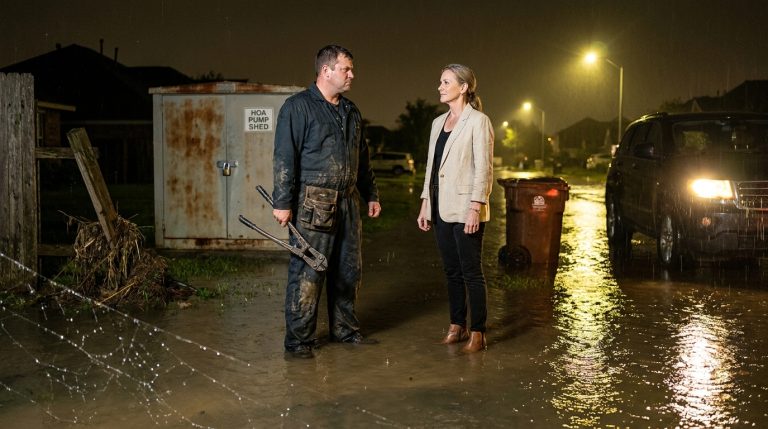
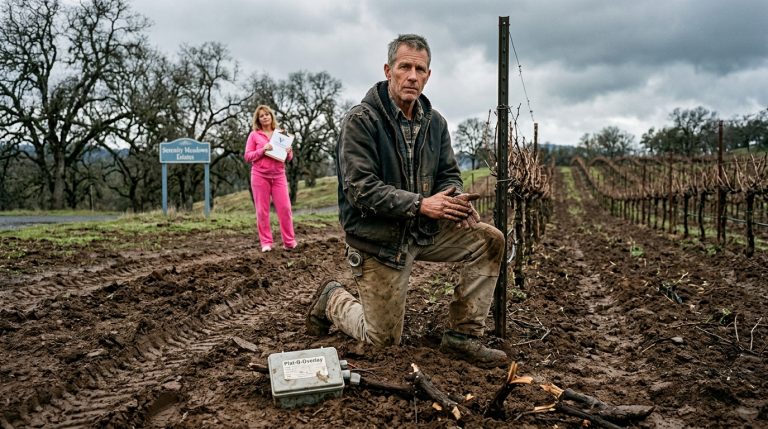
The space where the John Deere 5075E should have been was now just a rectangle of undisturbed, gray-white gravel. It was 11:45 a.m. on a Tuesday. The silence of my own land felt heavier than usual, pressing in against the sides of the workshop like water against a dam. I stood there, boots planted, letting the reality of the empty apron register, not with anger—anger is a fuel that burns out too fast—but with the cold, mechanical assessment of a problem.
Darla had done it. She had followed through on her threat with the clumsy, predictable arrogance of someone who thinks the world is governed by her personal preferences. A yellow notice was stapled to the workshop door, flapping slightly in the mid-morning breeze. It cited Section 7B of the HOA covenants and listed the address for Halstead Towing, a facility that likely wasn’t equipped to store a piece of machinery this precise without the hydraulic seals suffering from the exposure.
I didn’t reach for my phone to call her. I didn’t stomp around the property. I looked at the ground, at the tracks where the tow truck had pivoted, grinding the fresh gravel into the dirt below. She had pointed the machinery of the HOA at me, thinking I was just a neighbor she could out-manage. She didn’t realize that in my world, in the world of the Army Corps of Engineers and heavy infrastructure, we didn’t operate on petty social pressure. We operated on documented, federal law.
The tractor wasn’t just a vehicle. It was a tool of watershed stabilization, bound by a federal equipment loan agreement that sat in my fireproof safe inside. By removing it, she hadn’t just violated an HOA rule; she had interfered with a federal program. A shadow passed over the shop floor as I stepped inside. My desk was tidy, everything in its place, the yellow highlighter still resting on top of the 47-page covenant booklet I’d been studying.
I sat down, pulled the booklet toward me, and looked at the page I’d flagged earlier that morning. My heart rate didn’t spike. Instead, my mind began to categorize the next steps, the same way I’d sequence a bridge repair or a bank fortification. Document, notify, wait. The Zeigarnik effect started to gnaw at me—the human need for completion—but I forced it aside. This wasn’t about winning a fight; it was about the cold, hard logic of the law.
Then, my gaze shifted to the edge of the workshop desk. My phone lay face-down, but it buzzed—a short, sharp vibration that shouldn’t have been there. It was a text from Prentice Chadwell, the IT guy who kept the neighborhood records. It contained a single screenshot of the current HOA board meeting minutes. I opened it, and as I read, a detail I had overlooked in the fine print of the previous year’s budget finally clicked into place. The $14,200 discretionary fund wasn’t a buffer. It was a bridge to something much darker, and as I looked at the numbers, I realized Darla hadn’t just made a mistake. She had created a trail that led directly to her own front door.
CHAPTER 2: THE YELLOW HIGHLIGHTER
The 47-page covenant booklet sat on my workbench like a loaded weapon. My coffee had gone stone cold, a dark, oily film forming on the surface, but I didn’t care. The text in the screenshot Prentice had sent me was clear: a $14,200 line item labeled ‘administrative discretionary,’ buried in the budget. It wasn’t just a number. It was a deviation. I looked back at the Section 3D clause I’d already marked—the prior use exemption.
If my tractor was grandfathered in, the fine was invalid. If the fine was invalid, Darla’s claim to ‘enforce the rules’ was nothing more than theater. And theater, by its very nature, required a script. I needed to see the original script.
I stood up, the chair scraping sharply against the concrete floor, and walked to the wall-mounted rack where I kept my tools. The smell of diesel and old, dry earth hung in the air—the smell of a shop that hadn’t seen active commercial work in years. My hands moved with a practiced, heavy rhythm. I grabbed a file folder, a clean legal pad, and a fresh pack of certified mail envelopes from the supply drawer. I didn’t need to yell. I didn’t need to post a rant on some neighborhood forum.
I sat back down and began to draft.
Dear Ms. Hutchins,
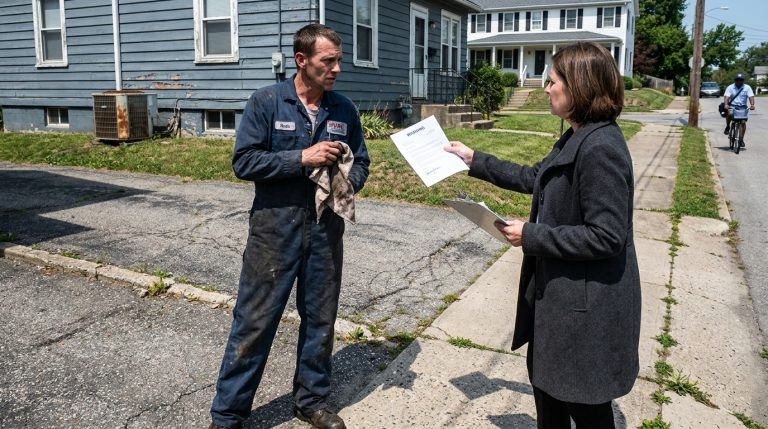
I am writing regarding the fine issued on Tuesday. Please find enclosed a citation of Section 3D of our governing documents, the prior use exemption. My equipment, having been in consistent use for property improvement for six years—predating the incorporation of this HOA—is exempt from the provisions you’ve cited.
I stopped. The rhythm of the sentences felt right: clinical, detached, and utterly, legally suffocating. I didn’t mention the federal lien on the tractor. Not yet. That was a card for the deep game, not this opening hand. I finished the letter, signed it, and attached the original receipt for the John Deere, dating back six years.
Ten minutes later, I was in my truck, driving toward the local post office. The gravel of my driveway crunched under the tires, a sound that felt like a challenge. As I pulled out onto the main road, a dark sedan passed me in the opposite direction. It was Darla’s. I saw her face through the windshield—set, tight, the eyes fixed on the road ahead, her hands gripping the wheel at ten and two. She didn’t look at me, but the way she accelerated past my driveway told me everything I needed to know. She wasn’t just managing the neighborhood; she was patrolling it.
I arrived at the post office and watched the clerk slide the certified mail sticker onto my envelope. That small, red-and-white sticker was the first move. When I got back to the truck, my phone buzzed again. This time it was Fern Bolstock, the retired teacher from next door.
“Garrett?” Her voice was steady, the kind of voice that had kept unruly classrooms in check for decades. “I heard about the tractor. I’m looking at the board minutes for 2022. There are four months missing. Entirely missing. It’s not just a clerical error.”
“Can you bring them over?” I asked.
“I’m coming now. And Garrett?”
“Yeah?”
“Don’t go to her house. She’s already calling the county compliance officer again. She’s claiming you’re running a scrap yard.”
I felt a cold prickle of irritation at the base of my neck—the sensation of someone trying to box you in. I looked out the windshield at the rusted frame of a nearby utility trailer, the orange-red oxidation flaking off in the wind.
“Let her,” I said, my voice flat. “Let her call them. The more she calls, the more paperwork she creates. And paperwork is exactly what I need.”
I hung up and started the truck. The engine turned over with a low, gut-deep vibration. I wasn’t fighting a person anymore; I was fighting a system, and systems, as I knew from years of Corps work, were always built on a foundation of documentation. If Darla wanted to treat my land like a crime scene, I would treat her bureaucracy like a structural failure. I headed back toward Ridgeline Estates, watching the rearview mirror, wondering just how far she was willing to go to maintain the illusion of her own authority.
CHAPTER 3: THE BOARDROOM BATTLE
The clubhouse always smelled like industrial carpet cleaner and the faint, lingering ghost of stale coffee. It was a space designed for compliance, not for conflict, yet here I was, standing in the back corner as the board meeting reached its midway point. Darla was at the head of the table, her HOA badge catching the overhead fluorescent light, her voice a measured, rehearsed drone. She was moving through a list of routine maintenance approvals, her eyes scanning the room with the practiced ease of someone who had never encountered a real, immovable obstacle.
I watched her. I didn’t fidget. I didn’t look at my watch. I stood with the heavy, quiet patience of a man who spent his career leveling foundations. Beside me, Fern Bolstock stood rigid, her eyes fixed on the manila folder in her hands—the one containing the records she’d been collecting.
“Any other business?” Darla asked, her gaze sweeping past me as if I were a piece of the architecture.
I stepped forward, the sound of my boots heavy and rhythmic against the thin carpet. “I have a question about the budget, Darla.”
The room went still. You could hear the hum of the HVAC system, a low, vibration in the floorboards. Darla’s smile didn’t flicker, but her hand, holding her pen, tightened. “Mr. Wallover, this is for board members and homeowners to discuss items on the agenda. Your issue with the tractor is currently under legal review.”
“This isn’t about the tractor,” I said, my voice steady, stripped of any defensive edge. “It’s about the administrative discretionary line item in the 2023 budget. $14,200. I’d like to see the board minutes that authorized that expenditure.”
Darla took a breath. She looked toward her two allies on the board, but they were suddenly very interested in the papers in front of them. “That is an operational decision, Garrett. It’s covered under my authority as president.”
“Authority is defined by the covenants, Darla,” I said, stepping closer to the table. I didn’t need to shout. The tension in the room was doing the work for me. “I’ve read the charter. Any discretionary expenditure over a thousand dollars requires a board vote. I’ve looked through the minutes for 2022 and 2023. I don’t see a vote. I don’t see a signature from the treasurer.”
“I don’t have to explain line-item allocations to you,” she said, her voice dropping an octave, losing its polished veneer. She looked around the room, searching for support, but the homeowners were shifting, leaning in. The silence was becoming heavy, a physical weight.
“If you didn’t have a vote,” I continued, pressing the point with the deliberate pace of a man driving a pile into soft clay, “where did that $14,200 go? Because if it wasn’t authorized, and it wasn’t spent on community maintenance, that’s a liability issue for every single person sitting in this room.”
Darla’s face flushed. The lanyard around her neck seemed to tighten. “You are harassing this board,” she snapped, her voice finally breaking the plane of professional composure. “I have already contacted the county regarding your illegal activity, and I will be calling them again if you do not sit down.”
“Call them,” I replied. “Call the county. Call whoever you want. But before you do, you might want to consider why there are four months of board minutes missing from the public records request I filed last week.”
She went pale. It was a subtle, almost imperceptible shift, but I saw it—the sudden realization that I wasn’t just guessing. I had the paper trail, and I was holding it right in front of her. She reached for her water glass, her hand trembling just enough to make the ice click against the rim.
“This meeting is adjourned,” she said, standing up so abruptly her chair nearly tipped over.
“You can adjourn the meeting,” I said, my voice quiet, cutting through the murmurs of the other homeowners, “but you can’t adjourn the truth.”
I turned and walked out of the clubhouse. The air outside was cold, biting, and smelled of wood smoke and approaching winter. Behind me, the muffled sound of voices erupting—arguments, questions, the sound of a foundation cracking under pressure—filled the air. I didn’t look back. I reached my truck, climbed inside, and listened to the engine turn over. The job was just beginning, and for the first time in months, the weight of the tractor’s absence was balanced by the weight of what I had just initiated. Darla was running, but she was running into a corner, and I was going to be the one to seal it.
CHAPTER 4: THE PAPER TRAIL
The manila folder on my kitchen table was thick, dense with the scent of old paper and the sharp, metallic tang of the office-grade toner used at the print shop downtown. Fern was sitting across from me, her spectacles perched on the end of her nose as she methodically sorted through the pages. The late afternoon light filtered through the kitchen window, catching the dust motes dancing in the air above our heads. Everything felt slow, heavy, and deliberately precise.
“Look here, Garrett,” she said, tapping a page with a neatly manicured nail. “I spent all morning cross-referencing the meeting minutes with the bank statements Prentice pulled from the shared drive. There is a two-month gap in the fall of 2022, right when the landscaping contract was being renegotiated. And look at this.”
She slid a document toward me. It was a single-page addendum titled ‘Executive Compensation Adjustment, Board President.’ My eyes narrowed. My finger traced the line where the signature block sat. It was signed by Darla and two others—the same two board members who had voted with her on the tractor issue. There was no date of membership approval, no reference to an association vote, and—most crucially—no record of it ever appearing on an agenda.
It was a quiet, clinical act of self-dealing. The $575 monthly stipend was a steady, rhythmic drainage of community funds, perfectly calculated to stay just below the threshold where an automated alarm might trigger in the bank’s fraud detection software. It was clever. It was also, in the eyes of the law, simple embezzlement.
“She wasn’t just managing the neighborhood, Fern,” I said, my voice low. “She was treating the treasury like a personal ATM.”
I stood up and walked over to the safe in the corner of my workshop. I opened it, the steel lock yielding with a satisfying, heavy clunk. I pulled out the original equipment loan agreement for the John Deere. I’d been keeping it separated from the HOA files, a deliberate choice to ensure no one would mistake my primary motivation for a petty dispute over garden maintenance.
I looked at the federal seal at the top of the page. It felt different now, more substantial, like an anchor in a rising tide.
“What are you going to do with it?” Fern asked. She was watching me, her expression unreadable, the kind of quiet focus that had made her such a formidable educator.
“I’m not doing anything with it yet,” I replied, tucking the compensation addendum into the file. “If I take this to the police now, Darla’s attorney will claim it’s a clerical oversight or a misinterpretation of the charter. They’ll bury us in motions until the membership forgets the issue ever existed.”
“And if you don’t?”
“Then we wait for the next slip,” I said. “She’s already panicked. She’s calling the county on us, she’s trying to freeze us out of the clubhouse. People who are panicked make mistakes. The more she tries to solidify her control, the more cracks she’s going to leave in the foundation.”
I walked back to the window. Outside, the gravel driveway was beginning to settle into the shadows of the evening. I could see the edge of the creek through the trees, the water moving in the dark, carving away at the bank. It was a slow process—the erosion—but it was constant. Every day, a little more dirt, a little more sediment, until the whole structure eventually gave way.
“I’m going to Thaddeus Crane,” I said, turning back to Fern. “He’s a real estate attorney in Knoxville. He knows how to handle these things. I want this documented, notarized, and ready to be filed the second she makes one more aggressive move.”
Fern nodded, her lips pressed into a thin, tight line. “I have more files in my study. If there’s an embezzlement scheme, there’s a trail of communication. She wouldn’t have been able to keep those two board members quiet without emails, texts, maybe even private letters. If she was confident enough to sign this, she was confident enough to write about it.”
“Find them,” I said. “Don’t let her know you’re looking. If she thinks we’re only focused on the tractor, she’ll be careless with the rest of it.”
As Fern left, the house felt suddenly, sharply quiet. I looked down at the documents on the table. The rust of the old metal on the workbench seemed to bleed into the edges of the paper. I wasn’t an angry man, but I was a man who understood the value of a solid, well-built structure. And right now, the structure of our community was rotting from the inside out. I picked up the pen, but I didn’t write. I just watched the ink bleed into the paper, the weight of what I was about to unleash finally settling into my bones. This wasn’t just about my machine anymore. It was about the integrity of the ground we were all standing on.
CHAPTER 5: THE GRAY SEDAN
The clubhouse, usually a sanctuary of muted carpet and lukewarm coffee, felt charged with a sudden, suffocating electricity. It was Thursday afternoon, two days after my board meeting confrontation, and the air was thin, smelling of rain and impending finality. I was sitting in my truck at the edge of the parking lot, watching the entrance. I didn’t need to be there, but I needed to see if my gamble—the notification I’d sent to the Corps’ field office—had triggered a response.
A gray government-issue sedan, paint dulled by highway salt, pulled into the lot and idled. No markings, just a standard Tennessee plate. Two men in muted, olive-drab field uniforms stepped out. They didn’t look like bureaucrats. They looked like engineers who spent their days surveying mud and concrete. They walked with the deliberate, heavy-footed gait of men who didn’t care about HOA aesthetics.
They didn’t knock on the door. They simply approached, checked the lock, and finding it secure, produced a white, official envelope. One of them slid it under the threshold of the clubhouse front door. It was a clean, precise motion, executed with the indifference of a man delivering a utility bill.
My phone vibrated in the console. A text from Clifford: They’re here. Do you want me to record it?
I tapped out a quick reply: Keep the camera rolling. Don’t engage.
As the men returned to the sedan and pulled away, I felt a sharp, hollow drop in my stomach. This was the moment where the internal conflict—the petty squabbles over mailbox colors and discretionary budgets—collapsed under the weight of something much larger. I knew what was in that envelope. It was the administrative demand letter from the Department of the Army, citing the federal equipment loan agreement for my John Deere.
Darla was in her house three doors down, likely stewing over the board meeting, unaware that the rules of the game had fundamentally shifted. She thought she was fighting me. She didn’t realize she was now in the crosshairs of a federal agency that viewed unauthorized equipment removal as a violation of 18 USC Section 1361.
I started the truck, the engine’s idle rattling the dashboard. I drove past the clubhouse, slowing just enough to see the white edge of the envelope peeking out from beneath the door.
My phone buzzed again. It was a call from Thaddeus.
“Garrett,” he said, skipping the pleasantries. “The insurance company is already calling. They’ve been alerted to the civil suit, and they’re demanding a total freeze on HOA discretionary spending. They don’t like the liability of embezzlement charges attached to their coverage.”
“What does that mean for Darla?”
“It means she’s isolated. But be careful,” Thaddeus warned, his voice hardening. “She’s not the type to retreat. She’s the type to burn the house down to keep you from walking through the door. If she finds out it was you who signaled the Corps, she’s going to target you with everything she has left. The defamation, the zoning complaints—it’s going to get much worse before it gets better.”
“Let it,” I said, looking at the clubhouse one last time. “She wants to play with the machinery of government? She’s going to find out how heavy that machinery actually is.”
I turned the truck onto the main road. The sky was turning a bruised purple, the clouds low and heavy with the promise of a cold front. I wasn’t feeling a rush of triumph. I was feeling the cold, pragmatic necessity of the situation. Every action had a consequence, and I had set in motion a sequence that wouldn’t stop until the entire structure was dismantled. I wasn’t looking for a settlement anymore. I was looking for the absolute, rusted-through truth, and I knew that to get it, I’d have to survive whatever collapse came next. Darla would be at her door in twenty minutes to check her mail. When she saw that envelope, the real war would begin.
CHAPTER 6: THE SETBACK
The light in Thaddeus’s office was the color of a dying filament, casting long, sharp shadows across the stacks of legal briefs and invoices. I had been sitting there for twenty minutes, listening to the hum of the air conditioner, watching the clock tick toward midnight. Thaddeus walked in, his suit jacket rumpled, his face etched with a fatigue that went deeper than just a lack of sleep. He didn’t offer me coffee. He didn’t offer a seat. He walked to his desk, placed his briefcase down with a heavy thud, and looked at me.
“We have a problem,” he said, his voice stripped of its usual professional buoyancy. “Darla’s attorney filed an emergency motion to dismiss the civil suit. They’re claiming we’ve engaged in illegal surveillance and intimidation of the board.”
“They have no proof of that,” I said, my voice steady, though my hands had curled into fists on the mahogany surface of the desk.
“They don’t need proof yet, Garrett. They just need to cast enough doubt to trigger a procedural stay. The judge has scheduled an evidentiary hearing for Monday morning. If we can’t prove that our evidence—the minutes, the stipend addendum, the correspondence—was acquired through lawful, standard discovery processes, the court could move to suppress everything.”
I felt a cold, sharp ache in my chest. “Everything?”
“Everything. They’re going to paint you as a disgruntled resident stalking the board, and they’re going to frame the federal inquiry as a coordinated effort by you to weaponize government agencies against a private nonprofit.”
I looked at the window. Outside, the Knoxville skyline was a grid of indifferent lights. I thought about the files in my safe, the hours spent with Fern and Prentice, the quiet, meticulous work of building a case. All of it, hanging by a single procedural thread.
“What about the audit?” I asked. “The insurance company’s auditor found the embezzlement. That’s independent, objective fact.”
Thaddeus sighed, rubbing his temples. “The insurance carrier is backing off. Darla’s legal team threatened them with a bad-faith suit if they continue to release internal memos to us. They’re locking down. We’re losing our access to the inner records.”
It was a failure. Not a total defeat, but a tactical reversal that stung like a lash. Darla wasn’t just playing defense anymore; she was using the very systems I’d tried to leverage against me. She had understood the rules of the game just as well as I had, and she was currently using them to bury the truth under a mountain of procedural red tape.
“I need to go to Ridgeline,” I said, pushing off the desk.
“Garrett, don’t. Whatever you’re thinking, don’t. If you go there and confront her now, you lose. You give them exactly what they need to make the stalking claim stick.”
I didn’t answer him. I walked out of the office, the silence of the hallway amplifying the erratic thrum of my own heart. As I reached my truck, my phone buzzed again. An unknown number. I answered it, expecting another lawyer, another threat.
“You think you’re so smart,” a voice hissed—a woman’s voice, tight with a mixture of terror and malice. It wasn’t Darla, but it sounded like someone standing right behind her. “You think you’re exposing us? You don’t know what you’ve started. That tractor? The ‘federal property’? Do you have any idea how many people are actually involved in the watershed stabilization project? How many signatures are on those documents? You pull that thread, Garrett, and the whole state of Tennessee comes down with it. Back off, or the next thing that gets towed won’t be a piece of equipment.”
The line went dead.
I stood there, the cool night air biting at my skin, the silence of the parking lot absolute. The mystery of the “federal interest” had just taken a massive, jagged turn. This wasn’t just about an HOA president stealing a few thousand dollars anymore. The voice on the other end had sounded genuinely terrified, not for Darla, but for the implications of the project itself. I looked at the dark sky. The “Rusted Truth” I had been chasing was far more complicated than an embezzlement scheme. There was something else buried in those federal files—something that reached far beyond the boundaries of our small cul-de-sac. And for the first time in this entire ordeal, I realized I had been looking at the wrong layer of the machine.
CHAPTER 7: THE ANNUAL MEETING
The clubhouse was a pressure cooker. It was the second Saturday of December, and the air inside was thick with the scent of bad coffee, damp winter coats, and the low-level, frantic hum of thirty-some homeowners who had been summoned by rumor and urgent text messages. I stood near the back, my boots heavy against the linoleum. Fern was to my left, her posture as rigid as a ruler, and Clifford was to my right, his knuckles white as he gripped his phone—the one with the camera that had captured the entire towing incident.
Darla was at the front. She looked brittle, the edges of her composure fraying in real-time. She wore her lanyard like a suit of armor, but it wasn’t holding. Her eyes were darting, scanning the back of the room, looking for an exit or a defender, but the faces staring back at her were blank, expectant, and utterly devoid of the usual reflexive nodding.
She opened her mouth to begin, but Fern’s hand was already in the air.
“Section 14 C of the charter,” Fern announced, her voice echoing in the small space. “I move that we grant Mr. Wallover the floor for five minutes to address matters of community governance.”
A collective murmur rippled through the room. It wasn’t dissent; it was the sound of a group of people finally deciding to take a side. Darla’s face flushed a deep, unhealthy red, but the board members to her left and right were staring at their shoes. They knew the audit memo. They knew the insurance carrier was pulling the plug. They were already calculating the cost of their own loyalty.
“Seconded,” a voice called out from the middle row. It was Prentice.
Darla looked like she was choking. She made a gesture as if to speak, to protest, but the weight of forty-one households—the collective silent disapproval of the people who paid the dues she’d been siphoning—was a physical force. She slumped, just slightly, and nodded.
I walked to the front. I didn’t have notes. I didn’t have a rehearsed speech. I had the truth, and for the first time, I had the room. I laid it out, piece by piece. The tractor, the fabricated zoning complaints, the missing minutes, the unauthorized stipend. I didn’t yell. I spoke with the cadence of an engineer describing a structural failure. I kept my eyes on the crowd, not on Darla, because they were the ones who needed to understand the mechanics of what had happened.
When I finished, I placed the federal demand letter on the table. The seal of the Department of the Army was visible from the third row.
Prentice connected his laptop to the wall-mounted screen. The first slide flashed: Administrative Discretionary Fund: $14,950.
The room went cold. The silence that followed wasn’t just quiet; it was the sound of a social contract dissolving. People weren’t just angry; they were confused, shocked, and slowly, surely, furious.
Darla stood up, her voice trembling, attempting a defense—a jumble of words about ‘operational necessity’ and ‘misunderstanding.’ It was a performance that nobody was buying. The board members, one by one, turned their chairs away from her.
“Move to vote,” Clifford shouted from the back.
The vote was a formality. It wasn’t a choice; it was an act of housecleaning. A unanimous show of hands to authorize an independent audit, a unanimous demand for her immediate resignation, and a unanimous adoption of the new, transparent complaint procedure.
I looked at Darla. She was staring at the screen, at the numbers, her fingers tracing the plastic of her HOA badge. She looked smaller, thinner, the authority she had built her life around stripped away in under twenty minutes. It wasn’t the triumph I had anticipated. It felt like watching a rusted piece of machinery finally snap under load—ugly, loud, and entirely inevitable.
As the meeting dissolved into a flurry of motion—people gathering their things, the new board members huddling with Fern, the air clearing of its manufactured tension—I walked toward the door. I saw one of the board members who had supported her quietly slip out the back, leaving his badge on the table.
I stepped out into the biting December air. A gray sedan was idling at the edge of the lot. The two men from the Corps were watching, their faces neutral, their presence a silent, looming reality that had nothing to do with chili cook-offs or basketball hoops. They knew something I didn’t—something that had nothing to do with the $14,950. As I walked to my truck, I realized the investigation into the equipment loan wasn’t ending with Darla’s departure. It was just shifting gears. The tractor was coming back, but the real question—the one that had left me cold in Thaddeus’s office—remained unanswered. I had won the neighborhood, but I had accidentally walked into a much deeper, more dangerous conflict, and the machinery I had exposed was already starting to turn against me.
CHAPTER 8: THE RIPRAP AND THE RIVER
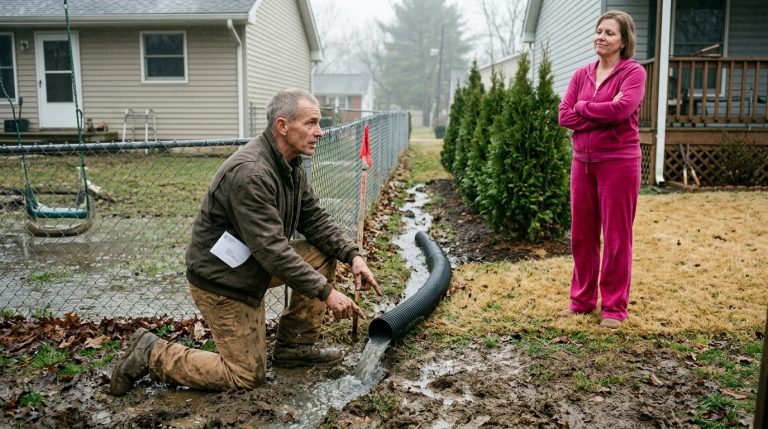
The spring sun was finally warm enough to take the chill off the metal tools in my workshop, but as I stood by the creek bank, the air still felt heavy with the lingering scent of wet clay and old, decomposing leaves. The restoration work was complete. The riprap—large, jagged stones placed with precision to break the current—sat firmly against the slope, stabilizing the earth where the bank had once been raw and bleeding.
I held a clipboard in my hand, my thumb tracing the edge of the final project sign-off document. Beside me, Sully Bramhurst from the Corps stood looking at the water. He didn’t smile; he didn’t offer a congratulatory pat on the back. He just watched the water eddy around the new stones, his expression as unreadable as a topographical map.
“It’ll hold,” he said finally, his voice barely rising above the low gurgle of the creek.
“For how long?” I asked.
He looked at me then, his eyes behind his thick, utilitarian glasses revealing a flicker of something—not malice, but the absolute, crushing pragmatism of a man who dealt in scales of time much larger than our own. “Long enough for the project’s purpose. That’s all we ever design for, Garrett.”
I thought back to the caller—the panicked, desperate voice that had warned me about the state of Tennessee, about the number of people involved in the watershed project. I understood now. It wasn’t about my tractor, or Darla’s ego, or even the small, petty embezzlement of a few thousand dollars. It was about the project itself: a sprawling, multi-agency initiative that relied on the quiet, unobtrusive cooperation of local stakeholders. My tractor had been a cog in a machine that was already moving too fast, and by forcing an audit, by pulling the federal thread, I hadn’t just exposed an HOA president. I had drawn the eye of auditors and regional counsel toward a project that had been built on a foundation of “necessary deviations” and “informal authorizations.”
The tractor was back in its shed, serviced and running, but the sense of ownership I’d once felt toward this land had been subtly, irrevocably altered. It was no longer just my three acres. It was a fragment of a larger, managed landscape, maintained by systems I had only begun to comprehend.
I walked back to my workshop, the gravel crunching beneath my boots—that familiar, grounding sound. Inside, I sat at my desk and looked at the fireproof safe. The manila folder was still there, but the documents inside—the compensation addendum, the affidavits, the audit demands—felt like artifacts of a previous life.
Darla was gone. The HOA was functioning. Transparency was the new baseline. And yet, the silence in the neighborhood felt different. It was the silence of a house where the ghost had finally been driven out, leaving behind a cold, empty structure.
Fern stopped by later that afternoon. She brought a loaf of bread, her usual contribution to the peace of the afternoon. We stood on the porch for a moment, watching the evening light play across the cul-de-sac.
“Prentice says the board is looking for a new treasurer,” she said, her voice soft. “He wants you to run.”
I shook my head. “I think I’ve done enough board work for one lifetime.”
“You did good, Garrett. You cleaned the slate.”
“I did what I had to do,” I said, but the words felt hollow. I had cleaned the slate, yes, but I hadn’t built anything new. I had merely returned the neighborhood to a state of baseline functionality.
As the sun dipped below the tree line, leaving the gravel path in shadow, I went back to the creek one last time. I knelt by the water, running my hand over the rough, grey surface of one of the riprap stones. It was solid, immobile, and perfectly placed. It was a good repair. It was a functional repair. But as I watched the water flow over it, I couldn’t shake the feeling that the real, underlying erosion—the deep, structural decay of our community, of our trust in the institutions that govern the ground beneath our feet—was something that no amount of stone, or paper, or procedure could ever truly fix.
I turned back toward the house. The smell of diesel from the workshop floor drifted out to meet me, sharp and familiar. I was back where I started. The tractor was parked, the creek was stable, and the rules were being followed. I had the truth, but it was a rusted, heavy thing, and as I walked inside and locked the door, I realized that some things are only meant to be held for as long as they serve their purpose, and then, eventually, you have to let them go.