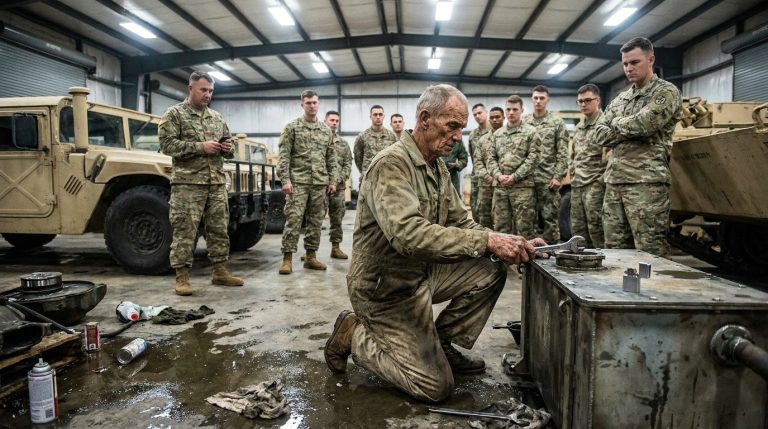
The Deepest Silence: A Relic of the Cold War Faces the Abyss to Save a Sunken Crew.
CHAPTER 1: THE WEIGHT OF THE WATER
The silence of the abyss was not empty; it was heavy, a physical pressure that pushed against the reinforced glass of his helmet. Jedadiah Croft adjusted the intake valve on his rebreather, the mechanical click sounding like a gunshot in the confined space of his mask. He breathed in, a rhythmic, measured draw of enriched oxygen, his pulse remaining steady at forty-eight beats per minute.
Above him, the Atlantic was a thousand feet of violent, sun-bleached surface agitation, but here, in the bathypelagic zone, the water was as still as liquid lead. His hands, encased in thick, pressurized gloves, rested on the cold, sweat-slicked steel of the manual override housing. He could feel the vibration of the ocean through the hull, a distant, rhythmic thrum—the dying heartbeat of the USS Nebraska.
He checked his wrist display. The numbers were glowing a faint, pale green in the darkness. Five minutes of bottom time had passed. The cold was beginning to seep through the multi-layered insulation of his suit, a biting, relentless ache that crawled into his joints, but he ignored it. To acknowledge the cold was to invite the numbness, and he needed his fingers to be precise.
He probed the seam of the valve housing. It was fused, but not by corrosion. The rust patterns were wrong; they were interrupted by fresh, geometric scars—marks left by a specialized high-torque tool, not the steady, agonizing decay of salt water. He paused, his breath hitching for a fraction of a second. The sabotage wasn’t environmental. It was internal. Someone had made certain this valve would never turn.
He traced the metal with his thumb, feeling the faint, raised edges of a stamp partially ground away by the saboteur. It was a serial number from a facility that had been closed before the Berlin Wall fell. His jaw tightened. He wasn’t just performing a rescue; he was walking into a crime scene he had helped build forty years ago.
The Nebraska groaned, a deep, structural screech that shuddered through his boots, threatening to tear his grip from the hull. He braced his feet against a jagged projection, his entire body acting as a living bridge between the submarine and the crushing weight of the world above.
A new, flickering light emerged from the darkness below him—the faint, rhythmic strobe of an emergency beacon from the sub’s lower compartment. Then, something caught his eye in the strobe’s reach: a piece of red wire, sheared cleanly and taped to the exterior vent. It was a tripwire. The pressure didn’t need to be enough to crush him; the mechanism was rigged to vent a caustic gas the moment the valve was nudged.
He wasn’t just fighting the ocean. He was fighting a ghost of his own design.
CHAPTER 2: THE ANATOMY OF A GHOST
Jedadiah didn’t pull his hand away from the cold steel. The red wire, stripped and coiled with the precision of a master wireman, pulsed in the strobe light like an open wound. It was a classic “dead-man’s” circuit, designed to trigger the moment someone tried to correct the very failure it caused. It wasn’t just a trap; it was a taunt.
The thought pulled at a thread in his mind, unraveling a memory he hadn’t touched since the Cold War thaw. He saw the layout of the Nebraska’s valve assembly, not as he looked at it now, but as it had appeared in the blue-light glare of a drafting table in 1984. He had designed that housing. He had signed off on the fail-safes. This specific bypass—this elegant, lethal modification—wasn’t done by a standard shipyard mechanic. It required an intimate, structural-level knowledge of the sub’s internal architecture. It was his own handiwork, perverted by someone who had been holding onto his blueprints for decades.
He felt a phantom chill that had nothing to do with the freezing Atlantic water. A voice echoed in his memory, a quiet, cynical laugh from a man he had worked with in the shadows—a man who had disappeared shortly after the prototype was finalized. If that man had survived, if he had been the one to plant this… the mission wasn’t just a rescue. It was a reckoning.
Jedadiah shook his head, the movement tight and controlled. He forced the ghost of his past back into the dark corners of his consciousness. Focus on the physical. He began to work, his movements slow and deliberate. To cut the red wire was to trigger the gas. To leave it was to lose the crew of the Nebraska to the crushing depths. He needed a middle path. He pulled a small, custom-made ceramic pick from his kit—a tool that wouldn’t spark—and began to carefully scrape away the epoxy resin sealing the wiring block.
His breath echoed in his ears, rhythmic and steady. In. Out. Three seconds. Four. The silence of the deep sea was absolute, a heavy weight that seemed to press the very air out of his suit. He felt a sudden, sharp tremor run through the hull of the submarine, a metallic groan of protest as the pressure increased. The Nebraska was dying; he could feel the sub’s structural fatigue vibrating through his own gloves, a shivering, desperate plea for help.
He finally reached the contact point of the override housing. With the surgical precision of a man who had spent his life repairing what others had broken, he diverted the current. It was a high-stakes bypass, an improvisation that relied on the very physics of the cold water outside to act as a heat sink for the circuit he was about to jump. He held his breath, pressed the copper bridge into place, and felt the sudden, satisfying click of the locking mechanism releasing.
The trap didn’t fire. The wire remained inert.
Jedadiah exhaled, the sound a low, gravelly rasp in his helmet. He had gained entry to the manual override, but the interior of the valve was a tangled mess of deformed metal. He reached in, his gloved fingers finding the blockage—a jagged shard of hardened steel jammed deep into the gearing. He pried at it, his forearm muscles straining against the thick, pressurized suit. It wouldn’t budge.
He checked his dive timer. He had used ten minutes. The oxygen scrubbers on his rebreather were starting to hum with a slightly higher pitch, a warning of the increasing CO2 levels. He realized then that the sabotage wasn’t meant to kill him immediately. It was meant to make him work for the rescue, to force him to expend his remaining time in the dark, watching the sub slowly succumb to the crushing pressure, giving him a front-row seat to the failure of his own design.
He pulled back, bracing his boots against the hull, and took a final, hard grip on the jammed shard. He didn’t pull; he twisted, applying the torque in a slow, agonized rotation. He wasn’t just moving a piece of metal; he was forcing the past to yield. The steel shrieked—a sound of rending metal that traveled through the hull and into his very bones. Then, with a sudden, sickening snap, the blockage gave way. The valve spun freely, the sudden release sending a jolt through his arm that nearly knocked him off the casing.
He had opened the path, but the water rushing into the vent was already tinged with oil and something else—a bitter, chemical smell that seeped through his suit’s seals. The internal pressure of the Nebraska was dangerously low. He had cleared the valve, but the real test was only just beginning. He looked up toward the hatch, his eyes scanning the dark, shifting water for any sign of a response from the crew inside. There was only silence, punctuated by the steady, rhythmic banging of a loose piece of hull plating against the sub’s frame.
Jedadiah gripped the hatch release. He knew that when he turned this, he wouldn’t just be entering a submarine; he would be entering the heart of a secret he had spent forty years trying to forget.
CHAPTER 3: THE ECHO IN THE HULL
The hatch groaned as Jedadiah applied leverage, the rusted locking pins grinding against one another with a shriek that echoed deep into the Nebraska’s bowels. When it finally swung clear, the pressure differential surged, pulling at his suit with a sudden, violent tug. He hauled himself through the opening, the transition from the freezing sea into the sub’s internal airlock a sensory shock. The air inside was thick, smelling of overheated electronics, wet insulation, and the faint, sweet decay of long-stagnant bilge water.
He stood in the cramped confines of the airlock, his heavy boots clanking against the steel deck plating. The emergency lights were dead, leaving him in a shroud of impenetrable shadow, broken only by the dim, pulsing amber glow of his shoulder-mounted tactical light. The beam cut through the haze, illuminating floating particulates of dust and stray wires hanging like tangled vines from the overhead conduits.
The distress signal wasn’t a human voice. It was a digital loop, a distorted, rhythmic pulsing that seemed to vibrate through the very walls. Jedadiah listened, his head cocked. It was an old signal—a Cold War-era burst code, the kind he had helped write in his youth. It was a cry for help from a machine that had been designed to keep its own secrets.
He moved forward, his movements economical, his eyes scanning every bulkhead for signs of the crew. But the Nebraska was empty. Not abandoned in a rush—empty in a way that felt deliberate. There were no discarded coffee cups, no scattered logbooks, no signs of panic. The bunks were made. The mess hall table was clear. The ship wasn’t waiting for a rescue; it was holding its breath.
He reached the primary control junction—the heart of the systems he had engineered four decades prior. As he wiped away a layer of grime from the diagnostic panel, he saw the modification. It wasn’t the override valve he had cleared; it was a secondary, clandestine bypass wired directly into the ship’s central processor. The casing was stamped with the same faded serial number he had seen on the outside.
His pulse, usually steady, hitched. He looked closer. The wires were not just connected; they were interwoven with the ship’s primary life support, creating a parasitic feedback loop. The sub wasn’t failing due to a simple mechanical error. It was consuming its own oxygen to feed the processor. The “catastrophic failure” was a manufacturing choice.
He leaned in, his gloved fingers tracing the wiring. His perception shifted, the lines of the ship’s schematics appearing to blur in his mind’s eye. For a fleeting second, he felt a wave of dizziness—a psychological phantom of a laboratory, forty years ago, where a younger version of himself had debated the ethical implications of a ship that could sustain its own mission parameters independent of human input. Had he really built this? Or had he been a pawn in a design he never fully understood?
He shook the thought away, but the uncertainty remained, gnawing at him like a rot. He was the only one who knew how to disconnect the loop, but doing so would effectively kill the signal—and with it, the only proof that this ship hadn’t sunk by accident. If he cut the power, he was erasing the evidence. If he left it, the Nebraska would become a tomb, a silent witness to a crime that had been in motion for a generation.
He heard a faint, metallic clink from the corridor behind him. It wasn’t the shifting of the hull; it was the distinct, rhythmic sound of a boot hitting steel—a slow, deliberate gait that didn’t match the frantic scramble of a trapped sailor. Jedadiah extinguished his shoulder light, plunging himself into absolute darkness. He didn’t breathe. He didn’t move. He became a shadow among shadows, his hand resting on the heavy wrench in his kit, his mind already calculating the angles of the corridor and the sound of the approaching footsteps.
The presence was close now, the air in the corridor shifting as something moved past the hatch. It wasn’t just a survivor. It was someone who knew exactly where to walk to avoid the creaking deck plates. Someone who, like him, was intimately familiar with the silence of a dying ship. Jedadiah pressed his back against the bulkhead, his senses tuned to the microscopic vibrations in the floor. The footfalls stopped. A soft, muffled voice, distorted by the residual electrical hum of the corrupted signal, spoke into the void—not a cry for help, but a calm, clinical confirmation of a status update.
Jedadiah realized then that he hadn’t been sent to save a crew. He had been lured into a container, and the lock had just clicked shut.
CHAPTER 4: THE GHOST IN THE MACHINE
Jedadiah didn’t move for a full minute. He stood braced against the rusted bulkhead, the wrench heavy and balanced in his hand, his breathing shallow and synchronized with the rhythmic hum of the failing life support. The footsteps had vanished into the labyrinth of the engineering deck, yet the air in the corridor felt different—charged, as if an electrical potential had been altered by a recent presence. He waited until the settling sounds of the submarine—the pops and groans of metal bowing under the immense, unyielding pressure of the deep—masking the sound of his own movement.
He crept forward, his boots making no sound on the grease-slicked grating. The corridor opened into the primary auxiliary junction, a space he remembered as a clean, orderly workspace of backlit consoles and glowing diodes. Now, it was a graveyard of obsolete technology. He panned his light across the walls, his gaze lingering on a smudge of fresh oil on a control lever. It was still glistening. Someone had been here moments before, operating the controls with a familiarity that chilled him.
He knelt by the junction box he had examined earlier. A small, thin strip of adhesive tape—the kind used to hold temporary wiring harnesses in place—lay discarded on the floor. It was modern. Military-grade. He picked it up, feeling the tacky residue against his gloved fingertip. The Nebraska was supposed to be a tomb of 1980s engineering; it shouldn’t have had a single piece of modern hardware on board.
The implication hit him with the force of a physical blow. The sabotage wasn’t a relic of the past; it was a contemporary effort to keep the sub’s true purpose buried. He wasn’t dealing with a lingering ghost of his old unit, but an active, ongoing operation. He looked at the wiring junction again, noticing a faint, circular mark on the steel casing—a stress mark where a heavy component had been mounted and recently removed. They were stripping the ship. They were cleaning up the mess before the recovery team arrived.
A soft, synthesized tone emanated from the console to his left—a low-frequency alert, almost subsonic. It was a proximity sensor, one he hadn’t noticed during his initial sweep. It wasn’t designed to detect intruders; it was designed to log the exact moment the override valve was engaged. He had been tracked from the second he stepped through the airlock.
Jedadiah scanned the overhead. There, tucked behind a bundle of heavy-gauge cabling, a small, dark lens glinted. It was an optic, high-definition and miniaturized, aimed directly at his current position. He realized with a surge of cold adrenaline that the person in the corridor hadn’t just been avoiding him—they had been leading him to the junction, watching him work, gathering data on how he bypassed the security.
He stood up, his movements fluid and unhurried. He didn’t turn toward the optic. Instead, he reached into his kit and pulled out a small, metallic signal dampener—a relic of his own, a device that scrambled localized electronic sensors. He held it against the bulkhead behind the junction box and keyed it. A sharp, high-pitched whine briefly cut through the air, and the red light of the optic flickered once, twice, and then went dead.
The silence that followed was total, and yet, it was the most dangerous silence he had ever known. He was blind, but so were they. He moved toward the rear of the engineering deck, his goal now shifting from a simple rescue to a desperate search for the command log. If there was a record of the Nebraska’s final mission, it would be hidden in the black box located in the sub’s navigation core, deep in the flooded bow section.
He moved through the bulkhead door, stepping into a corridor that tilted sharply downward. The floor was slick with condensation, the walls weeping cold water that tasted of rust and stale hydraulic fluid. He felt a sudden, sharp ache in his chest—a warning from his own aging, pressure-worn lungs. He pushed past the discomfort, forcing his body to ignore the protest of his joints. He was deep in the bowels of a machine that had been his own creation, and with every step, the walls seemed to whisper secrets he had spent a lifetime trying to bury. The identity of the saboteur, the true nature of the Nebraska’s “catastrophic failure,” and his own culpability in the original design—all of it was waiting for him at the end of this dark, flooded descent.
He gripped the railing, his knuckles white under the heavy gloves, and looked down the long, dark stretch of the corridor. He was alone, he was running out of oxygen, and he was being hunted by someone who knew the ship as well as he did. He took a steadying breath, pushed off, and descended into the dark.
CHAPTER 5: THE WEIGHT OF THE SECRET
The descent into the bow section was a lesson in claustrophobia. Jedadiah moved through the dark, his shoulder light casting long, jittery shadows against bulkheads that were weeping rusted condensation. Every inch of the descent felt intentional, the layout of the corridors conforming to a design he remembered—a design that included a series of emergency ballast release mechanisms he had personally calibrated for stability.
He reached the flooded bow section. The water here was chest-high, murky, and thick with floating debris—pieces of insulation, detached wiring, and the bitter, sharp scent of ruptured hydraulic lines. He waded forward, his heavy suit dragging against the current of the recirculating bilge. He knew this room; he knew where the emergency navigation junction sat behind a reinforced plating of sonar-dampening alloy.
A sudden, sharp hiss erupted from the overhead piping, followed by a violent spray of high-pressure fluid. The floor beneath him gave a sickening lurch, and the room tilted another five degrees to port. The sabotage wasn’t just containment; it was a purge. The system was trying to force the flooded water into the forward torpedo room to ensure the ship sank nose-first, burying the navigation core under tons of silt and seawater.
Jedadiah didn’t waste time on panic. He lunged for the manual control valve on the starboard wall, his hands slipping on the oily, wet steel. He gripped the lever, his muscles burning as he fought against the pressure of the fluid system. He needed to lock the ballast, but the lever was seized, held in place by a mechanical jam—another deliberate obstruction. He looked around, his light sweeping the flooded deck, and spotted a length of rusted rebar wedged into the floor grate.
He grabbed the metal, the weight of it a familiar anchor in his hands. He wedged it behind the lever, using the leverage of the entire room’s tilt to force the mechanism. The metal shrieked against the steel valve, the sound vibrating through his teeth. With a grunt of exertion, he leaned his entire body weight into the turn. The valve groaned, the internal gears popping as the rusted locking pin snapped.
The flow of hydraulic fluid stopped, but the cost was immediate. The sudden change in the ship’s equilibrium caused a deafening crash from the deck above. Something heavy had broken loose—a primary power array, crashing through the levels. The Nebraska shuttered, a seismic groan that felt like the ship was being crushed in a giant’s fist.
He pushed through the water to the navigation core panel, pulling a specialized data-extraction interface from his kit. He had seconds before the ship’s remaining structural integrity gave way. As he plugged the interface into the port, the terminal flickered to life. The display wasn’t the navigation log he expected; it was a cascading series of override commands, date-stamped with the last forty-eight hours.
The logs didn’t show a mechanical failure. They showed a deliberate, systematic shutdown of every safety protocol on the vessel. And the digital signature attached to the override command—a string of alpha-numeric code he recognized with a sick, hollow dread—was his own.
He stared at the screen, the pale light illuminating the deep, weathered lines of his face. The signature wasn’t a forgery. It was a biometric handshake—a code that only he, and the original designer of the Nebraska, could have generated. He stood in the dark, the water rising around his waist, realizing that his own hand, his own legacy, had been weaponized.
The hatch at the far end of the compartment creaked. The footsteps were back, closer this time, moving with an aggressive, rhythmic pace that indicated the intruder knew exactly what he had just found. Jedadiah turned, his hand hovering over the data-interface, the choice laid bare: download the truth and risk the ship collapsing entirely, or pull the plug and remain in the dark, but alive. He looked at the screen, his reflection staring back from the black glass—a man who had spent a lifetime running from the past, only to find it waiting for him at the bottom of the world.
CHAPTER 6: THE TORQUE OF BETRAYAL
The sound of the hatch’s seal breaking was a wet, heavy thud against the steel bulkhead. Jedadiah didn’t turn immediately. He kept his back to the hatch, his fingers poised over the interface, watching the progress bar crawl across the terminal’s cracked screen. He needed just ten more seconds. The data was encrypted, a multi-layered handshake of protocols that felt like a conversation with his own younger self.
“You always did have a penchant for the dramatic, Jed.” The voice was smooth, devoid of malice, and sounded like a recording played through a layer of thick velvet. It was calm, clinical, and chillingly familiar.
Jedadiah’s hand froze. He knew that cadence. He turned slowly, the heavy wrench still gripped in his hand. Emerging from the gloom of the corridor was a figure in a standard-issue Navy wet-suit, though the insignia on the chest had been stripped away. The man’s face was obscured by a low-profile rebreather mask, but his eyes—clear, piercing, and devoid of the exhaustion Jedadiah felt in his own bones—were unmistakable. It was Marcus, his lead engineer from the Nebraska project. The man who had officially “died” in an experimental sub-collapse thirty-five years ago.
“Marcus,” Jedadiah said, his voice a low, gravelly rasp. “You were supposed to be on the Icarus mission. We buried you in the records.”
Marcus stepped forward, his boots silent on the flooded grating. He held no weapon, only a small, handheld override unit that matched the modifications Jedadiah had been fighting since he boarded. “Records are for the living, Jed. And this ship has been a very efficient way to stay dead for a long time.” He gestured toward the terminal. “You’re trying to pull the logs. You think they’ll tell you why the Nebraska went dark. But the truth is much simpler. You didn’t just build this ship—you built the containment for what it was supposed to become.”
The terminal chirped. Data transfer complete. Jedadiah pulled the drive, his movements sharp. He didn’t care about the explanation; he cared about the leverage. “If you think I’m going to let you walk away with this, you’re more delusional than you were when we were designing the core.”
Marcus didn’t flinch. Instead, he reached out and tapped a command into his own override unit. Above them, the overhead lights didn’t just flicker—they went dead, followed by the sound of heavy, automated blast doors sliding shut at both ends of the compartment. The room was sealed. A low, synthetic drone began to emanate from the walls—the sound of the core’s emergency suppression system activating.
“The ship isn’t failing, Jedadiah. It’s purging,” Marcus said, his voice calm even as the deck tilted again, sharper this time, toward the abyss. “The experiment requires the total destruction of the primary hull to finalize the data. Your rescue? That was the final variable. We needed someone with your specific biometric profile to manually unlock the final valve before the hull integrity reached zero. You’ve done your job.”
Jedadiah realized the trap’s true design. The sabotage hadn’t been to stop him; it had been to ensure he was the one to unlock the system at the exact right moment. The sub was a clock, and he was the gear that had finally clicked into place. The floor plates under his feet began to vibrate with an intensity that rattled his teeth. The pressure outside was nearing the absolute threshold of the Nebraska’s structural integrity.
He lunged for the manual ballast release—the one he had spent the last hour trying to fix—but Marcus was faster. He moved with a grace that seemed to defy the depth, stepping into Jedadiah’s space and pinning his arm against the bulkhead with a strength that suggested he had been living and training under these exact conditions for decades.
“Don’t,” Marcus whispered, his face inches from Jedadiah’s helmet. “If you try to save this crew, you’ll be the one who triggers the final sequence. Every turn of that valve you made, every repair you executed, you were just following the script I wrote. The only way to win is to walk away, Jed. Let it go down.”
Jedadiah stared into those cold, clear eyes, feeling a rush of psychological vertigo. The phantom memories of the lab returned—the debates, the pride in his own work, the arrogance of believing he could control the physics of the deep. He was the architect of his own destruction. He looked past Marcus, toward the navigation console, where the data drive sat—the only thing that could prove he was just a tool, not the mastermind. He had to make a choice: save his own legacy, or sacrifice everything to burn the truth to the ground.
CHAPTER 7: THE ARCHITECTS RECKONING
Jedadiah didn’t choose between his legacy and the truth; he forced a third option. As Marcus pinned his arm, the vibration of the ship reached a crescendo, the steel bulkhead behind them groaning under the impossible pressure of the deep. Jedadiah shifted his weight, not to break the hold, but to drive his elbow backward into the control panel’s emergency reset—a secondary, hidden circuit he had once designed to be a “god-switch” for the entire vessel.
The sparks that showered the room were blinding, white-hot and smelling of ionized copper. Marcus flinched, the sudden surge of static electricity momentarily disrupting the rebreather’s feedback loop. It was the only opening Jedadiah needed. He twisted, his gnarled hand finding the release latch on his own suit’s pressurized glove, and slammed the heavy metal casing into Marcus’s temple. The blow wasn’t elegant—it was the blunt, desperate force of a man reclaiming his own territory.
Marcus stumbled, his grip loosening as he gasped for air, the rebreather malfunctioning under the sudden shock. Jedadiah didn’t wait. He scrambled across the tilted deck, his fingers sliding through the oily water until they locked onto the navigation console. He jammed the data-drive back into the port, his mind racing through the logic of the override.
“You think… you can stop it?” Marcus leaned against the bulkhead, his mask pushed back, revealing a face lined with the same history of service, the same scars of the deep. “The experiment is already running, Jed. The Nebraska isn’t just a ship. It’s a prototype for a deep-sea reactor that doesn’t need a crew. It doesn’t need air. It doesn’t need you. You’re not the engineer anymore. You’re the obsolete component.”
The ship lurched again, a violent, sideways heave that threw them both against the racking. The water in the bow was now waist-deep and rising, the temperature dropping as the thermal seals failed. Jedadiah saw the truth on the screen as the encryption dissolved: the Nebraska wasn’t sinking; it was draining. The reactor was pulling heat from the surrounding Atlantic to fuel a self-sustaining cycle, a process that would create a localized pressure vacuum, imploding everything in a five-mile radius.
He saw the signature now, at the very bottom of the log file: his own, alongside a directive stamped by the highest office in the department. He hadn’t just built a ship; he had designed a weapon intended to disappear, a vessel that could patrol the abyss undetected, powered by the very environment it was meant to monitor. He hadn’t been tricked. He had been so proud of the engineering, so enamored with the elegance of the cycle, that he had ignored the final, lethal consequence of its application.
“I built it to survive,” Jedadiah whispered, the realization hitting him with the weight of the ocean above.
“You built it to be perfect,” Marcus corrected, his voice weak. “And perfection doesn’t allow for human error. It doesn’t allow for you.”
Jedadiah turned to the ballast controls. There was no way to save the Nebraska. There was no way to salvage the reactor. But he could break the cycle. He reached for the master vent—the one he had cleared earlier—and instead of sealing it, he opened it fully, flooding the core with the very pressure it was trying to escape.
The sound was apocalyptic—a roar of rushing water as the Atlantic poured into the heart of the ship. The deck began to spin, the lights dying completely as the reactor went into a terminal, cold-fission crash. Marcus collapsed, his strength drained by the atmospheric shift. Jedadiah grabbed the data-drive, his movements sluggish as the pressure in the room began to equalize with the crushing depths outside.
He wasn’t saving the crew. There was no crew—there had only ever been the mission, and the mission had been the ship itself. He looked at Marcus, who was watching him with a strange, haunting smile, the look of a man who finally understood that they were both just ghosts haunting a machine that had never cared for them. The hull screamed as it began to buckle. Jedadiah turned toward the airlock, the water rising past his chest, the weight of his own history pressing down on him, darker and deeper than the sea itself. He had the evidence. Now, he just had to survive the descent to the surface.
CHAPTER 8: THE DUSTY GRAY
The airlock cycle was an agonizing eternity of mechanical protests and shuddering steel. As the pressure normalized, Jedadiah collapsed onto the wet deck, his chest heaving as he ripped the rebreather helmet from his head. He gasped for air, the smell of recycled, ozone-heavy oxygen replaced by the cold, biting spray of the Atlantic as the outer door finally swung open. The Vigilant loomed above like a silent monolith against a bruised, dawn-lit sky.
He didn’t wait for the boarding ladder. He clambered onto the rescue netting, his gnarled, salt-encrusted hands gripping the mesh with a fervor that defied his exhaustion. He pulled himself over the rail and hit the deck, the cold air hitting his skin like needles. Rear Admiral Jennings was there, flanked by a silent security detail, their faces hardened by the anticipation of a secret coming home to die.
Jedadiah reached into his suit and pulled out the data drive, holding it out not as a trophy, but as a burden. He didn’t offer a report. He didn’t offer an excuse. He simply dropped the drive into Jennings’s outstretched palm.
The aftermath didn’t come with fanfare. It came with the quiet, suffocating efficiency of an institution scrubbing a floor. Within hours, the Nebraska was gone, sent to a permanent, unmapped grave in the deepest trench of the Atlantic, taking Marcus and the remnants of the prototype reactor with it.
The debriefing was held in a windowless room on the base, a place that smelled of floor wax and silence. Jedadiah sat opposite a table of men in gray suits who didn’t ask about the heroism of the rescue; they asked about the integrity of the design. They wanted to know if the “leak” had been plugged. They wanted to know if the ghost was dead.
Jedadiah answered them with the same brutal, pragmatic economy he had used to build the ship. He explained the failure in the reactor’s feedback loop—a failure he had identified the moment he saw the logs. He took full responsibility, not out of guilt, but out of a need to ensure the truth remained his to bury. He accepted the reprimand, the forced retirement, and the permanent redaction of his service file without a flicker of protest.
When he finally walked out of the base, the sun was high and unforgiving. He stood by the gate, the wind whipping at his old ball cap. He reached into his pocket and pulled out the small, rusted cleat he had kept from the Serenity—the piece of hardware that had grounded him for a lifetime of quiet service. He walked to the edge of the pier, where the water churned against the stone, and looked out toward the horizon.
He thought of Marcus, buried under miles of pressure. He thought of the Nebraska, a masterpiece of human ingenuity turned into a tomb of iron and intent. He hadn’t just saved a crew; he had prevented a cycle of destruction that would have outlasted them both. He felt a strange, hollow peace—a silence that finally matched the one he had lived in for forty years.
He knelt by the edge and took a small, handheld file from his pocket. He began to work on the cleat, smoothing the jagged, rusted edges until the surface was clean, functional, and whole again. It was a small act, a repair that meant nothing to the world, but it was his. He had spent his life building things that were meant to change the world, only to realize that the most important work was the kind that lasted in the quiet.
He finished, the metal shining under the midday sun. He stood up, placed the cleat in his pocket, and began the long walk toward the parking lot. He didn’t look back at the base. He didn’t look at the ocean. He just kept walking, a man defined not by the medals he had never worn or the secrets he had buried, but by the quiet satisfaction of knowing that, at the very end, he had finally held the truth and forced it to stand still. The weight was gone, replaced by the simple, dusty gray reality of a life that was finally, truly, his own.