The Iron Tide Rises Against the Dusty Gray Lines of Fading Resistance
CHAPTER 1: DUST AND BROKEN DOORKNOCKERS
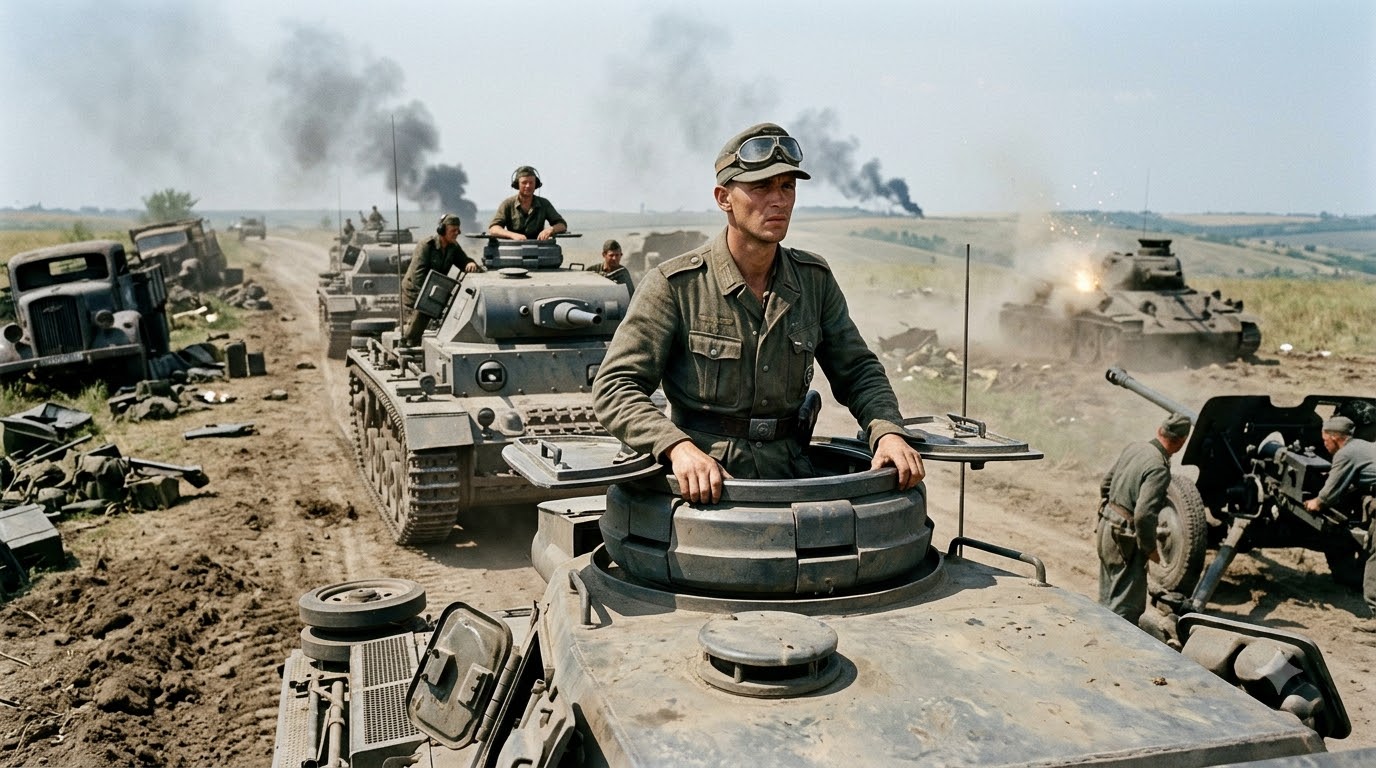
The air inside the Panzer 3 was hot enough to sting the throat with every breath. Oil fumes, cordite, and sweat hung in a heavy metallic haze.
Hans Becker stood half-exposed in the open commander’s hatch, his goggles flecked with dust and his field cap pulled low against the flat glare of the summer sun. Below him, the tracks ground over broken trucks and abandoned gear lining the verge of the farm road.
His gunner’s voice crackled through the headset with lazy confidence. More of their museum pieces, if this is the armor we are supposed to fear.
Becker wiped a streak of grime from his cheek and forced his expression to remain neutral. For six days, the advance had felt like a parade through a scrapyard of obsolete equipment.
A sudden courier car skidded sideways across the road ahead, signaling the column to halt. The panzer lurched to a stop, settling gently into the churned soil.
Across the distant ridge, a flat, heavy impact rolled over the fields, followed by black pillars of smoke. Becker dropped into the turret and pressed his eye tightly to the periscope rubber.
Dark shapes heaved over the crest through the shimmering heat, crouching low like animals ready to spring. The lead tank swung its turret toward the German line with an ominous, deliberate grace.
A pack-36 crew on the right flank fired first, eager to test the small weapon against the newcomer. The sharp crack echoed across the valley as the 37mm round struck the enemy glacis square in the center.
A bright spark bloomed and died against the sloping steel, leaving nothing more than a faint smudge of dust. The oncoming tank did not even break its steady momentum.
Becker reached out with a gloved hand and gripped the cold steel edge of the breech block. The radio remained dead and heavy, stripped of any higher guidance or external rescue.
Target the lead vehicle at eight hundred meters, Becker ordered, his voice clipped and dry. We find the hinge points, or we do not go home.
CHAPTER 2: BERLIN DRAWING BOARDS REACT
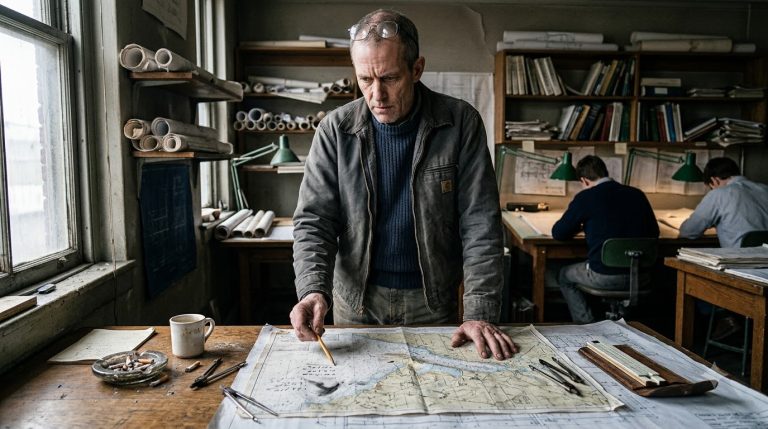
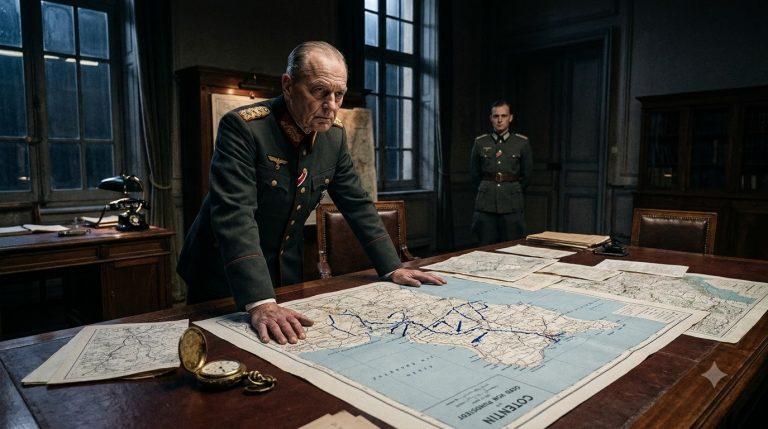
The proving grounds outside Berlin smelled of burnt oil and damp wool. Field-gray coats mingled with the dark leather of ordnance officials who crowded around the captured hull.
Hans Becker adjusted his collar against the damp winter chill and watched an engineer measure the glacis angle with a brass caliper. The captured steel was crude, but the slope changed the geometry of survival entirely.
A Daimler-Benz designer knelt by the frozen tracks to inspect the wide shoes designed for mud and snow. Our medium vehicles sink where this machine simply keeps rolling.
Becker reached down to wipe a layer of frost off the breech block of his temporary test mount. The radio remained a dead weight, entirely cut off from any higher command or artillery support.
If we answer twenty tons with twenty tons, we are answering weakness with weakness, an ordnance officer muttered, tapping a clipboard. We need thirty to thirty-five tons, sloped armor, and a gun that punches through.
Becker gripped his subtext object—a heavy, oil-stained rag—and methodically worked it over the grease-smeared breech handle. The drawing boards are one thing, but the assembly lines have to build them before the mud freezes solid again.
CHAPTER 3: THE LONG BARREL RESPONSE
The spring mud of Ukraine smelled of melting ice and rotting stalks, clinging to the suspension links of the Panzer 4 with stubborn weight.
Hans Becker stood in the taller turret, his gloved fingers tightening around the cold, extended mass of the 7.5cm KwK40 barrel. It stuck out like a spear, heavy and menacing, balanced by the ball-shaped muzzle brake that promised a different kind of math than the old short-tubed supports.
Across the shallow valley, the familiar hunched shapes of enemy armor began to form their lines under the pale sun.
My gunner wiped moisture from his optics and muttered about the crosswind drifting off the marsh. Range is eleven hundred, lead vehicle turning its turret front.
Take it, Becker said, dropping his weight into the ring as the breach slammed shut with a sharp, comforting metallic click.
The long gun roared, sending a brutal kinetic jolt through the steel deck that bit straight into his chest. Through the binoculars, a clean black hole tore through the enemy glacis, and secondary flames erupted from the crew hatch before the vehicle even completed its swing.
Other long-barreled medium tanks joined the chorus along the ridge, punching holes through plates that used to shrug off iron like hail. But on the flank, an old pack gun sat abandoned in the mud, its slim barrel pointing uselessly at the sky like a forgotten milestone.
We killed that one, but three more are grinding through the mud behind the ridge, the loader called out, wrestling another heavy shell from the rack.
Becker stared down at his grease-streaked knuckles, feeling the familiar tightening in his throat as the heavy drone of diesel engines rolled across the horizon.
CHAPTER 4: MECHANICAL FAILURE AT KURSK
The fields outside Oboyan were choked with thick dust and the metallic reek of overheating manifolds.
Hans Becker stood with his boots planted firmly on the floor plates, listening to the final drive scream with a sharp, terminal shriek.
The new heavy vehicle ahead of them had already slewed sideways into a deep crater, its engine deck billowing dense, oily black smoke into the summer haze.
The transmission is gone again before we even clear the departure line, the loader muttered, dropping an unspent round back into the rack with a heavy clatter.
Becker wiped sweat from his forehead using the back of his forearm, his gaze fixed on the stalled line of machinery blocking the track. Without any radio link to higher command, they were entirely blind to the flanking movements shifting through the dust.
We go around the stalled hull or we stay here and become a target for their batteries, Becker said, his voice flat and unyielding.
His driver jammed the gear lever forward with a desperate heave, but the tracks merely chewed deeper into the soft earth without gaining an inch.
Across the ridge, the deep, rhythmic thud of opposing heavy guns answered the silence, reminding them that mechanical friction was a deadlier enemy than any shell.
CHAPTER 5: THE ENDLESS WINTER RUMBLE
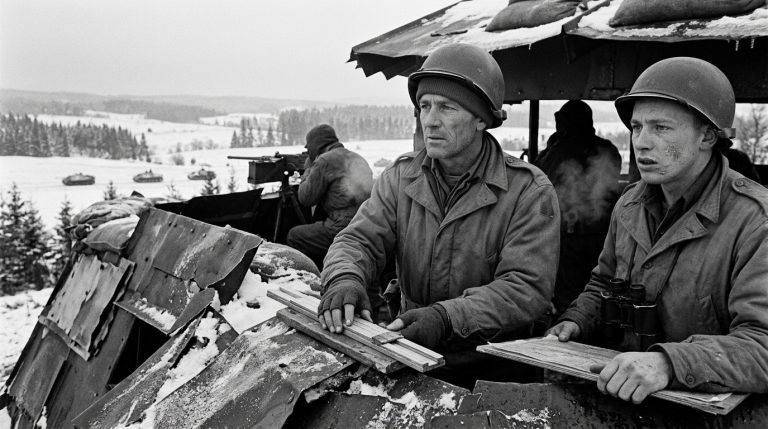
The snow outside the tree line buried the old iron wrecks under deep white drifts, leaving only jagged barrels protruding like broken bones.
Hans Becker pulled his wool scarf tighter around his neck and stared through frosted binoculars at the steady, rhythmic movement across the valley.
They do not come in twos or threes anymore, his loader whispered, rubbing frostbitten fingers against a metal casing. The rumble out there has not stopped for three days.
Becker kept his hand steady on the cold breech block, feeling the low, vibrating thrum of hundreds of hidden engines beating through the frozen earth.
The radio remained completely dead, cutting off any hope of coordination or rescue from higher command as the white landscape darkened under a low, heavy sky.
We hold this ridge until the infantry clears the track, or we freeze right here in the snow, Becker said, his voice flat against the howling wind.
Across the field, the white-crowned shapes surged forward out of the storm, their diesel engines roaring with an unyielding industrial rhythm that mocked every calculation.
CHAPTER 6: CROSSROADS AT THE END
The shattered walls of the village on the road to Berlin smelled of wet plaster and burnt coal.
Hans Becker planted his boots against the vibrating floor plates, his eyes locked on the endless stream of shapes pouring through the gray fog.
The major had vanished hours ago, leaving behind a dead radio and a ruined crossroads blocked by stalled chassis.
Our armor-piercing rounds are down to single digits, the loader shouted, slamming a high-explosive shell into the breech with desperate strength. If they push through this wall, we throw stones.
Becker reached out and gripped the cold steel handle, feeling the raw vibration of hundreds of enemy engines shaking the earth beneath the tracks.
There were no more wonder weapons arriving, no more drawing board designs to save them from the unyielding industrial tide rolling across the fields.
Driver, slow smoke and back us out toward the canal bridge, Becker commanded, his voice steady against the roar. We hold the line until the road is gone.
The panzer lurched backward into the bitter dust, leaving the crushed crossroads behind as the iron tide closed over the remaining traces of the road.